
by Omar Cruz | Sep 11, 2025 | Advice For Buyers, Advice For Sellers, Economy, Foreclosures
You may be seeing headlines about how foreclosures are rising. And if that makes you nervous that we’re headed for another crash, here’s what you should know.
According to ATTOM, during the housing crash, over nine million people went through some sort of distressed sale (2007-2011). Last year, there were just over 300,000.
So, even with the increase lately, we’re talking about numbers that are dramatically lower. But what does the future hold? Is a wave coming? The short answer is, no.
Here’s why. Experts in the industry look at mortgage delinquencies (loans that are more than 30 days past due) as an early sign for potential foreclosures down the line. And the latest data for delinquencies is reassuring about the market overall.
Right now, delinquencies as a whole are consistent with where we ended last year, which means we’re not seeing the kind of increase that would signal widespread trouble.
But there are some key indicators to continue to watch. Marina Walsh, Vice President of Industry Analysis at the Mortgage Bankers Association, explains:
“While overall mortgage delinquencies are relatively flat compared to last year, the composition has changed.”
Right now, borrowers with FHA mortgages currently make up the biggest share of new delinquencies (see graph below):
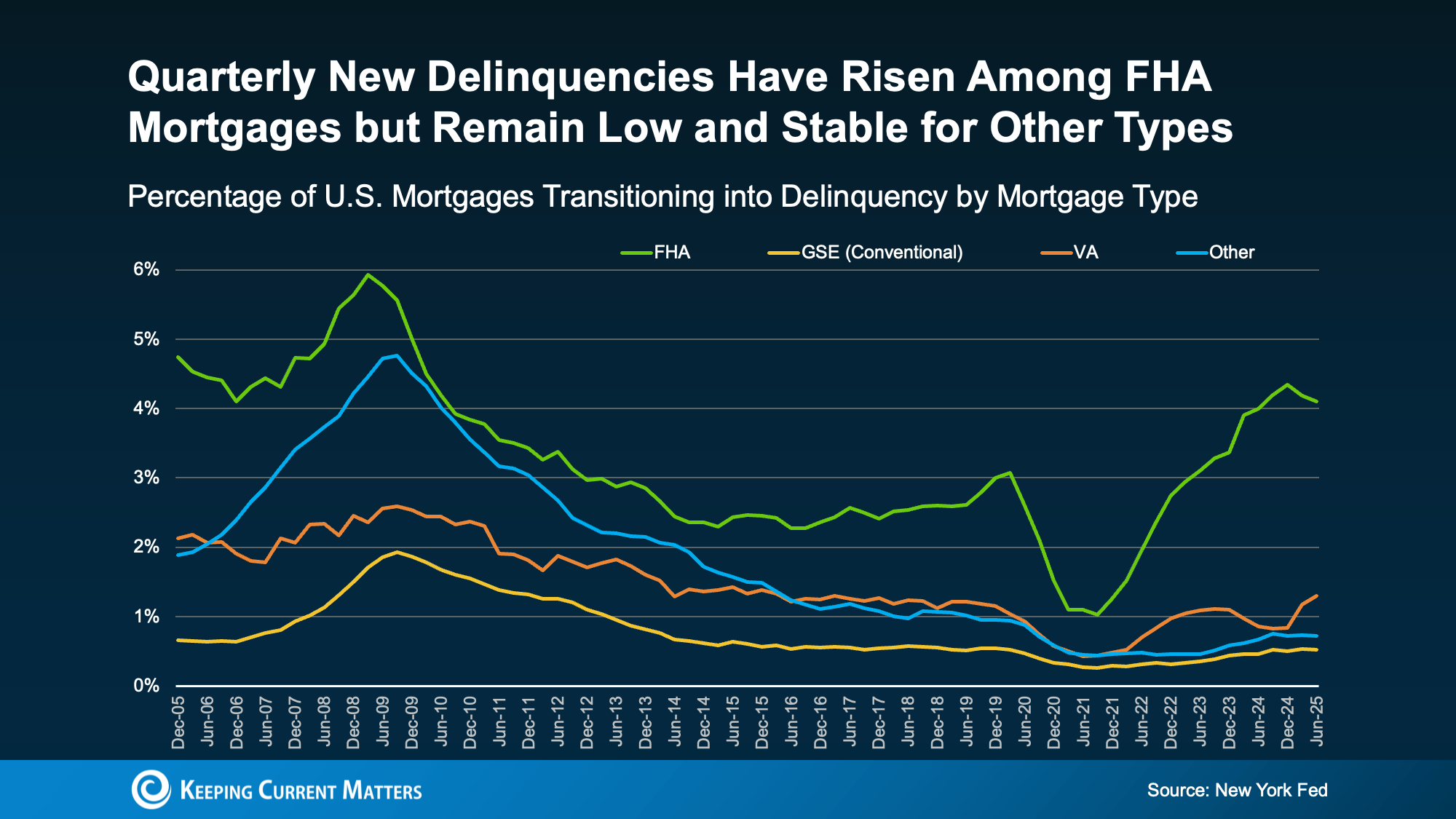 And here’s why that may be happening. Borrowers with FHA mortgages may be more sensitive to shifts in the economy. And with recession fears, stubborn inflation, employment challenges, and more, it makes sense this segment of the market may be feeling it a bit more. But that doesn’t mean it’s a signal a crash is coming.
If you look back at the graph, it shows, while there are more FHA loans experiencing hardship than the norm, delinquency rates for other loan types remain low and stable. Back during the crash, delinquency rates were significantly elevated for all 4 categories.
That means the broader mortgage market is on much stronger footing than it was back in 2008. As ResiClub says:
“The recent uptick in mortgage delinquency seems to be concentrated among FHA borrowers, however, mortgage performance remains very solid when viewed in light of the twenty-year history of our data.”
The Region with the Most FHA Loans
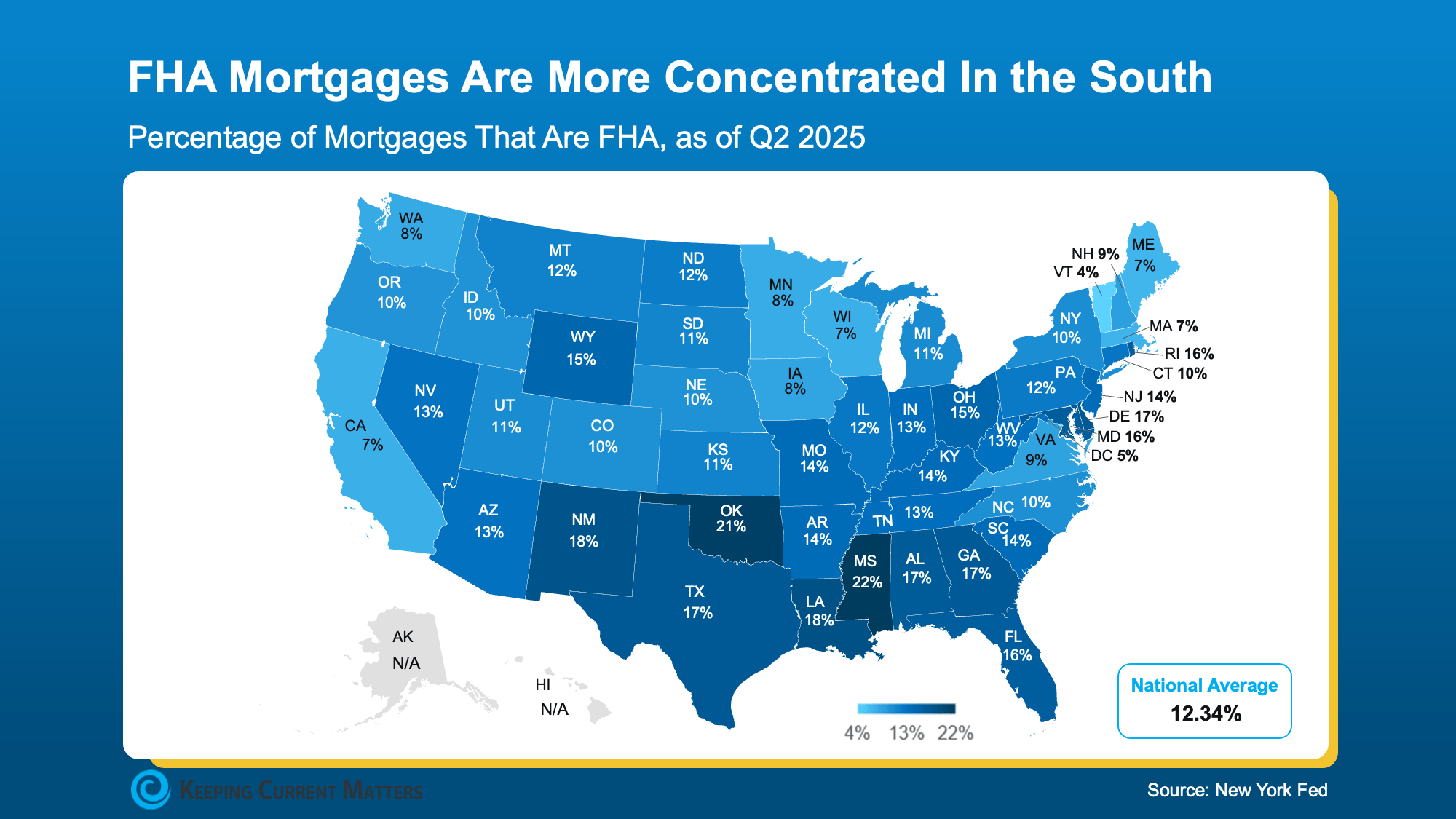
Here’s another reason this isn’t a signal of trouble ahead. FHA loans only make up about 12% of all home loans nationwide. But like anything else in housing, local data matters. There are some regions of the country where there are more of this type of loan than others, particularly the South.
The map below does not show how many FHA loans are delinquent. It just shows the overall concentration of FHA loans by state, so you can see which regions have the greatest volume (see map below):
 As the Federal Reserve Bank of New York explains:
“Looking at geographic concentrations of loans, recent data indicate that a higher proportion of mortgage balances are delinquent in many of the southern states . . . we see that higher delinquency rates coincide with a higher share of FHA loans across states.”
Just remember, even the delinquencies rates we’re seeing now aren’t as high as they were in 2008. Again, this is not a signal of a crisis. But it is something experts will monitor in the months ahead.
If You’re Experiencing Financial Hardship
No one wants to see anyone face the challenges of foreclosure. But just know that, if you’re a homeowner struggling with payments, you’re not alone – and you do have options.
The first step is reaching out to your mortgage provider. In many cases, you may be able to set up a repayment plan or explore loan modifications to help you stay on track. And for many homeowners today, you may also have enough equity to sell your house and avoid foreclosure. Odds are, at least some of these delinquencies will go that route since homeowners today have near record amounts of equity in their homes. It may be worth seeing if that could be an option for you too.
Bottom Line
Foreclosures are rising slightly, but they’re nowhere near the levels of 2008. And delinquency trends don’t point to a crash ahead.
This is something industry professionals are going to watch in the days ahead. If you want to stay up to date, connect with an agent or lender so you always have the latest information.

by Omar Cruz | Sep 11, 2025 | Advice For Sellers
Waiting for the perfect buyer to fall in love with your house? In today’s market, that’s usually not what’s holding things up. And here’s why.
Let’s be real. Homes are taking a week longer to sell than they did a year ago. According to Realtor.com:
“Homes are also taking longer to sell. The typical home spent 60 days on the market in August, seven days longer than last year and now above pre-pandemic norms for the second consecutive month. This was the 17th straight month of year-over-year increases in time on market.”
Part of that is because there are more homes on the market. So, with more options for buyers to choose from, they aren’t getting snatched up quite as fast. But there’s another big reason: price.
The Average List Price Isn’t Going Up – and That Matters
Today, a lot of homeowners are overshooting their list price. They remember the big climb in home prices a few years ago, and they don’t realize how much has changed.
One of the most important, but often overlooked, changes in today’s housing market is this: average list prices have held steady for the past few years.
That’s a big shift from a typical market, where prices were rising steadily each year. And it’s significantly different than the 2021-2022 surge when sellers could set their price just about anywhere and still attract multiple offers over asking.
But now? That trend has leveled off – and sellers who want to stay competitive need to take note (see graph below):
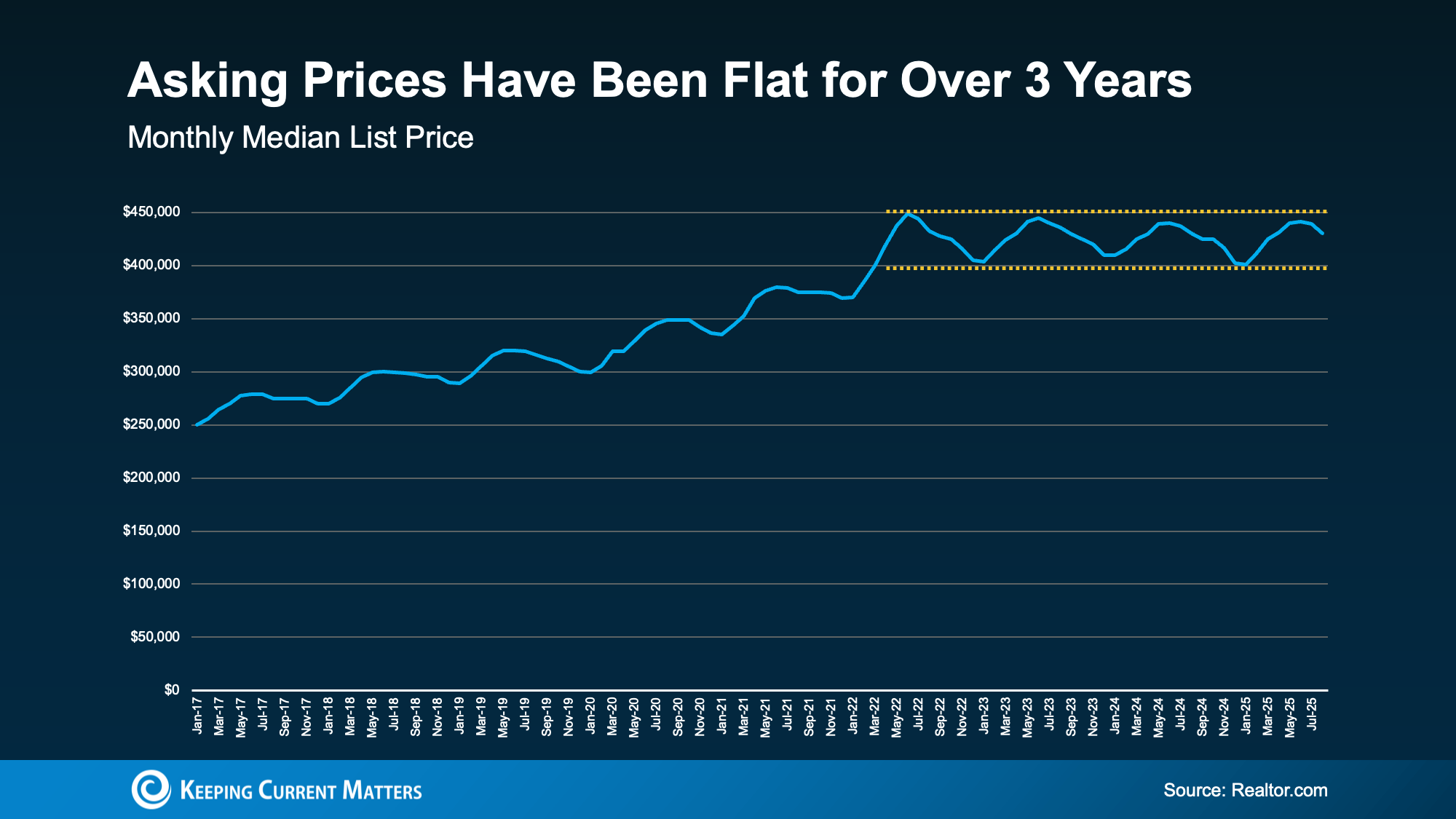 Here’s what this says about today’s market. Buyers are a lot more price sensitive now. And sellers can’t keep trying to inch the bar higher, or their house will sit without any offers.
Homeowners who expect to bring in more than their neighbors did last year may be setting themselves up for a longer, more frustrating experience.
And while homeowners are starting to realize prices can’t keep climbing at such a rapid pace, the hiccup is that list prices aren’t actually coming down yet as a result. They’re hanging around, holding steady. And sellers who make this mistake are often holding onto hope that they’ll be able to eek a few more dollars out of their sale. But that’s the problem right there.
If you want to sell today, you need to be in line with where the market is today. Not last year. Not during the pandemic. Today.
Because buyers will skip over homes that feel overpriced, even if it’s only by a little. It’s not that they aren’t interested. It’s just that in a market with more homes to choose from, buyers can be more selective, and sellers don’t get the same benefit of the doubt. If your house isn’t priced to sell, buyers just move on. They’ve got other options anyway.
4 Signs Your Price May Be Too High
You may already be feeling this yourself. If your home is listed and you’re not seeing results, watch for these common red flags noted by Bankrate:
- You’re not getting many showings
- You haven’t gotten any offers (or you’ve only gotten lowball offers)
- Buyers that do come to see your house leave overly negative feedback
- Your house has been sitting on the market longer than the average for your area
If any of these sound familiar, know that waiting it out won’t fix it. But adjusting your price will.
So, What’s the Solution?
Work with your agent to make sure your house is positioned for today’s market. Depending on your what’s happening in your local area, a few weeks without traction can raise questions for buyers about whether your price is realistic. And don’t worry – it doesn’t have to be a big drop. Even a small adjustment can be enough to bring the right buyers through the door.
And if you’re worried you won’t get the high-ticket sale price you thought you would be able to land, keep in mind that your equity has probably grown quite a bit. Chances are, you’re still ahead of the game simply because you invested in a home over the last 5, 10, or more years. You’re still winning when you sell today.
Bottom Line
Patience isn’t a strategy. Pricing is.
If your home isn’t moving, the market is telling you something – and the right price can change everything. Your house will sell, if you price it strategically.
Talk to your agent about what buyers are willing to pay right now to make sure your home stands out for all the right reasons.

by Omar Cruz | Aug 20, 2025 | Advice For Sellers, Agent Value, For Sale by Owner, Selling Tips
KEEPING CURRENT MATTERS
Cutting out the agent might seem like a smart way to save when you sell your house. But here’s the hard truth.
Last year, homes that sold with an agent went for almost 15% more than those that sold without one.
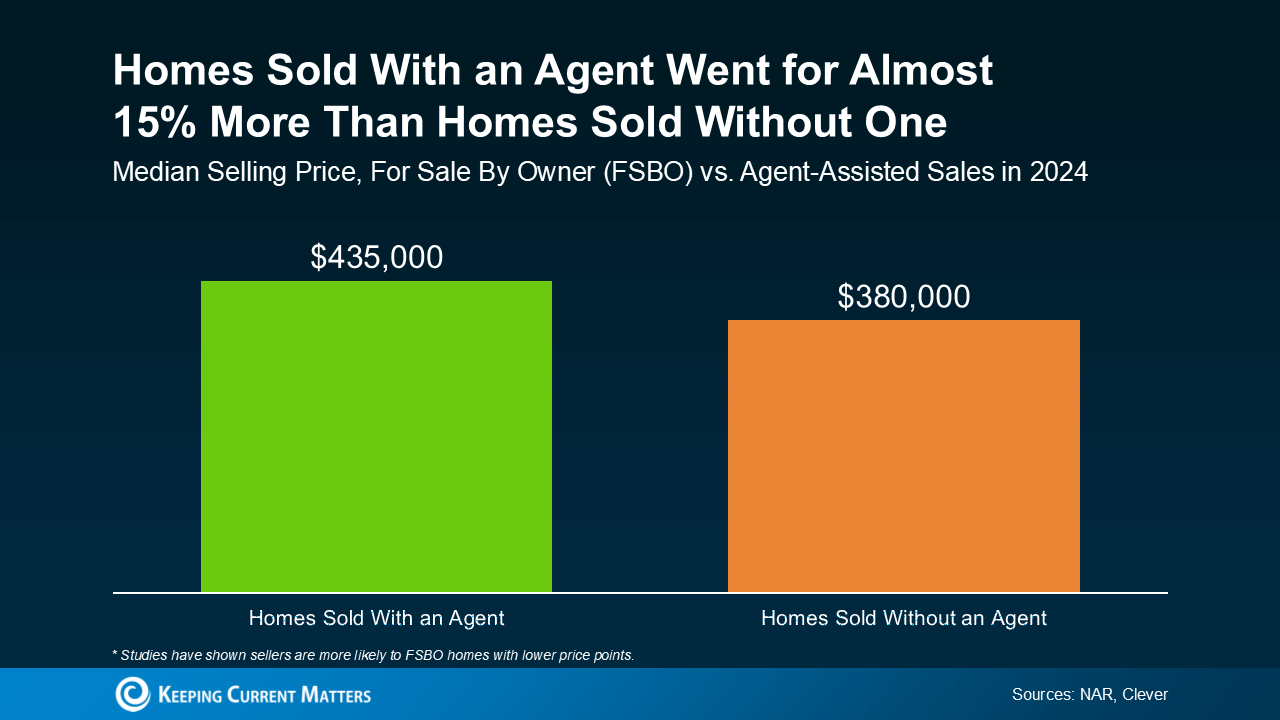 That gap is pretty hard to ignore. And with more homes on the market to compete with right now, selling on your own is a mistake that’s going to cost you.
This Isn’t the Market for DIY Selling
A few years ago, you might’ve gotten away with a “For Sale By Owner” (FSBO) sign in your yard, navigating the process on your own. That’s because homes were flying off the market and buyers were pulling out all the stops. But that’s just not the case anymore. With more inventory than we’ve seen in years, we’re not in a “list it and they will come” market anymore. You need professional expertise.
A yard sign and some photos you take on your own won’t cut it.
Right now, the housing market is getting back to what most would consider a more normal balance of buyers and sellers, and that really changes the game. According to Realtor.com, the latest number of listings for sale was the highest it’s been in any month of July since 2019 (see graph below):
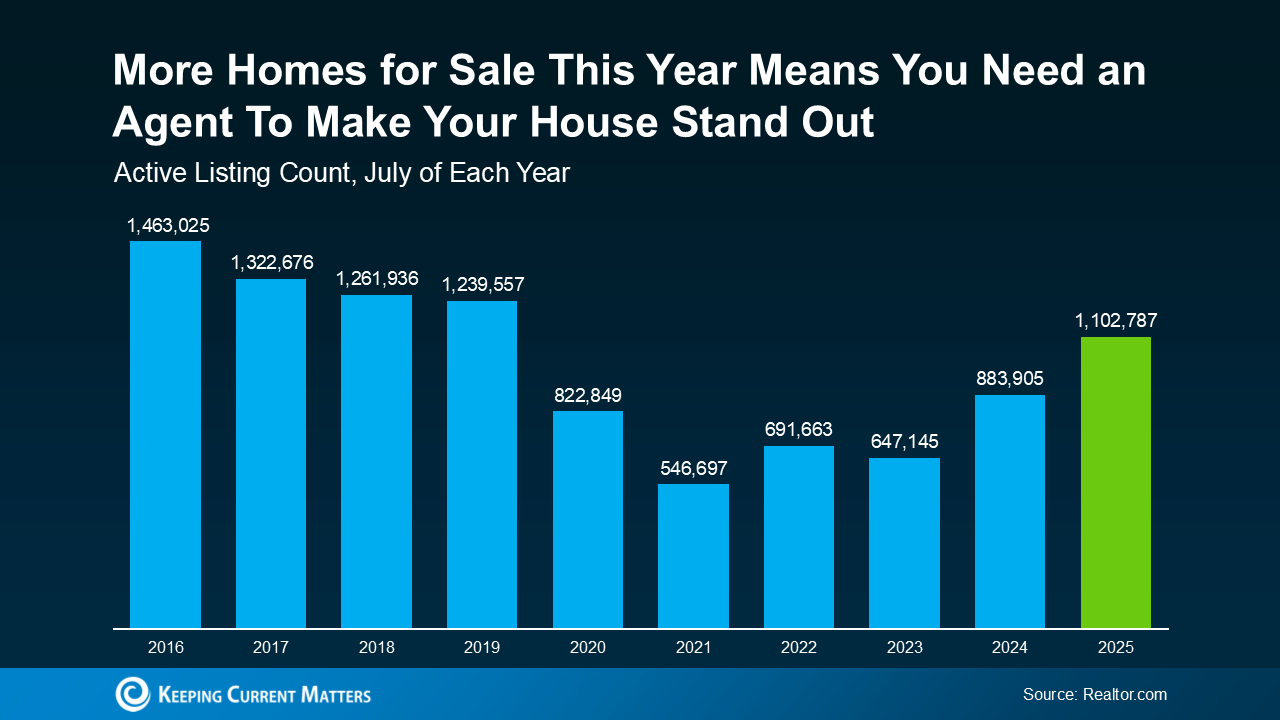 And while inventory growth is going to vary by local market, nationally, this graph shows the number of homes for sale is inching back toward normal.
With more listings available, that means buyers can be more selective. They’ll compare your home to others on price, condition, photos, location, and more. If yours doesn’t stand out, it will get skipped over.
More Inventory = More Competition for You
Selling today requires the latest pricing strategy, expert prep work, professional marketing, and strong negotiation skills. And if you’re not bringing all of that to the table, chances are, you’re going to feel it in your bottom line.
More Homeowners Are Turning To the Pros
That’s why even more home sellers are working with agents today. Data from the National Association of Realtors (NAR) shows a record-low percentage of homeowners sold without an agent last year. And the few sellers who tried to sell on their own realized their mistake pretty quickly.
According to Zillow, 21% of homeowners ended up hiring an agent anyway after struggling to sell on their own.
So, why take the risk? With a local pro, you’ll have:
- Pricing precision to attract buyers and maximize your return
- Expert staging and presentation advice to highlight your home’s best features
- Pro-level marketing, including the best exposure and access to buyer networks you can’t reach on your own
- Skilled negotiation to evaluate offers and navigate inspections, protecting your bottom line
- Local market expertise that helps your listing stand out based on what inventory looks like in your area
An agent’s expertise isn’t optional anymore. It’s essential.
Bottom Line
In a market with more listings and pickier buyers, many sellers who try to sell on their own end up working with an agent anyway. So why not start there?
Connect with an agent so you have a pro who knows exactly what it takes to sell your house in today’s market, for the best possible price, without leaving money on the table.
Reach out to an agent if you want a professional assessment on what your house could sell for today.
