
by Omar Cruz | Jul 9, 2026 | Economy, For Buyers, For Sellers
Author: Keeping Current Matters
Buying or selling a home is a big financial decision. And right now, it feels even bigger. Inflation is high, costs are high, and you want to be sure the timing is right before you make your move.
But if you do decide to go for it, whether you’re buying or selling, here’s something reassuring to hold onto. Not only does your move change your own life, but it also gives your whole community a boost.
Real estate is a huge part of the economy. In 2025, it added up to about $5.6 trillion, according to the National Association of Realtors (NAR). A good share of that comes from everyday people buying and selling homes, just like you.
Your Move Puts Real Money Into the Local Economy
Every sale sends money flowing through your area. NAR data shows that buying an existing home (one that’s already been lived in) adds about $64,000 to the local economy. Buy a newly built home, and that number climbs to more than $134,000 (see graph below):
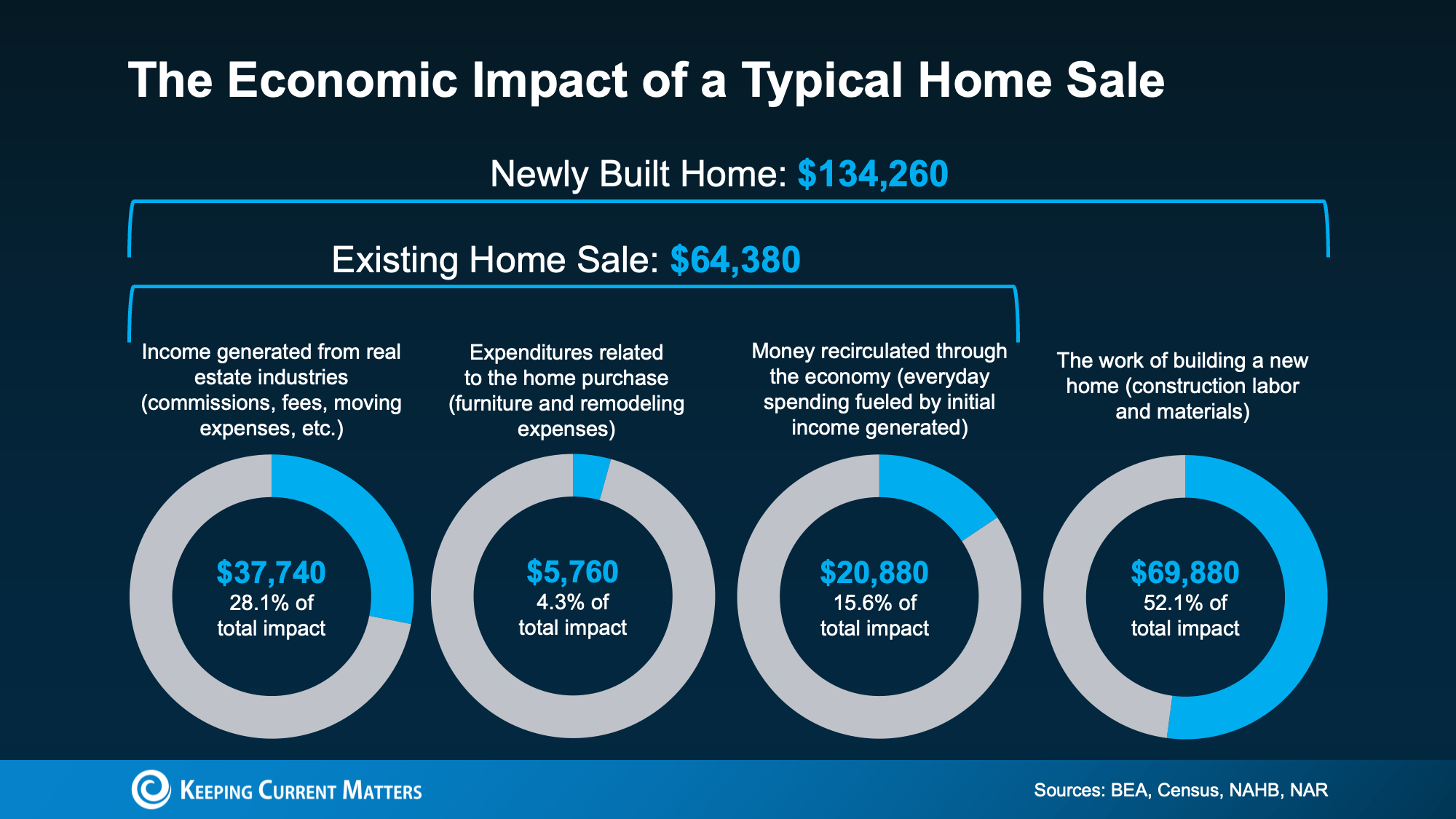
Over half of that comes from the work of building the home itself. The rest flows to real estate services, like agent and lender fees, plus what you spend settling in afterward, on things like furniture and remodeling.
And the money doesn’t stop there. As local businesses earn it, they spend it again in your area, so a single sale ripples further than the sale price alone.
One Sale Keeps a Lot of People Working
Behind every sale is a whole network of people doing their jobs. Contractors, lenders, inspectors, movers, and more. When you buy or sell, you help keep them busy. Lawrence Yun, Chief Economist at NAR, puts it this way:
“Increased home sales mean more economic activity — lawn care, furniture purchases, moving services, mortgage originations and other related business activities all get a boost.“
So, your move supports your neighbors’ livelihoods, too. The deal that gets you into your next home also helps a local crew make payroll. In a year when every paycheck counts, that’s no small thing.
Your Local Impact May Be Even Bigger
What your move financially adds to your community depends a lot on where you live. To help you see how it can vary, here’s a look at the impact of a typical newly built home sale by state.
The national average for a newly built home is about $134,000, but some states see far more (see map below):
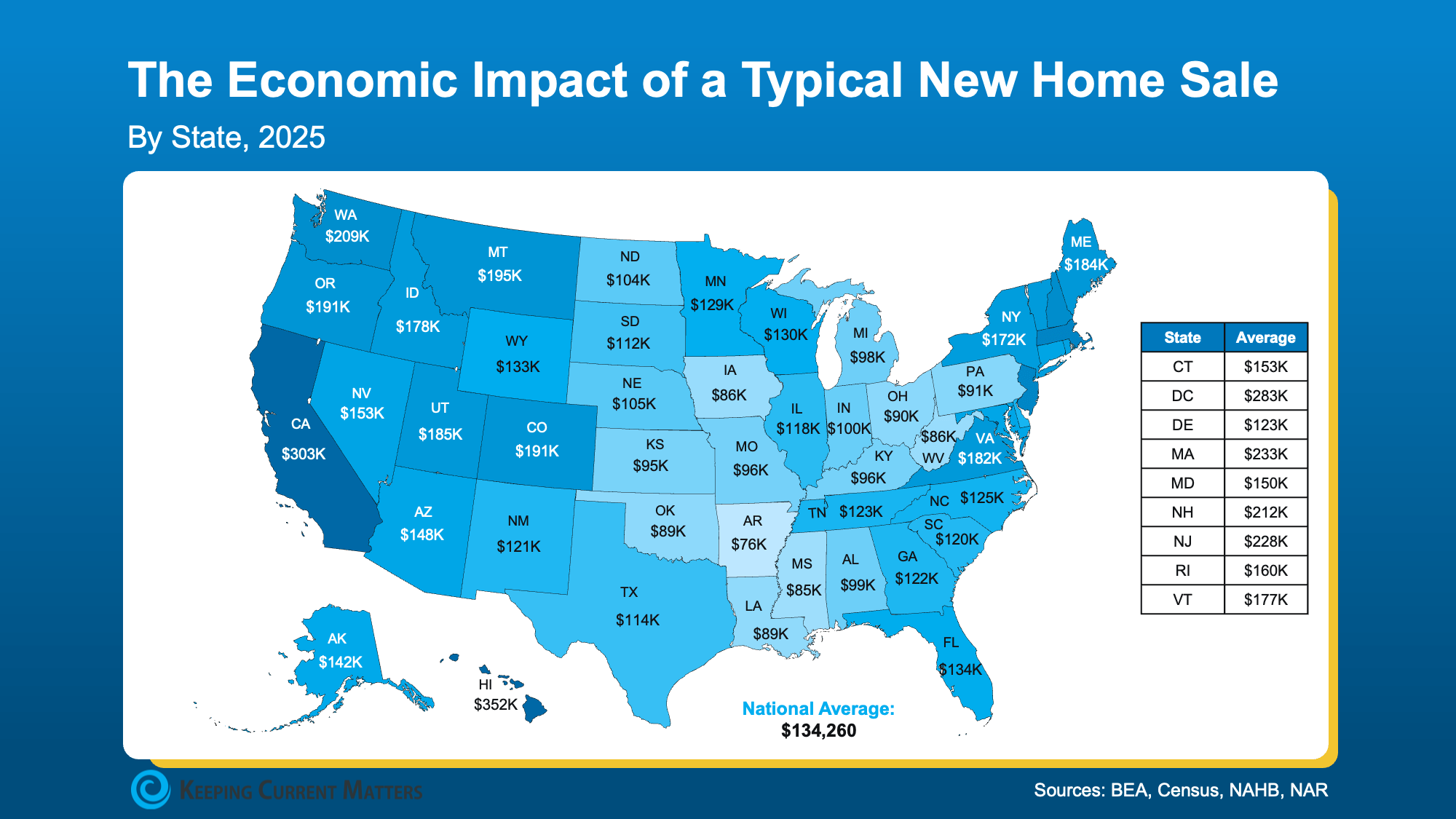
In California, a single sale adds more than $300,000 to the local economy. In Hawaii, it’s over $350,000. Even in the most affordable states, the number lands in the tens of thousands.
Want to know what a move would mean where you live? A local agent can show you a figure close to home.
Bottom Line
Moving is both a personal milestone and an investment in your community. So, if the time is right for you, connect with a local agent. You’ll make a difference for more people than you know.

by Omar Cruz | Jul 2, 2026 | Economy, Expired/Withdrawn/Canceled, For Buyers, For Sellers
Author: Keeping Current Matters
You may be hearing that a near-record number of homeowners are pulling their houses off the market. And if that headline has you thinking, “Wait… is something bad about to happen?” You’re not alone.
Because when people start stepping to the sidelines, it sounds like a warning sign that something’s coming – or that they realize something you don’t know.
Here’s the thing. This trend gets spun like it means the market is about to crash. But the data tells a more practical story.
What the Numbers Actually Say
According to the latest data from Redfin, 5.5% of all listings were taken off the market in May. And it’s true that’s almost the highest it’s been since back in March 2020 (see graph below):
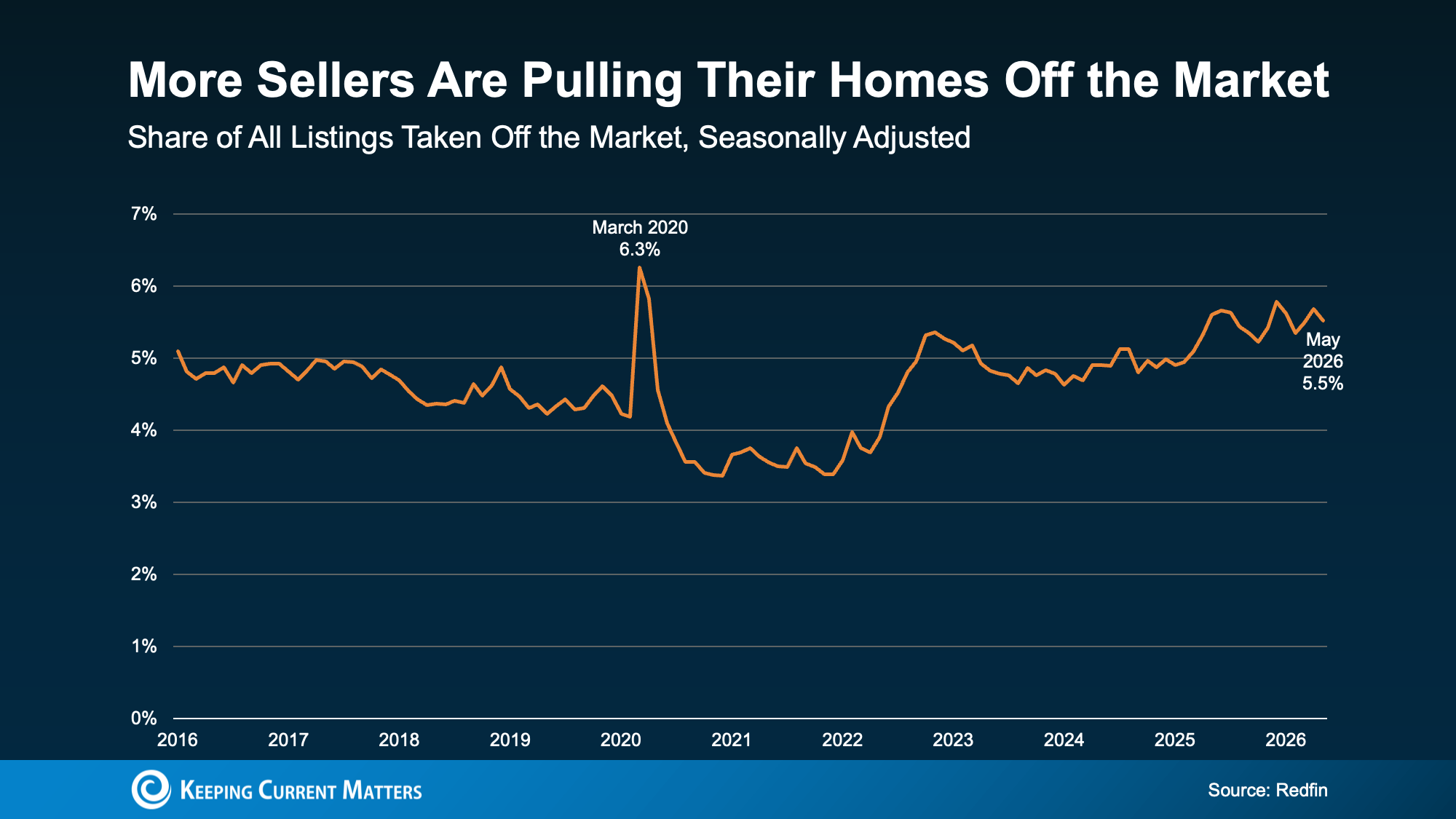
That can sound scary. But a lot of the fear comes from how this story gets told. “A near record number of sellers are pulling their listings” makes a great clickbait headline – and that sort of thing spreads fast, especially online. But sellers pull a house off the market for plenty of reasons that have nothing to do with a crash.
Redfin points to four main forces driving this trend:
- Homes are taking longer to sell. When the pace slows down, some sellers get frustrated and decide to hold off.
- The number of homes for sale is rising faster than demand. That means buyers have more options. And sellers who don’t price or prep right may not get many eyes on their house.
- Some sellers still have pandemic-era price expectations. A price that would’ve worked a couple of years ago may not match what today’s buyers will pay.
- Economic uncertainty is making both buyers and sellers cautious. Buyers pause. Sellers second-guess. And that has an impact on overall sales volume and pace.
Notice what’s missing from that list? There isn’t a single mention of an impending market crash or price collapse.
This is about a shifting pace, more competition, and sellers deciding how they want to respond.
One Detail Most Headlines Leave Out
Want more peace of mind that this isn’t a crash? This next stat delivers. Yes, more sellers are taking their homes off the market. But Redfin also shows something you’re not going to see in social posts…
The number of re-listings is growing too.
While more sellers are pulling their listings, more are also deciding to give selling a second shot. This is pretty much the highest re-listings have been since the pandemic hit.
While 5.5% got pulled in May, 2.3% were also put back on the market (see graph below):
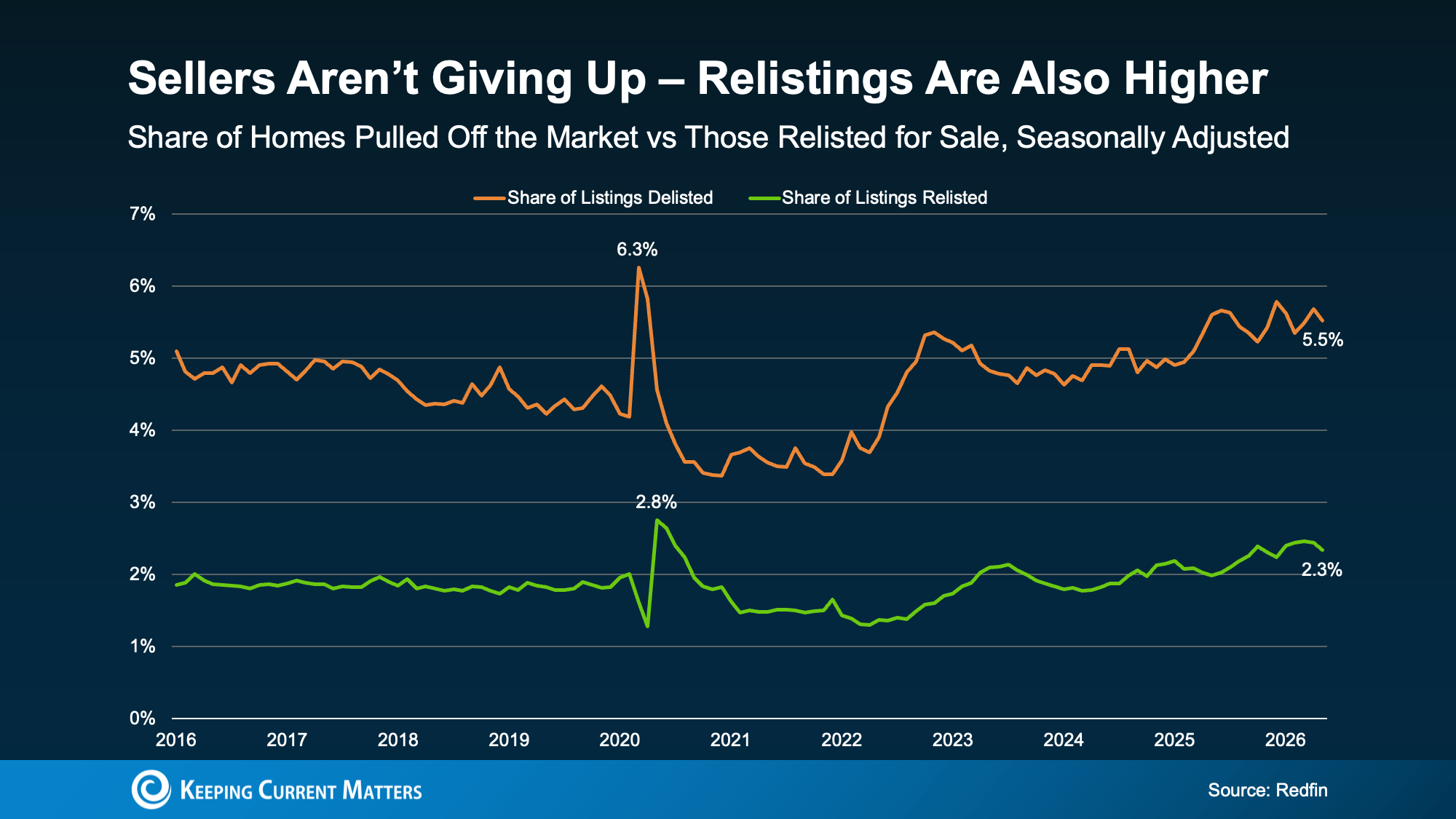
That’s a signal sellers aren’t giving up or running away in large numbers.
Some are simply stepping away briefly before deciding to try again. That tells you this often isn’t a permanent decision. In many cases, it’s a pause – and the seller comes back with a different approach.
A lot of the time, that change in the overall strategy is all that’s needed to finally get a house sold.
And just in case you need more proof this isn’t a reason to worry, check this out. Buyer activity may be starting to pick back up – and that could bring more sellers back in or, at least, prevent some sellers from pulling back.
The National Association of Realtors (NAR) reports existing home sales increased 3.2% in May. That’s the biggest increase since December. As the Wall Street Journal puts it:
“Home sales in May posted the biggest rise this year, a sign that the housing market’s crucial spring selling season may be showing signs of life after a sluggish start.”
That doesn’t sound like a market in trouble.
Bottom Line
If you’re seeing headlines about how a record number of sellers are taking their homes off the market, don’t panic. It’s not a warning of an impending crash. It’s a market adjusting.

by Omar Cruz | Jun 5, 2026 | Economy, For Buyers, For Sellers, Forecasts, Home Prices, Mortgage Rates
Author: Keeping Current Matters
If the housing market feels confusing right now, you’re not alone.
Mortgage rates have risen. Home sales haven’t picked up like expected. And many buyers and sellers are wondering when things are going to feel easier or be more affordable.
The truth is: a lot changed over the first half of this year.
Back at the end of 2025, economists were forecasting a much stronger housing market for 2026. They expected mortgage rates to come down, affordability to improve more dramatically, and home sales to rebound.
But lingering inflation, economic uncertainty, and growing geopolitical tensions overseas pushed mortgage rates higher than expected. And because rates stayed elevated for longer, many buyers continued to hold off.
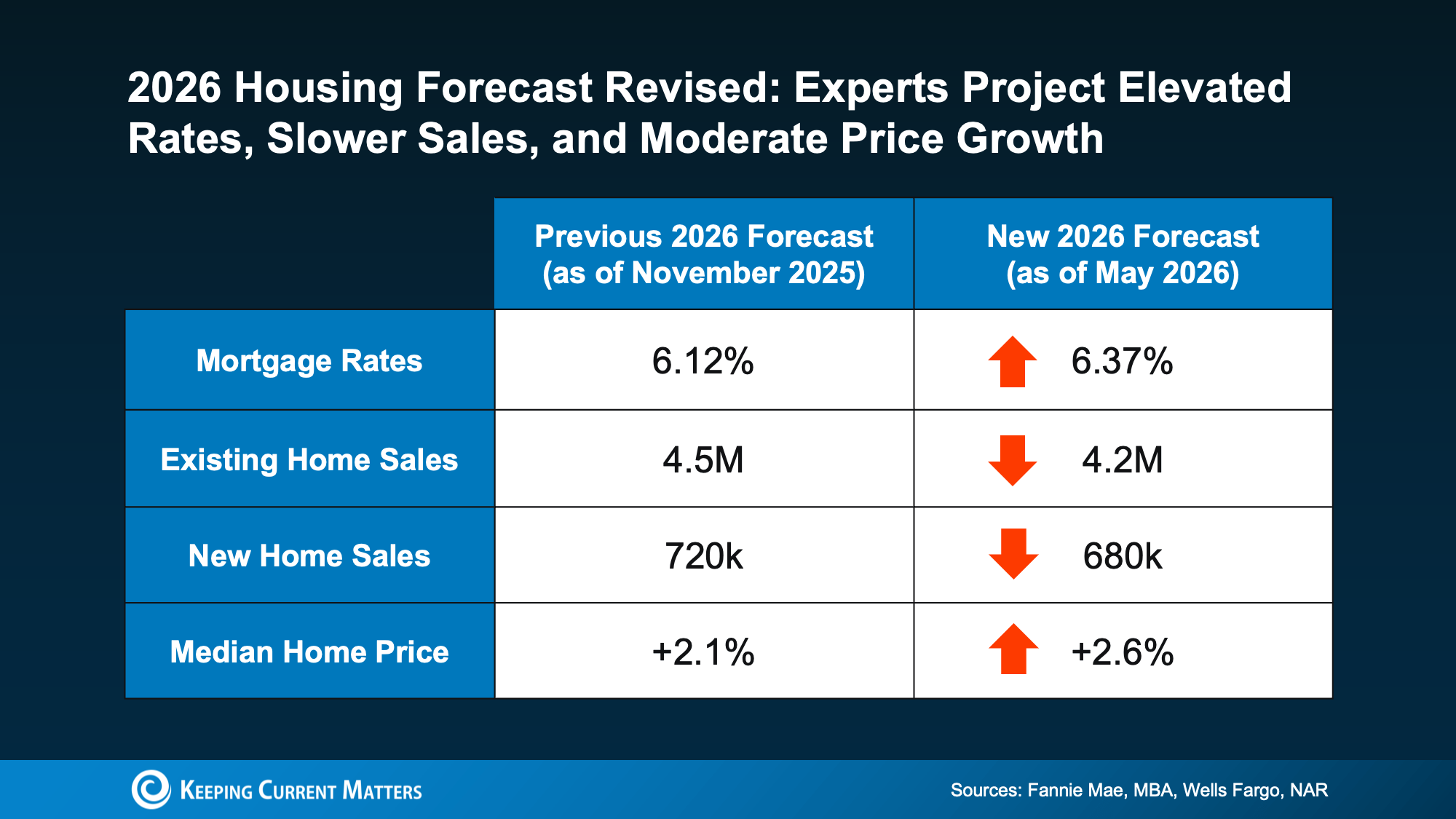
That’s why experts recently revised their housing forecasts for the rest of the year (see graph below):
So, what does this actually mean for you? Let’s break it down.
Mortgage Rates May Remain Elevated
While just about everyone wants mortgage rates to go back to the upper 5s or low 6s we saw at the start of the year, as of right now, the experts don’t think that’s likely to happen this year.
Instead, forecasts have been updated from the low 6s they originally projected. Many industry organizations are saying rates will stay in roughly the mid-6s this year. The good news is that’s still lower than rates were a year ago.
Of course, this is based on what we know today. If the conflict overseas comes to an end or inflation drops, this could change. But if you’re waiting for lower rates, it may not pay off in the way you expect.
Existing Home Sales Revised Lower
Back in late 2025, experts expected we’d sell an average of 4.5 million homes this year. Now? That’s dropped down a bit to 4.2 million.
That tells us something important: buyers are still hesitant because affordability remains challenging.
Higher mortgage rates have made monthly payments harder to manage, especially for first-time buyers. And that’s slowed the pace of the market compared to what was originally expected. But even though the forecast was revised down, we’re still expected to sell more homes than last year.
Once geopolitical tensions resolve, and rates begin to settle down, many experts believe that group of buyers will be ready to jump back in. As Lawrence Yun, Chief Economist at NAR, explains:
“There is sizable pent-up demand that could be released into the market.”
There has already been a few glimmers of renewed hope lately. In recent months, pending home sales have been improving month-over-month despite higher rates.
So, if you’re able to afford a home at today’s rates, it could still make sense to buy now. Because otherwise, if you wait, you’ll have more competition (and potentially fewer homes to choose from) when those other buyers jump back in.
New Home Sales Also Slowed
Builders also expected to have a stronger year. Earlier forecasts projected new home sales would top 700k in 2026. Now, economists expect we’ll be just shy of that number.
Again, mortgage rates are a major reason why.
But the upside for buyers is that builders may be even more motivated to sell. That means builder incentives, negotiation opportunities, and pricing flexibility may continue in many markets. So, if you live somewhere where there’s more new construction, this may actually be a bright spot for you.
Builders could be more ready to negotiate, and that gives you more leverage to get a better deal.
Home Prices Are Still Expected To Rise
This is one of the most important takeaways from the entire forecast. Even though sales activity is slower, on average, experts did not revise their home price forecast downward.
They still expect prices to rise nationally this year.
Why? Because while buyer demand has softened, the number of homes for sale is still relatively limited overall. That imbalance is helping support prices, even in a slower market.
Of course, conditions vary depending on where you live. Some markets are cooling more than others. But nationally, experts are still projecting steady price growth, not a major decline. And that should be a comfort whether you’re buying or selling.
Because sellers don’t want a major drop in prices. And while buyers may think they do, generally you feel better about a big purchase when it doesn’t depreciate right away.
Bottom Line
The housing market hasn’t rebounded as quickly as experts originally hoped. But that doesn’t mean it’s stalled.
Higher inflation and lingering economic uncertainty caused economists to revise their forecasts for this year. But importantly, when those two things settle down, many experts believe the market will regain its momentum.
So don’t see this revision in forecasts as a sign of trouble. See it as a temporary reaction to overall conditions and uncertainty.
If you want to know what’s happening in your local market, and what it could mean for your plans for the rest of this year, talk to a local agent.

by Omar Cruz | May 29, 2026 | Affordability, Economy, For Buyers, Mortgage Rates
Author: Keeping Current Matters
Let’s be real with each other for a second about affordability. Because you deserve someone who will be honest and transparent about what’s going on, especially if you’ve got a move on your mind.
Here’s the full picture of what’s happening and why. The good – and the bad. So, you know what it truly means for your move. Because while rates are certainly a big part of affordability, they’re not the only factor at play.
Mortgage Rates Have Been Rising
After a year or more of rates trending down, they’ve started to climb again. And, if you’re looking to buy, that’s not what you want to see. But it has happened. And here’s why.
Uncertainty is the enemy of mortgage rates.
And with lingering global uncertainty, ongoing tensions in the Middle East, and inflation refusing to fully cool off, there’s a lot that’s having an effect on rates. Colin Robertson, Founder of The Truth About Mortgage, put it plainly:
“You can’t have $100 a barrel oil and not expect inflation to rise, which translates to higher bond yields and mortgage rates.”
Take a look at the graph below. It uses data from Mortgage News Daily to show just how much all of those factors have had an impact:
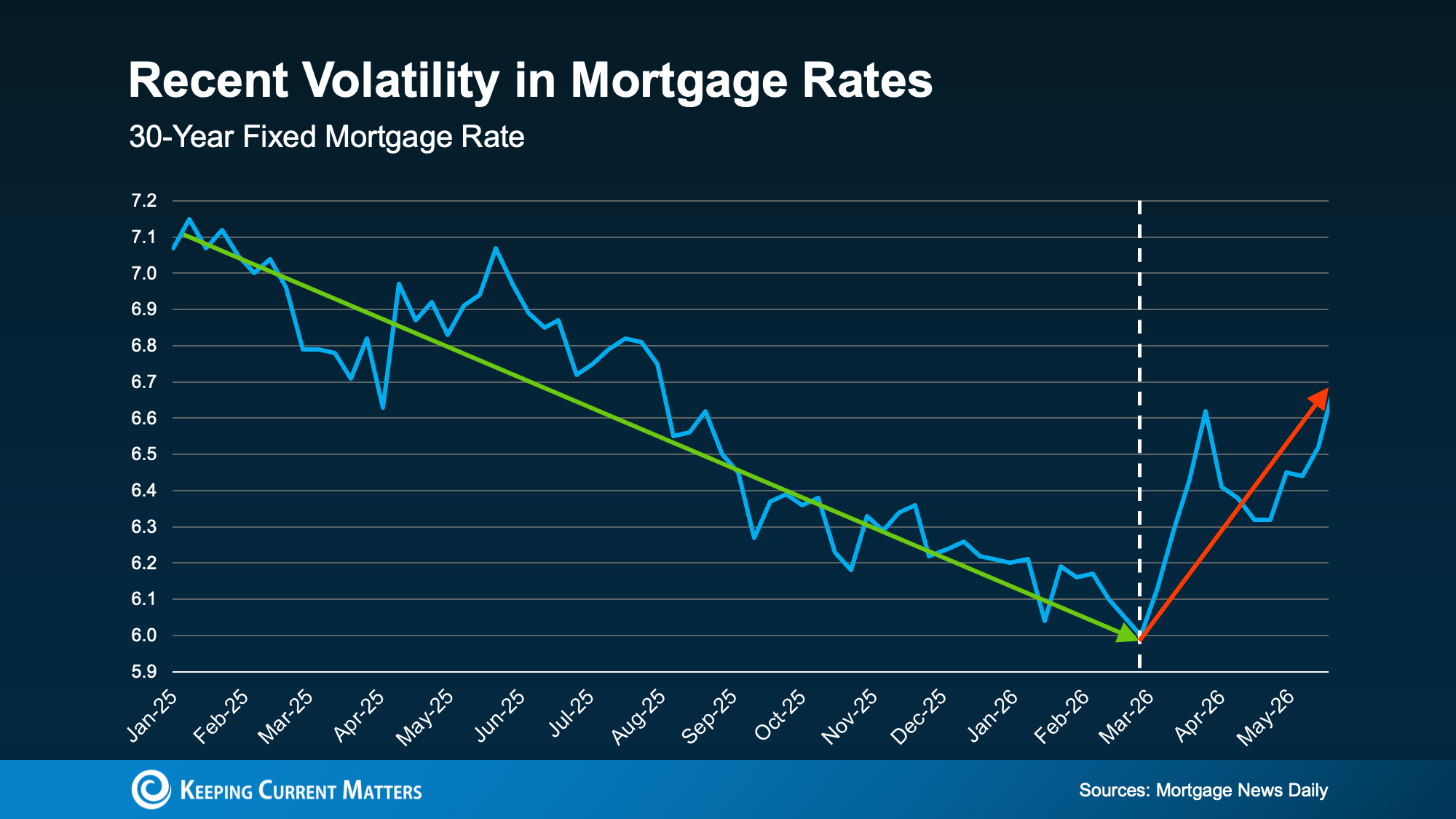 It’s a pretty sharp contrast from where we’ve been, in a relatively short window. And it’s probably making you wonder: Should I just wait this out? Will rates fall when the uncertainty eases?
It’s possible. But it all depends on how the ongoing geopolitical conflict plays out and whether inflation continues to run hot afterwards – and for how long.
Rates probably aren’t heading down until both of those things improve. And even when that does happen, experts agree rates likely won’t be dramatically lower – maybe in the low to mid-6s. That’s the reality, and it’s worth knowing.
So, should you wait for lower rates? The general consensus is, if you can afford to buy and you find a home you like, it’s still worth it. Because no one knows for sure when rates will start to come back down – and how long do you really want to put your life on hold?
Wages Are Outpacing Home Prices
You’ve probably heard that inflation is making everything more expensive, and there’s no shortage of headlines about the cost-of-living outpacing paychecks. It’s a legitimate concern. And maybe you’re feeling the pinch yourself. But here’s what doesn’t make the headlines. It’s not all bad news.
Data from the Federal Reserve Bank of Atlanta and Redfin shows wages have actually been growing faster than home prices.
- Recently, wages have been increasing at around 4% year-over-year.
- And home price growth is closer to 2% year-over-year.
As a buyer, you want your income to rise faster than prices because that helps make your purchase more manageable financially, and it quietly chips away at the affordability challenge over time. That’s exactly what we’re seeing lately. And every little bit is going to help.
A big reason wages have been gaining ground on home prices? Home prices have actually stayed pretty steady.
Existing Home Prices Have Held Steady
Check out the graph below. It shows home price data from the National Association of Realtors (NAR) over the past 4 years. Notice anything? There’s been no dramatic runup, and no crash either. Just relative stability and slow growth:
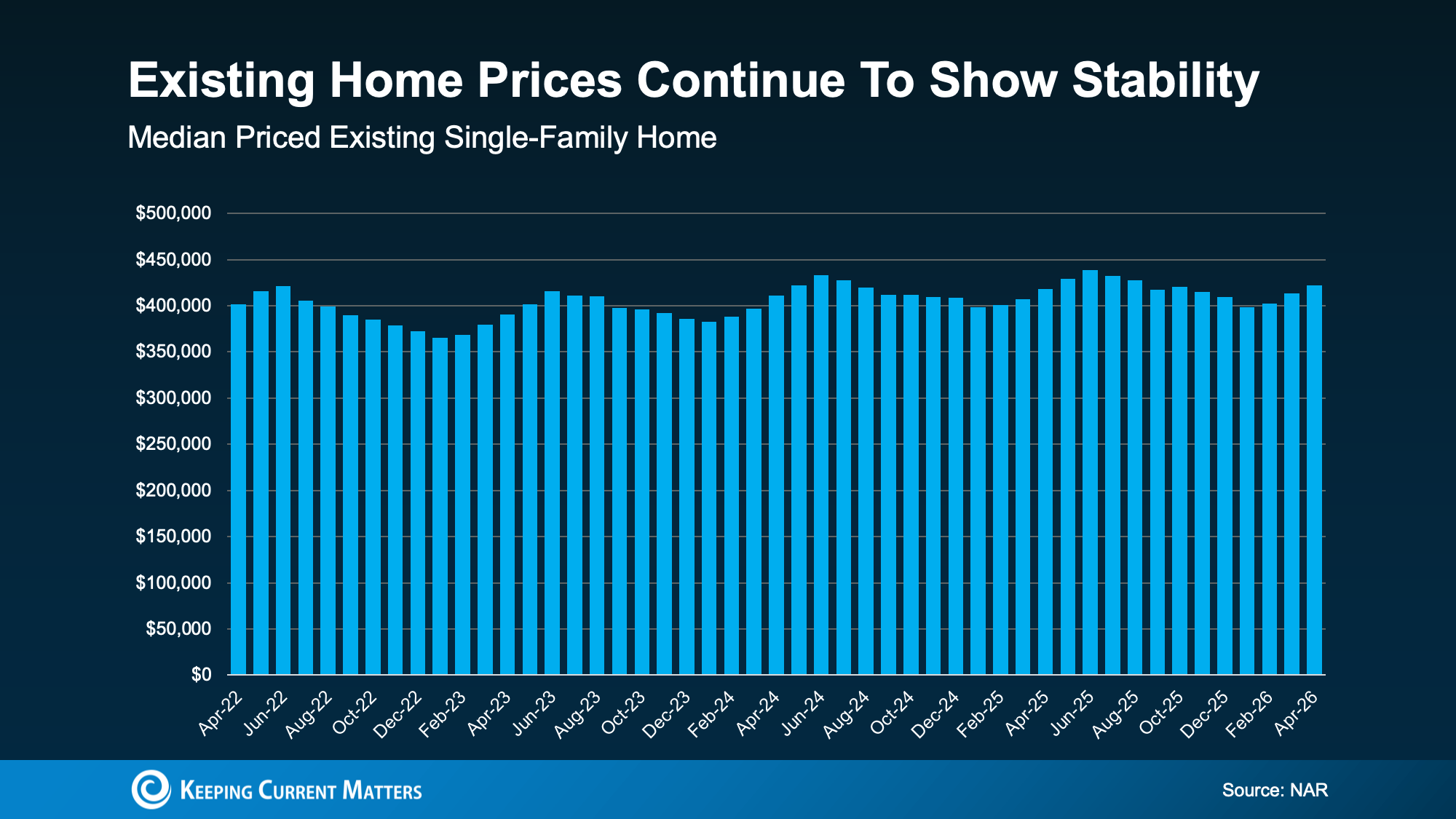
Part of what’s keeping prices this stable is that buyers finally have more choices. That means less competition, more negotiating power, and more time to find the home that actually fits your life, not just the one you had to grab before someone else did.
And that gives you a chance to hopefully find something that works for your budget, even with today’s rates. At the same time, you’re not losing ground pricewise while you take time to make a careful decision.
Bottom Line
Yes, rates have been volatile, and global instability is keeping them from settling down anytime soon. There’s no sugarcoating that. But the full picture of affordability is more nuanced than the headlines suggest.
Want to run the real numbers for your situation? Talk with a local real estate agent. They’d love to show you what’s actually possible in today’s market. Reach out to set up a quick, no-pressure conversation.

by Omar Cruz | Oct 23, 2025 | Economy, For Buyers, For Sellers, Forecasts, Home Prices
If you’ve seen headlines or social posts calling for a housing crash, it’s easy to wonder if home values are about to take a hit. But here’s the simple truth.
The data doesn’t point to a crash. It points to slow, continued growth.
And sure, it’s going to vary by local area. Some markets will see prices rise more than others. And some may even see small, short-term declines. But the big picture is: home prices are expected to rise nationally, not fall, over the next 5 years.
The Real Story Is in the Expert Forecasts
In the Home Price Expectations Survey (HPES) from Fannie Mae, each quarter over 100 leading housing market experts weigh in on where they project home prices will go from here. And in the report that was just released, the experts agree prices are projected to climb nationally through at least 2029 (see graph below):
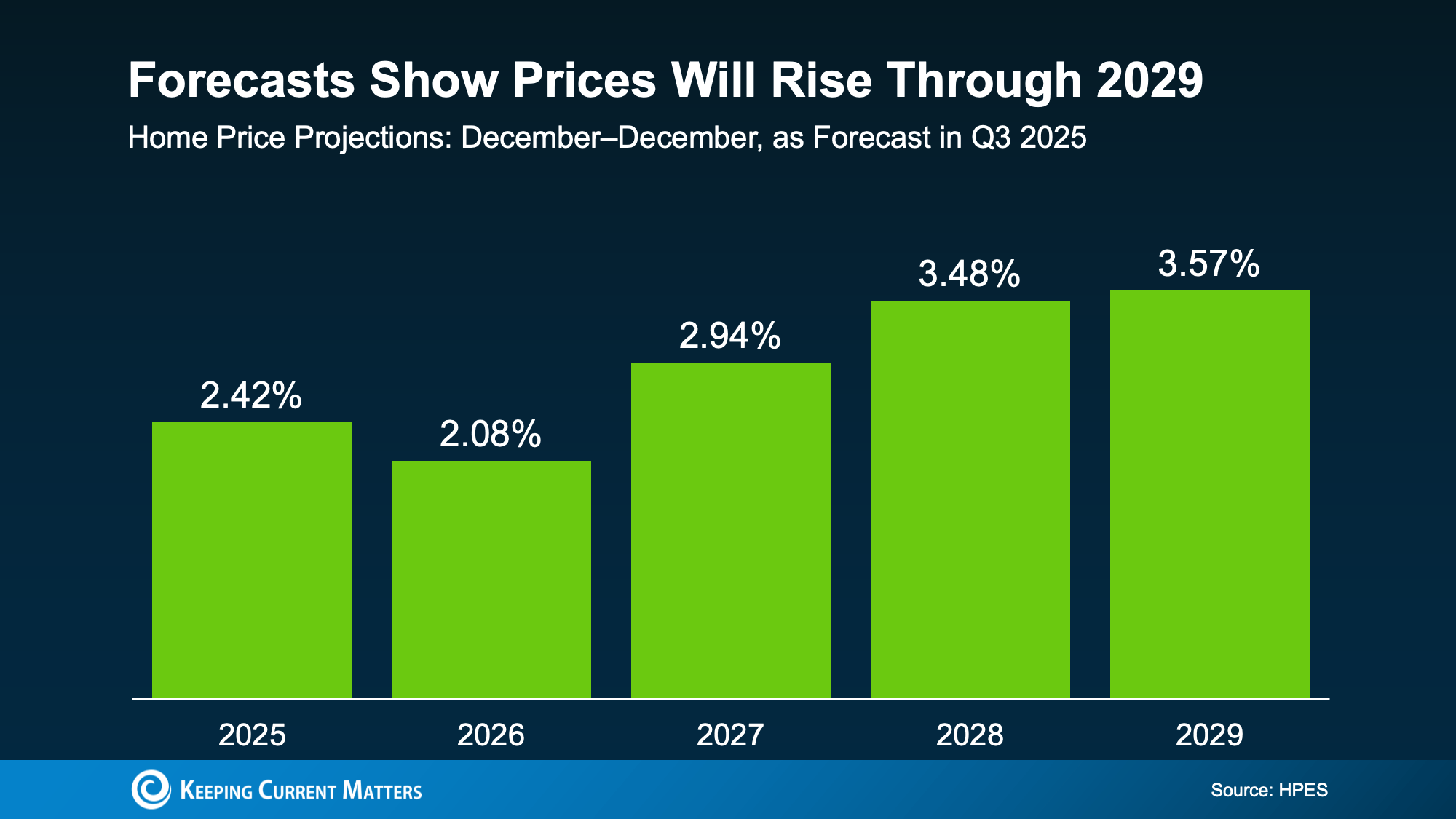 Here’s how to read this visual. Each bar in that graph shows an increase, not a loss. It’s just that the anticipated pace of that appreciation varies year-to-year.
And to further drive this home, let’s look at another view of where prices are and where they’re expected to go. In this version, the expert forecasts are broken into 3 categories: the overall average, the most optimistic projections, and the most pessimistic projections (see chart below):
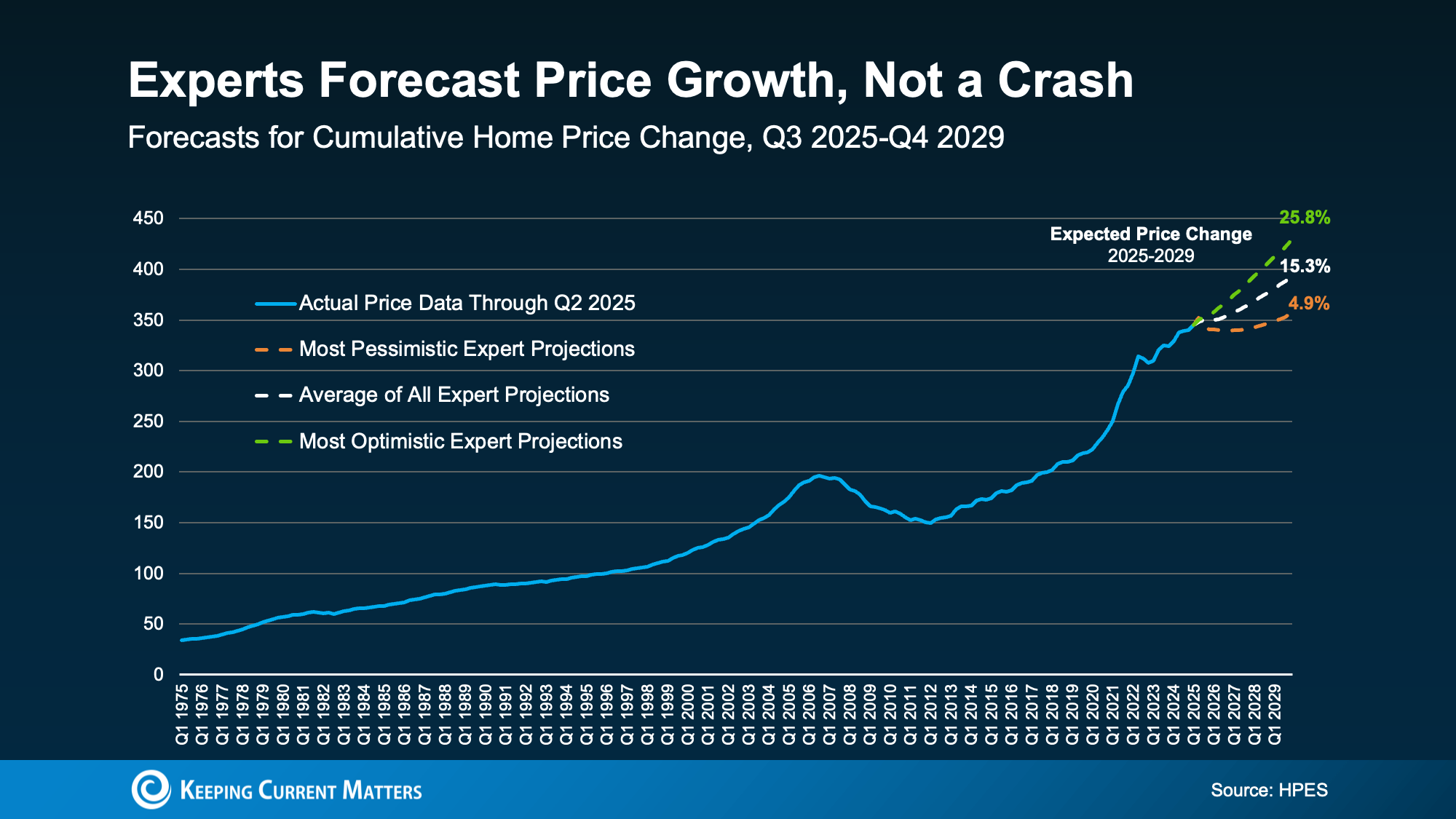 Notice how even the most pessimistic forecasters say we’ll see prices rise by almost 5% over the next few years.
- Overall, prices are expected to rise about 15% from now through the end of 2029.
- The optimists say we’ll beat that and see a roughly 26% increase.
- And even the pessimists anticipate prices will go up by 5% during that period.
What sticks out the most? None of these groups who study the market are forecasting a crash, or even a decline, over the next 5 years.
How This Compares to “Normal” for the Market
Now, focus back on the first graph. The projections call for 2-3.5% price increases in each of the next five years. For context, the average rate of appreciation for the last 25 years was closer to 4-5% annually.
So, while that’s slightly below the historical average, it’s much more sustainable and typical than where the market was in 2020, 2021, and 2022.
Back then, prices rose too much, too fast based on record-low supply and record-high demand. Some places even saw prices climb by 15-20%.
So, while it may feel like prices are stalling compared to those pandemic-era surges, what’s really happening is that the market is finally finding balance again.
Why Prices Aren’t Expected To Crash
A lot of the chatter about home prices today is based on that rapid rise and the old saying that what goes up, must come down. But historically, that’s not really true. Home prices almost always rise.
And the main reason we’re not heading for a repeat of 2008 is simple: supply and demand.
Even though affordability challenges have made it harder for some people to buy over the past few years, there still aren’t enough homes for everyone who wants one. And that ongoing shortage is keeping upward pressure on prices nationally.
That’s why experts across the board can confidently agree: we’re not headed for a price collapse, but for steady, long-term appreciation.
And just in case it’s the economy that’s got you worried, remember this. Over the past 50 years, there have been plenty of economic events that have impacted the market. And one thing that’s consistently been true throughout time is the housing market always recovers. And we’re coming through that turn right now and going into a recovery.
Bottom Line
If you’ve been waiting to buy or sell because you’re worried about a crash, it’s time to look at the data – not the headlines.
The question isn’t if home prices will rise, it’s by how much.
Connect with an agent who can show you what’s happening in your local market and what these forecasts mean for your next move.

by Omar Cruz | Sep 19, 2025 | Affordability, Economy, First-Time Buyers, For Buyers, Mortgage Rates
You’ve been waiting for what feels like forever for mortgage rates to finally budge. And last week, they did – in a big way.
On Friday, September 5th, the average 30-year fixed mortgage rate fell to the lowest level since October 2024. It was the biggest one-day decline in over a year.
What Sparked the Drop?
According to Mortgage News Daily, this was a reaction to the August jobs report, which came out weaker-than-expected for a second month in a row. That sent signals across the financial markets, and then mortgage rates came down as a result.
Basically, we’re seeing signs the economy may be slowing down, and as certainty grows in the direction the economy is going, the markets are reacting to what is likely ahead. That historically brings mortgage rates down.
Why Buyers Should Pay Attention Now
But this isn’t just about one day of headlines or one report. It’s about what the drop means for you.
This recent change saves you money when you buy a home. The chart below shows you an example of what a monthly mortgage payment (principal and interest) would be at 7% (where mortgage rates were in May) versus where rates roughly are now:
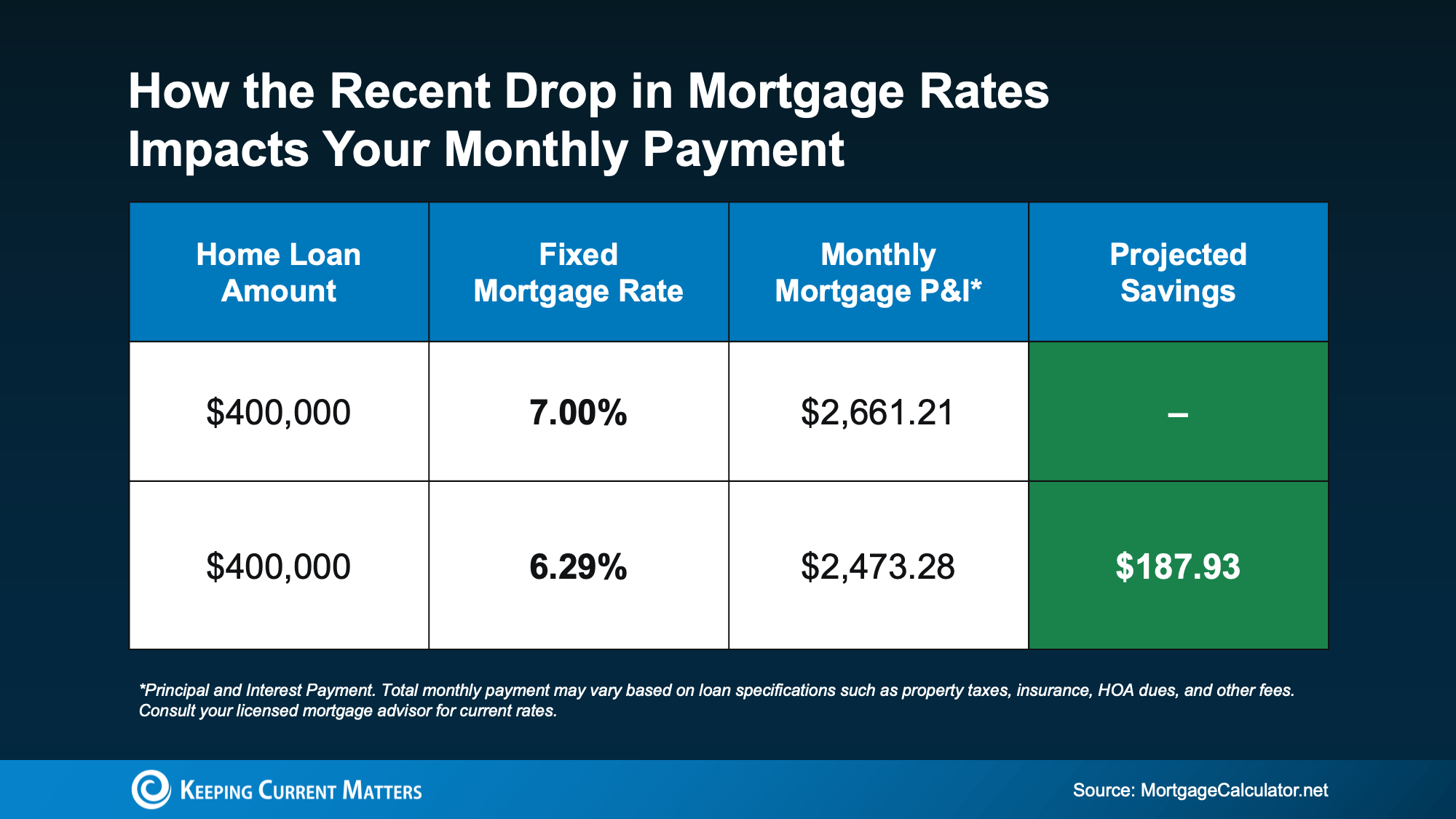 Compared to just 4 months ago, your future monthly payment would be almost $200 less per month. That’s close to $2,400 a year in savings.
How Long Will It Last?
That really depends on where the economy and inflation go from here. Rates could drop lower, or they could inch up slightly.
So, make sure you’re connected with a good agent and trusted lender. They’ll keep a close eye on inflation indicators, job market updates, and reactions to upcoming Fed policy to gauge where mortgage rates may go from here.
But for now, focus on this. While no one can say for sure where rates are headed, the fact that rates broke out of their months-long rut is a good thing. If you’ve been feeling stuck, this could make the start of a new chapter. As Diana Olick, Senior Real Estate and Climate Correspondent at CNBC, says:
“Rates are finally breaking out of the high 6% range, where they’ve been stuck for months.”
And that’s gives you more reason to hope than you’ve had in quite some time.
Bottom Line
This is the shift you’ve been waiting for.
Mortgage rates just saw their biggest decline in over a year. And if rates stay near this level, it could make a home you couldn’t afford just a few months ago feel possible again.
What would today’s rates save you on your future monthly payment? Connect with an agent or lender so you can find out.
