
by Omar Cruz | Aug 27, 2026 | OPEN HOUSE | Condo/Co-Op For Sale | Active
 OPEN HOUSE: Sun, Aug 30, 2026 02:00 PM – 04:00 PM
$1,397,000
Beautiful End Unit, Perfectly situated in Southport, this beautifully appointed 3-bedroom, 3.5-bath Colonial townhouse end unit offers an exceptional lifestyle just moments from village shops, restaurants, Southport Harbor, and the Metro-North train. Thoughtfully updated, the remodeled kitchen features quartz countertops, a sleek backsplash, and premium Bosch appliances, centered around a generous island-opening seamlessly to a private deck, ideal for entertaining. The open living and dining areas are anchored by a striking double-sided gas fireplace and hardwood floors. The walk-out lower level provides versatile additional space with a full bath and sliders to a private bluestone patio-ideal for relaxing or entertaining. Upstairs, the primary suite offers vaulted ceilings, a spacious walk-in closet, and a beautifully appointed marble bath. Recent updates include new carpet in the primary bedroom and freshly stained upper-level hallway floors. Extensive improvements include a brand-new Electrolux central vacuum system, new washer and dryer, new HVAC system, and a new hot water heater-delivering true turnkey living. Additional features include natural gas heat, central air, main-level laundry, and a 2-car attached garage, with the option to add an elevator. A rare opportunity to experience living in one of Fairfield County’s most sought-after coastal communities.

by Omar Cruz | Aug 27, 2026 | For Buyers, For Sellers, Inventory
Author- Keeping Current Matters
You may have heard the number of homes for sale isn’t growing like it was. And maybe that has you worried you won’t find a home you love when it’s time to make your move.
But that may be about to change. Here’s why your pool of options may actually start ticking back up again.
Growth Has Slowed, But It Hasn’t Stopped
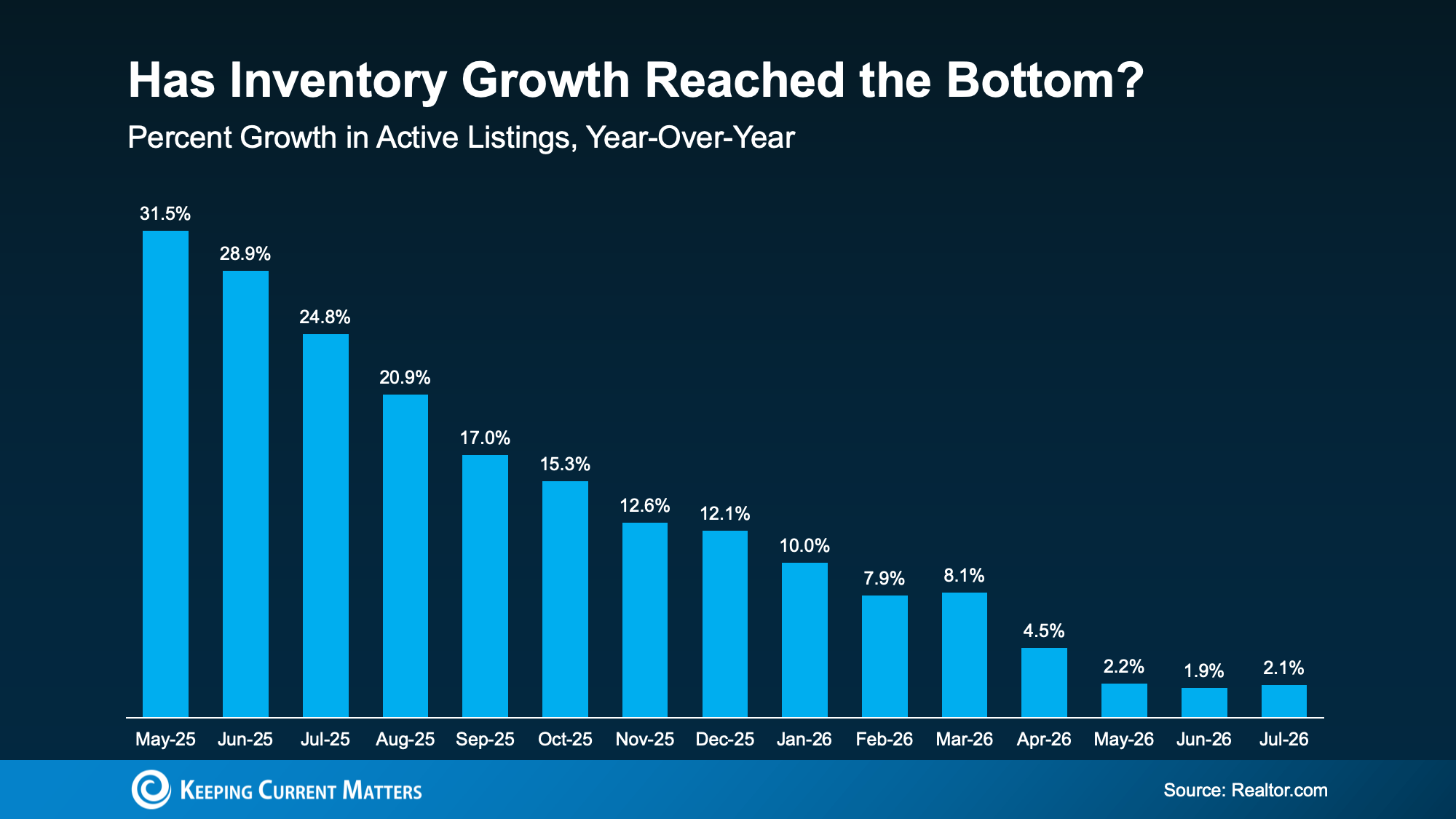
Active listings were up 2.1% year-over-year in July, according to Realtor.com. Back in January, inventory was up 10%. And in May of 2025, it was up 31.5%. So, growth has cooled off a lot over the last year.
The past 3 months, though, have all seen inventory growth land in roughly the same range, which is a sign this slowdown may be nearing its floor (see graph below):
So, what does that mean for you?
Homes are still coming onto the market. Every single one of these bars shows a period where inventory grew. So, don’t be discouraged or let this make you think you’re out of options. Plus, we’ve seen more stability in the numbers lately, which is a good sign.
The Most Homes for Sale Since 2019
Compared to the rock-bottom lows of 2021, inventory has climbed back substantially. Nationally, the number of homes for sale has been up year-over-year consistently now for 33 months. And inventory has almost doubled in just a few years. So don’t get too hung up on the pace of that increase.
This July was actually the best July for inventory since 2019 (see graph below):
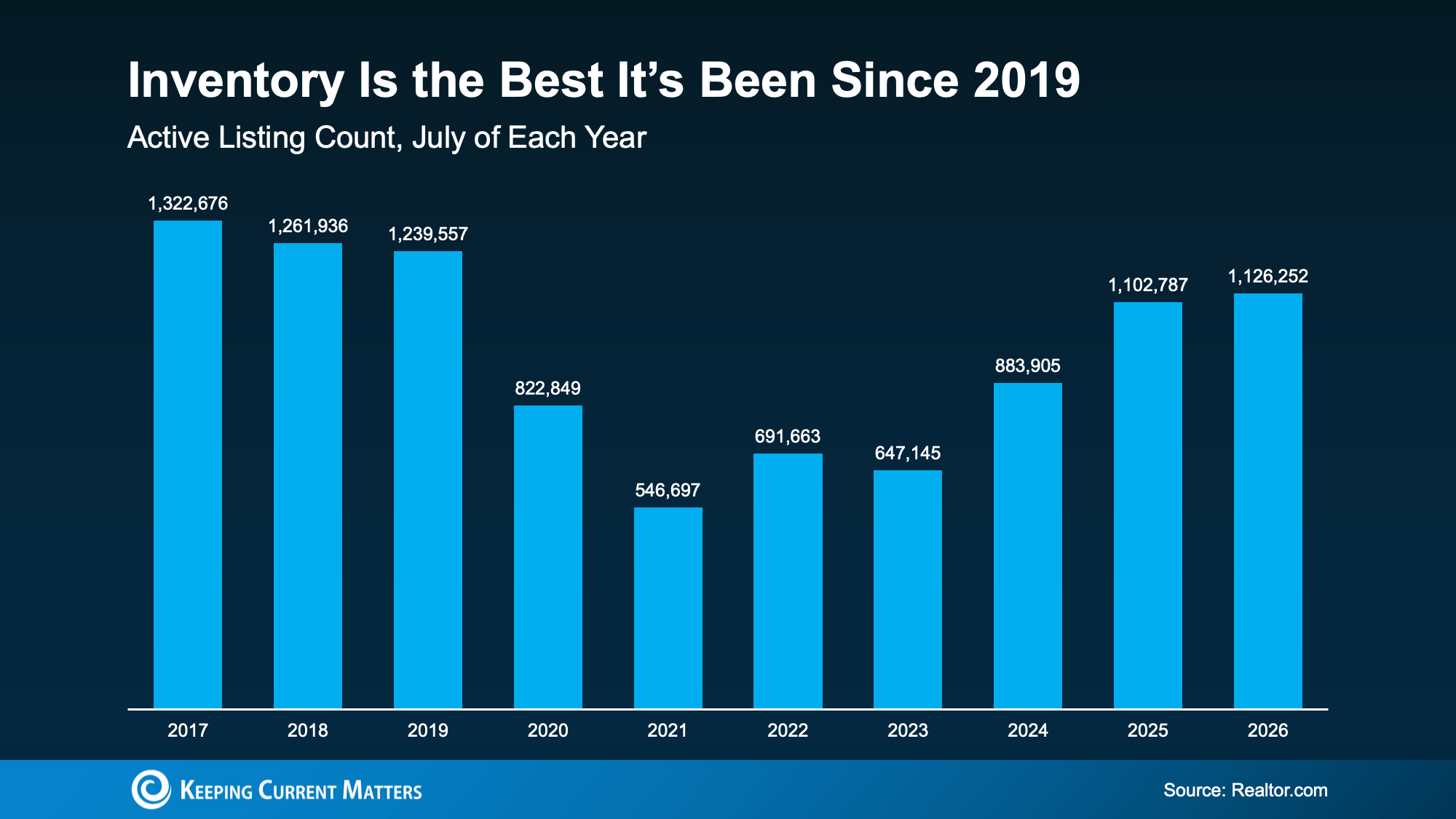
Now, the market still needs about 150k listings to get back to pre-pandemic levels, but things are quickly approaching normal. And experts think we may even be back to 2019 levels by the end of this year, even with the slowdown we’ve already seen.
And that’s thanks to one unlikely factor: mortgage rates.
Why Higher Rates May Actually Help Inventory Grow
It works like this. When mortgage rates climb, inventory tends to climb with them. As Mike Simonsen, Chief Economist at Compass, explains:
“When rates rise; inventory rises. When rates fall; inventory falls. So, from July last year to March this year, rates ease lower and all the inventory growth of the past several years evaporated. If rates move higher from here or stay elevated for [a] longer period of time, then we should expect supply to build again.”
Well, rates are expected to hold in the mid-to-upper 6% range for a while longer, and Realtor.com‘s latest forecast has inventory ending 2026 up 3.6% year-over-year.
That means 2 things:
- Inventory growth is forecast to pick up a little bit throughout the rest of the year.
- And, inventory is projected to close the year at a historically normal level, right about where it stood at the end of 2019.
For buyers, that’s a win. Even if today’s rates aren’t your favorite, they’re helping the number of homes on the market to grow. And more homes for sale means more choices, more room to negotiate, and less pressure to rush your search.
Bottom Line
The number of homes for sale is growing slowly but surely, and that means more options for your move. Want to see what’s available in your area? Reach out to a local real estate agent.

by Omar Cruz | Aug 26, 2026 | Agent Value, Expired/Withdrawn/Cancelled, For Sellers, Selling Tips
Author- Keeping Current Matters
Few things are as rattling as the thought of your home sale falling through at the last minute, right before closing. All that waiting, all that progress, out the window.
But if you’re getting ready to sell, here’s what you should know. Even in today’s market, it rarely comes to that. Buyers who are moving at today’s rates and prices are generally moving because of some big life change. That means they’re motivated, and eager to get all the way to the closing table.
According to the latest data from Redfin, only about 1 in 7 pending sales are falling through. Meaning the vast majority make it all the way to closing.
And the single biggest thing that puts a deal at risk is the one you have the most power to prevent. It just takes a little smart planning before your house hits the market.
Why Some Deals Fall Apart Before Closing
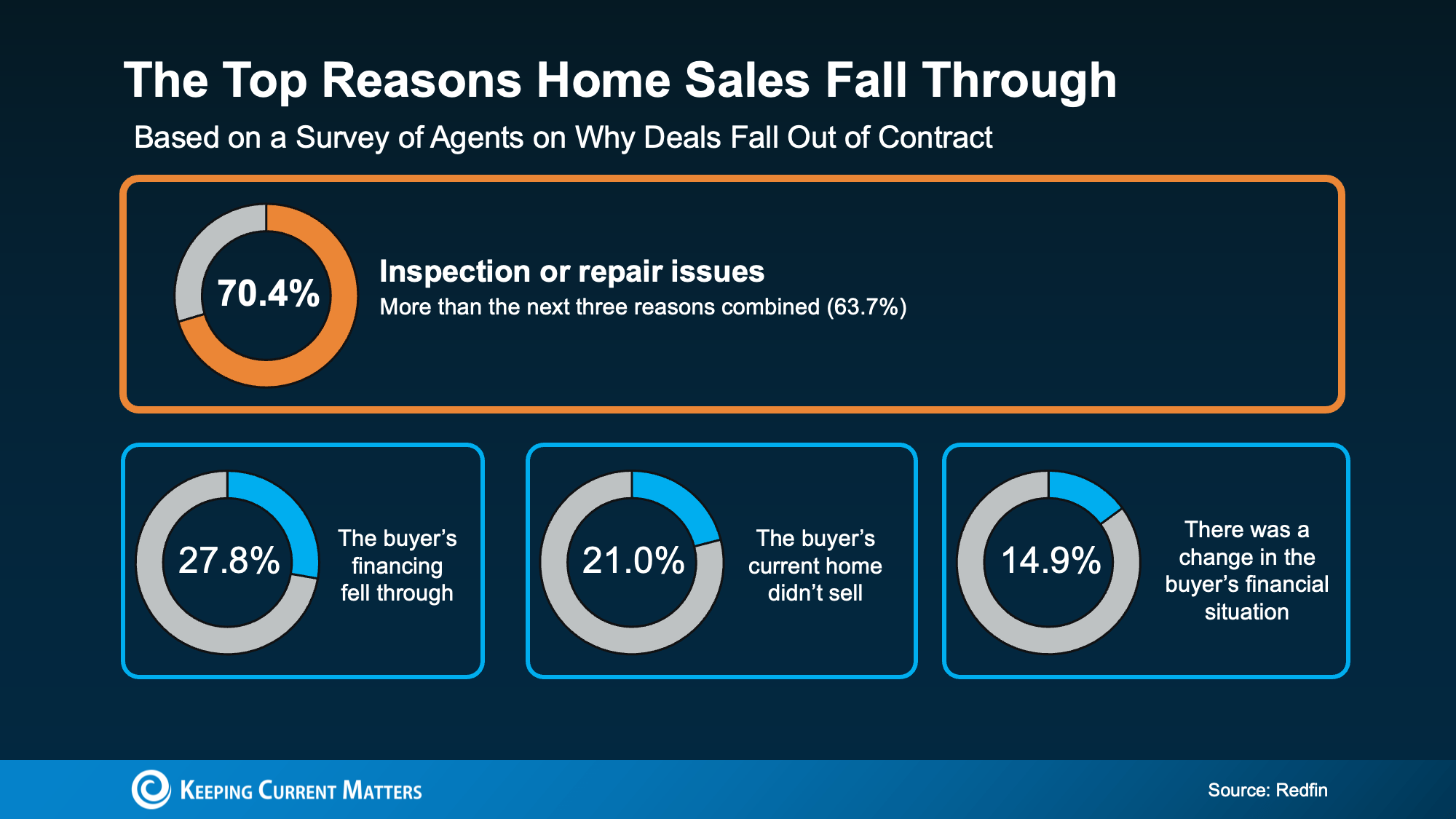
A Redfin survey sheds light on the most common things that trip up a sale (see visual below):
Here’s a bit more information on each one.
- Inspection or repair issues. This is the big one. When a buyer’s inspector finds a problem, whether with the roof, the plumbing, the foundation, or elsewhere, the buyer can push back, ask you to make repairs, request a credit so they can do it themselves, or see if you’ll lower your price. If they don’t get what they want, they may walk away from the deal altogether.
- The buyer’s financing fell through. Their mortgage loan has to be fully approved in time for closing day. If the loan doesn’t come together, the sale can’t move forward.
- The buyer’s current house didn’t sell. Some buyers need to sell their own home before they can close on yours. If that takes longer than expected, you may run into some issues with your timeline or even see them give up on their move.
- There was a change in buyer’s financial situation. A new job, a big purchase, or new debt can change what a buyer qualifies for on their mortgage loan, even after they were pre-approved.
Where Your Agent Makes the Difference
Some of those reasons are outside your control, like whether a buyer’s loan clears or whether they sell their own home in time. But according to Zillow, there are a few proactive things you can do to help make sure your sale goes as smoothly as possible:
- Save yourself the headache and get a pre-listing inspection. That’s when you get your own inspection before a buyer gets theirs. It lets you find the big issues before a buyer’s inspector does, so you can fix them or disclose them on your terms, instead of scrambling once you’re under contract. In this situation, your agent will help you decide what’s worth addressing and what to just disclose. Handle it now, and the biggest risk to your sale is behind you before a buyer ever brings it up.
- Look at more than just the offer price. Your agent will help you weigh the whole offer, including the buyer’s timeline and any contingencies attached. When a buyer’s offer depends on selling their own home first, the success of your sale rides on a second deal you can’t see. Sometimes, a slightly lower offer with fewer strings is the safer one. Your agent will help you weigh your options and make a plan that works well for you.
One of those is something you can’t do until you have offers in hand, but the other is something you can get ahead of right now. The pre-listing inspection.
That relatively small cost upfront can save you the much bigger hassle of a deal falling apart later. And while getting your own inspection before listing may not make sense in every market, your agent can tell you whether it’s worth it based on your market, your house, and what buyers are prioritize in your area.
Sometimes the smartest move is staying one step ahead.
Bottom Line
Most home sales still close, and the biggest thing that could get in the way of yours is the one thing you can actually do something about.
With the right prep, your sale has every reason to make it to the finish, and a good local agent can help you get there.

by Omar Cruz | Aug 25, 2026 | Downsize, Equity, Move-up, Selling Tips
Author- Keeping Current Matters
When’s the last time someone told you what your house is worth? Not what some online valuation tool guessed. Not what your neighbor’s house sold for. What yours is actually worth right now.
For a lot of homeowners, it’s been years. And if you’ve been thinking about moving, but higher home prices or mortgage rates have made you hesitate, here’s why it’s time to take a second look at that number.
Your House May Be Worth More Than You Think
Home values have climbed significantly over the past 5-10 years. And even though today’s market is more balanced, homeowners are building wealth every day just by owning their homes. That’s how equity works. As home values rise, and as you make your monthly payments, your equity grows. And it adds up fast.
According to Cotality, the typical homeowner with a mortgage now has $310,500 in equity. That’s not a small number. It’s six figures.
And that’s only the national average. In many states, homeowners have built even more equity than that. Take a look at the map below and see where your state stands. The darker the blue, the more equity the typical homeowner has there (see map below):
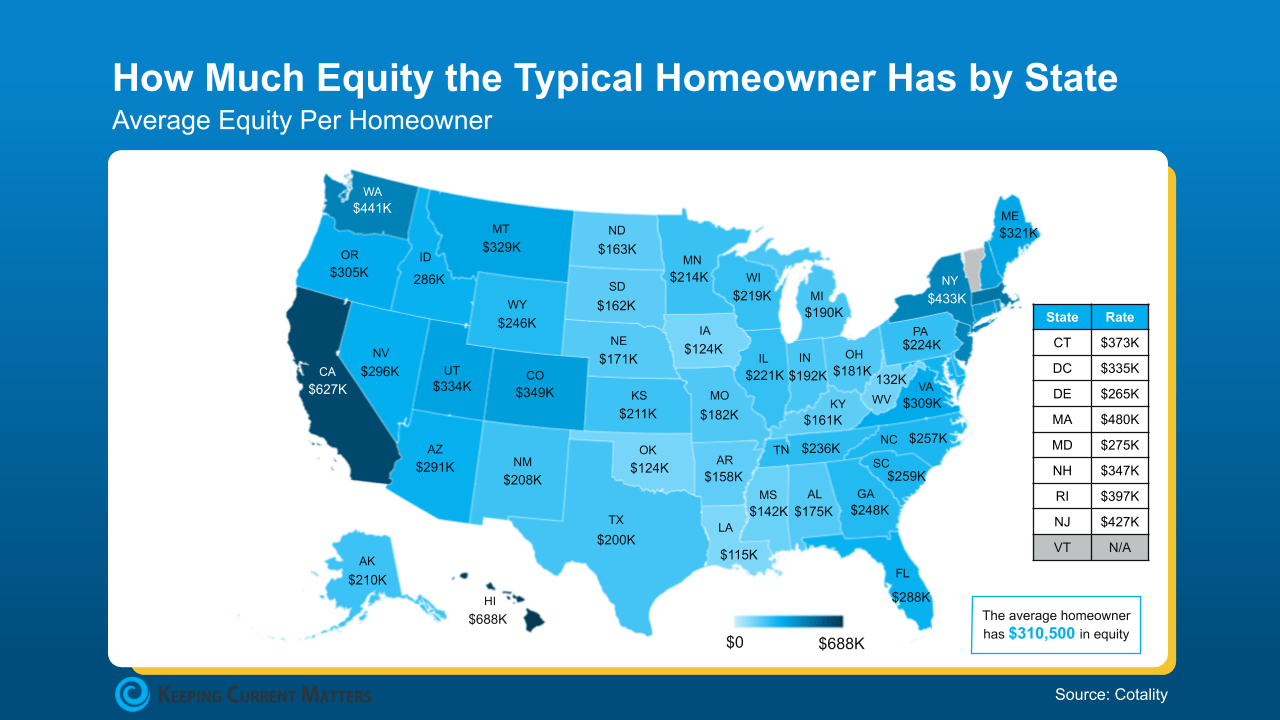 Even though every local market is different, the question you should be asking right now is the same: How much equity have you built up?
Because if you don’t know that number, you’re missing out.
This Could Be the Missing Piece in Your Move
Most people assume that because prices are higher and rates aren’t at 3% anymore, moving just isn’t realistic right now, especially if they already have an ultra-low rate. And that’s understandable, those are real factors.
But they’re not the only factors.
When you have that much equity in your house, you’re not starting from scratch. You’re not scraping together a down payment or hoping the numbers work. You’re walking into your next move with more of an advantage than you think. And that changes the math.
What Your Equity Can Do for You
Maybe you’ve outgrown your current house or you’re ready to downsize… The equity you’ve built could help bridge the gap between where you are today and where you want to be next.
Yes, your next house may cost more than your last one did. But your equity could cover a big chunk of that difference. Depending on how much you’ve built, it could help you:
- Lower your monthly payment on your next home. The bigger your down payment on your next place, the less you have to borrow. And with today’s rates, borrowing less can make a big difference in what you pay every month.
- Buy your next house with all cash. This surprises a lot of people, but some homeowners have built enough equity to buy their next home outright, in cash. According to the National Association of Realtors, more than one-quarter (26%) of repeat buyers paid all cash for their home in July.
- Transform the home you already have. Love your neighborhood but not your floor plan? You don’t have to move. Your equity could help fund renovations that make your home fit your life today while potentially adding value for tomorrow.
Your equity doesn’t erase the challenges of the current market. But it does mean you’re walking into your next move with a lot more power and flexibility than you think.
That’s why the value of your home isn’t something you should have to wonder about.
If you’re even thinking about a move or if you’re just curious what your options might be the smartest thing you can do is get a Professional Equity Assessment. It’ll give you a real, market-based evaluation of what your house is really worth right now and how much equity you’re working with.
Because once you see the number, maybe it’s not about whether you can afford to move – it’s about what kind of move makes sense for you.
Bottom Line
If it’s been a while since you’ve gotten a professional look at your home’s value, it’s time to change that.
Reach out to a local real estate agent for a free, personalized Home Equity Assessment that estimates what your house could sell for, how much equity you’ve likely built, and what that could mean for your next move.
You may have six figures of equity without even realizing it. And that’s enough to change everything about your next move.
by Omar Cruz | Aug 24, 2026 | Uncategorized
Homeownership is more than having a place to call home. It can provide financial benefits, long-term stability, and the freedom to make your space your own.
For many people, buying a home is one of the biggest financial decisions they will make. Understanding the benefits can help you decide if homeownership fits your goals and plans.
1. Build Equity Over Time
One of the biggest benefits of owning a home is the opportunity to build equity.
Equity is the difference between your home’s value and the amount you still owe on your mortgage. As you make mortgage payments and your home value changes over time, your equity may grow.
That equity can become an important part of your overall financial picture.
2. Create Long-Term Financial Value
Unlike rent, which generally pays for the right to occupy a property, mortgage payments can contribute toward ownership of an asset.
Home values can rise or fall based on market conditions, so appreciation is never guaranteed. However, owning a home allows you to benefit if the property’s value increases over time.
3. Enjoy More Control Over Your Home
Homeownership gives you greater freedom to personalize your property.
Depending on local rules, your budget, and your home’s requirements, you can update rooms, change finishes, improve outdoor spaces, or make other changes that fit your preferences.
These improvements can also make the home more comfortable and functional.
4. Plan for Greater Housing Stability
Owning a home can provide more control over where you live and how you use your property.
With a fixed-rate mortgage, the principal and interest portion of your payment generally remains consistent throughout the loan term. Property taxes, insurance, maintenance costs, and other expenses can still change.
This can make long-term budgeting easier for some homeowners.
5. Potential Tax Benefits
Homeownership may provide certain tax benefits depending on your individual situation and current tax laws.
Some homeowners may qualify for deductions related to mortgage interest or property taxes. Tax rules can vary, so it is important to consult a qualified tax professional about your circumstances.
6. Create a Foundation for Future Goals
A home can play an important role in long-term financial planning.
As equity grows, homeowners may have additional financial options in the future. These could include selling the property, moving to another home, or potentially using available equity for qualified financial needs.
The right choice depends on your financial goals and the value of your home.
7. Make Your Home Work for Your Lifestyle
Homeownership can also provide practical benefits.
You can choose how to organize and maintain your space based on your needs. Whether you want a dedicated home office, a more functional kitchen, or outdoor living space, owning a property can give you more flexibility to make those changes.
Is Homeownership Right for You?
Buying a home is not automatically the best choice for everyone. Your income, savings, credit profile, lifestyle, plans, and local housing market all matter.
Before buying, consider your upfront costs, monthly payment, maintenance expenses, property taxes, insurance, and how long you expect to stay in the home.
A thoughtful decision can help you choose a property that supports both your current needs and your long-term goals.
The Bottom Line
Homeownership can offer more than a place to live. It can provide an opportunity to build equity, create long-term financial value, personalize your space, and plan for the future.
If you are considering buying a home, understanding both the benefits and responsibilities can help you make a confident, informed decision.

by Omar Cruz | Aug 20, 2026 | Downsize, Home Prices
Author- Keeping Current Matters
That spare room on the main floor. The finished basement with a kitchenette and its own entrance. The bonus room you’ve been using for storage.
To you, it’s extra space. But to a growing pool of buyers, it’s the reason they’d pick your house. Here’s why. Multi-generational homebuying is on the rise.
Millions of Families Are Living Multi-Generationally
The number of multi-generational households is climbing. That’s when 3 or more generations live under one roof. And data shows those households grew from 3.2 million to almost 4 million between 2014 and 2024, according to Realtor.com.
And each year, more people are shopping for a larger home that fits their combined needs.
While the appetite for this type of house is rising across the board, data from USAFacts shows multi-generational living is more common in some states than others. The darker the state in the map below, the more common it is in that area (see map below):
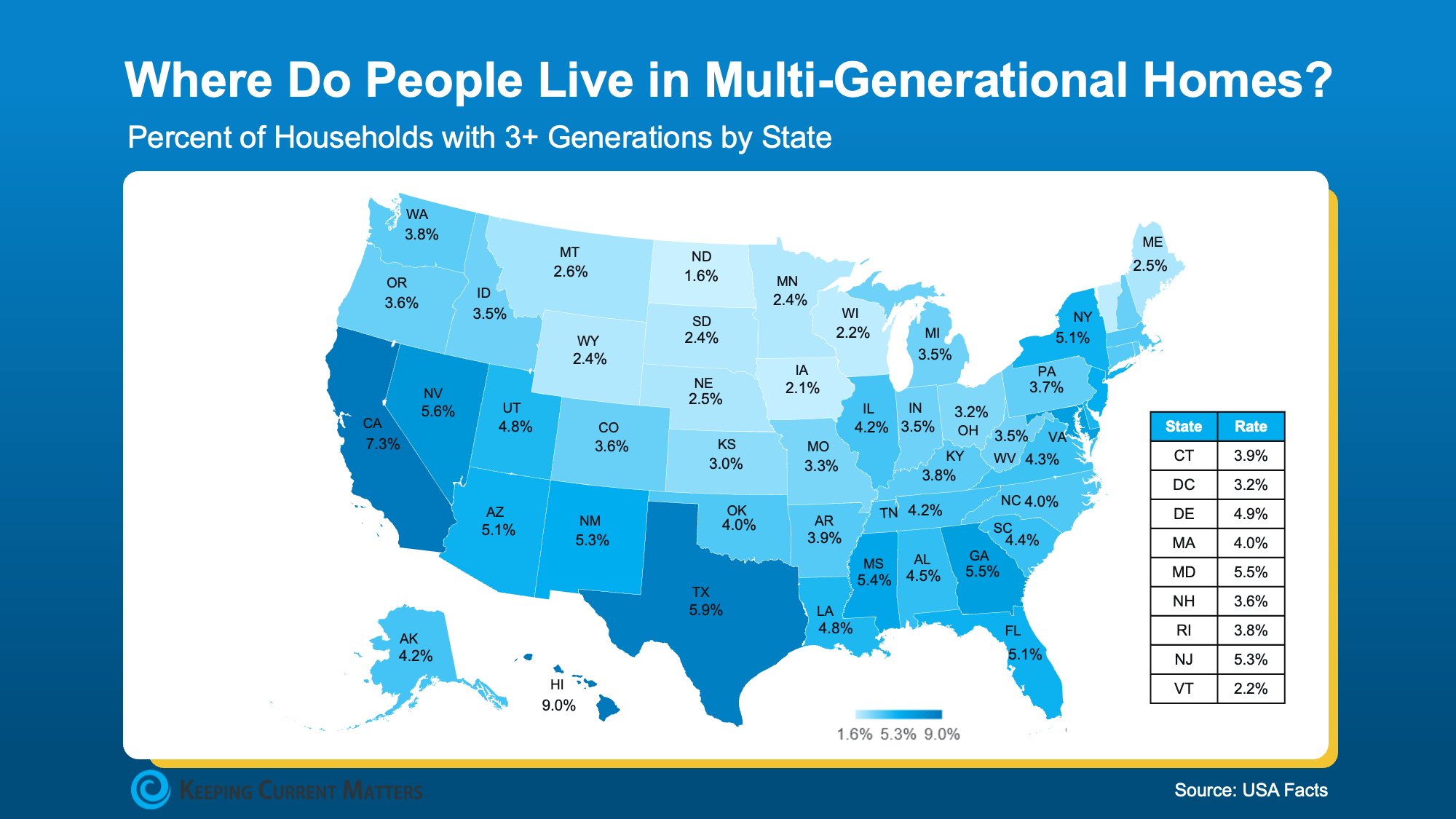
Where does your state fall? Depending on where you are, the pool of buyers looking for a house like yours could be even bigger than you’d think. But the overall bottom line is this.
There’s a real market out there for larger homes with room for multiple generations under one roof, especially since affordability is still so tight. And if you own a house like that, it’s in demand.
Multi-Generational Houses Sell at a Premium
And that extra room carries real value with the right buyer. According to Realtor.com, in 2025 the median asking price for a multi-generational house was $709,000 – roughly 65% higher than the $429,900 median for a standard house.
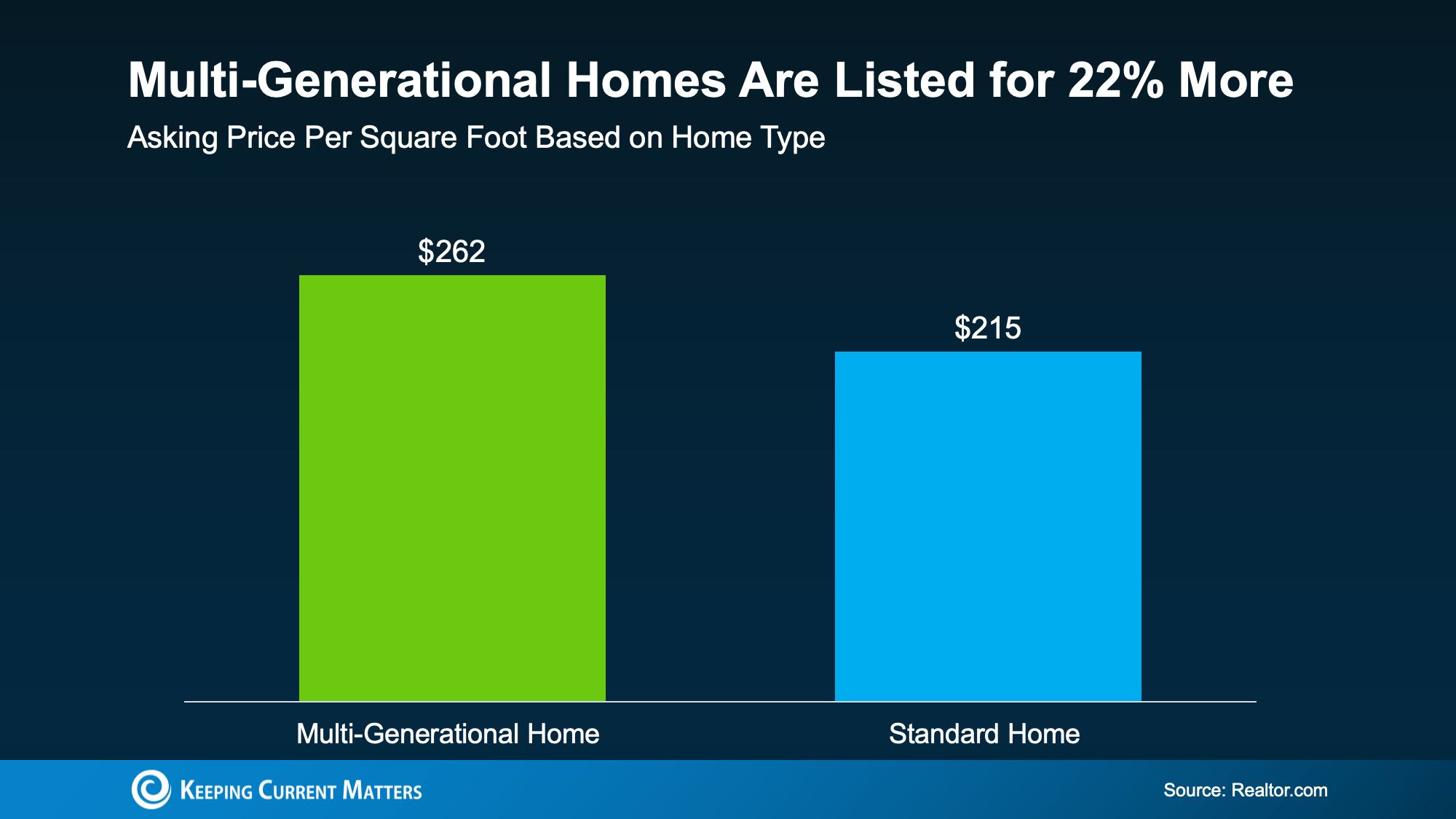
Some of that is simply size. But compare multi-generational homes to regular homes with the same amount of square footage, and they still come out on top – $262 per square foot versus $215.
That’s a 22% premium you could command for special features like in-law suites, second kitchens, and separate entries (see graph below):
When you sell, this could help you walk away with more money in your pocket, especially when your agent highlights your home’s multi-generational-friendly features in your listing.
And Buyers Aren’t Getting Sticker Shock
And even with slightly higher price tags, buyers aren’t flinching. Multi-generational houses drew 13.5% more online views than standard ones, and they still sold just as fast in about 59 days per the same Realtor.com report.
Hannah Jones, Senior Economic Research Analyst at Realtor.com, explains:
“The strong demand and steep premiums we are seeing in inventory-constrained markets point to a real mismatch between what buyers are looking for and what is actually available. For sellers in these markets, this type of home can be a significant asset.”
Basically, when buyers want something that’s very specific, the house that checks the box tends to stand out.
Bottom Line
Your multi-generational-friendly, or simply larger-than-average, house might meet criteria a lot of buyers can’t find in a standard one. That’s what gets attention. And offers. So, talk to a local real estate agent about what it could get you in your market right now.
by Omar Cruz | Aug 17, 2026 | Uncategorized
A strong real estate marketing strategy can help a business stay visible, communicate its value, and build lasting trust with potential clients. In today’s digital market, simply listing a property or posting occasionally on social media is not enough. Consistent, useful, and well-planned marketing can make it easier for people to find your business and understand what you offer.
The good news is that an effective marketing strategy does not have to be complicated. The right combination of website content, search engine optimization, social media, email communication, and professional property marketing can create a strong and consistent presence.
Start With a Clear Marketing Plan
Before creating content or launching campaigns, define what you want your marketing to accomplish. Your goals may include increasing website traffic, improving online visibility, generating inquiries, building brand awareness, promoting available properties, or staying connected with past clients and contacts.
Clear goals make it easier to decide which marketing activities are worth your time and resources. They also give you a way to evaluate whether your strategy is producing meaningful results.
Build a Strong Website Presence
Your website is often one of the first places people go to learn more about a real estate business. It should be easy to navigate, informative, and regularly updated.
Useful website content can include property listings, market updates, home buying and selling guides, mortgage and financing information, homeownership tips, local market information, and answers to frequently asked questions.
Well-written content can also support search engine optimization and help your website appear when people search for relevant real estate information.
Use SEO to Improve Online Visibility
Search engine optimization, commonly called SEO, helps search engines understand your website content. A practical real estate SEO strategy can include using relevant keywords naturally throughout your website, writing descriptive page titles, creating helpful blog posts, and keeping important information current.
For example, instead of filling a page with repeated keywords, create useful content around questions people may already be searching for. This approach can improve readability while making the content more valuable to visitors.
Create Consistent Social Media Content
Social media can help maintain visibility between property transactions and provide another way to share useful information. A balanced content strategy can include market insights, home preparation tips, property updates, financing information, maintenance advice, real estate education, and business updates.
Consistency is often more valuable than posting large amounts of content at once. A manageable posting schedule can help keep your online presence active without sacrificing quality.
Use Professional Property Marketing
When promoting a property, presentation matters. Clear property descriptions and high-quality photography can help communicate the features of a home accurately.
Property marketing should focus on objective characteristics such as property size, layout, features and finishes, outdoor space, updates and improvements, location, transportation information, and nearby public amenities and services.
This keeps the marketing informative while helping potential buyers understand the property itself.
Make Content Helpful and Easy to Read
Good marketing should answer questions rather than simply promote a business. Blog posts, social media updates, and website pages can provide practical information that helps readers understand the real estate process.
Short paragraphs, descriptive headings, clear language, and useful examples can make content easier to scan and understand. A helpful content strategy can also reduce the need for overly promotional messaging.
Keep Fair Housing in Mind
Real estate marketing should be created with Fair Housing requirements in mind. Property descriptions and promotional content should focus on the property, services, and objective features rather than suggesting that a home or area is intended for, preferred by, or better suited to particular types of people.
Avoid language that could imply a preference based on protected characteristics. Instead, describe verifiable property features, amenities, transportation, geography, and services.
A careful review process can help identify potentially problematic wording before content is published.
Track What Is Working
Marketing becomes more effective when performance is reviewed regularly. Depending on the platform, useful metrics can include website visits, search traffic, social media engagement, content reach, email opens and clicks, online inquiries, and lead sources.
The goal is not to chase every metric. Look for patterns that show which types of content attract attention and provide value.
Build a Consistent Brand
Consistency can make a real estate business easier to recognize across different platforms. Try to maintain a consistent approach to business information, visual presentation, writing style, property descriptions, social media messaging, and website content.
A consistent brand can create a more professional experience when someone moves from a social media page to the website or contacts the business directly.
Final Thoughts
A successful real estate marketing strategy is built on consistency, useful information, and clear communication. A strong website, thoughtful SEO, social media content, professional property marketing, and regular performance reviews can work together to strengthen an online presence.
The most effective strategy is not necessarily the one with the most content. It is the one that provides relevant information, follows applicable advertising guidelines, and creates a consistent experience across every channel.
by Omar Cruz | Aug 10, 2026 | Uncategorized
Mortgage trends continue to influence home buying, refinancing, and overall housing affordability. In 2026, buyers and homeowners are paying close attention to mortgage rates, loan options, monthly payments, and changing lending conditions.
Understanding these trends can help you make more informed real estate decisions.
1. Mortgage Rates Still Matter
Mortgage rates remain one of the biggest factors affecting home affordability. Even a small change in rates can impact a buyer’s monthly payment and purchasing power.
Instead of focusing only on finding the lowest rate, buyers should consider whether the overall monthly payment fits comfortably within their budget.
2. Affordability Remains a Priority
Higher borrowing costs have made affordability an important concern for many buyers.
Today’s buyers are looking beyond the home price and considering the complete cost of ownership, including the mortgage payment, property taxes, insurance, HOA fees, and maintenance.
Setting a realistic budget before shopping can help buyers avoid taking on more debt than they can comfortably manage.
3. More Loan Options Are Available
Buyers can choose from several mortgage options based on their financial situation and eligibility. These may include conventional loans, FHA loans, VA loans, USDA loans, fixed-rate mortgages, and adjustable-rate mortgages.
Comparing interest rates, closing costs, monthly payments, and loan terms can help buyers find financing that better matches their goals.
4. Refinancing May Create Opportunities
Homeowners are also watching mortgage rates for potential refinancing opportunities.
If rates become more favorable, refinancing could help some homeowners reduce their interest rate or monthly payment. However, refinancing comes with closing costs, so homeowners should compare the potential savings with the total cost of the new loan.
5. Technology Is Simplifying the Mortgage Process
Digital applications, electronic documents, and automated underwriting are making the mortgage process more efficient.
These tools can help reduce paperwork and speed up parts of the loan process. However, borrowers should still review their loan documents carefully and ask questions before signing.
6. Preparation Is More Important Than Timing
Mortgage rates can change based on economic conditions, inflation, and financial markets. Because future rates are difficult to predict, buyers may benefit more from being financially prepared than from waiting for the perfect rate.
Getting pre-approved, reviewing your credit, managing debt, and understanding your budget can put you in a stronger position when the right opportunity comes along.
The Bottom Line
Mortgage trends in 2026 are centered around rates, affordability, financing options, refinancing, and technology.
Whether you are buying a home or considering refinancing, focus on the complete financial picture rather than one number. A mortgage that fits your budget and long-term goals can be more important than trying to time the market perfectly.
Staying informed and working with qualified real estate and lending professionals can help you make confident decisions in today’s changing market.
by Omar Cruz | Aug 3, 2026 | Uncategorized
Buying your first home is an exciting milestone, but the process can also feel overwhelming. From saving for a down payment to choosing the right neighborhood and understanding your mortgage options, there are many decisions to make.
The good news is that you do not have to figure everything out at once. With the right preparation and a clear plan, buying your first home can be a smoother and more confident experience.
1. Know Your Budget Before You Start Looking
Before browsing homes online or scheduling showings, take a close look at your finances.
Consider your income, monthly expenses, savings, debts, and future financial goals. Your home budget should include more than the mortgage payment. Remember to account for property taxes, homeowners insurance, utilities, maintenance, and other homeownership costs.
Knowing what you can comfortably afford can help you avoid falling in love with a home that stretches your budget too far.
2. Save for Your Down Payment and Closing Costs
A down payment is one of the biggest expenses for many first-time buyers. However, the amount you need can vary depending on the loan program and your financial situation.
You should also plan for closing costs, which may include lender fees, title services, inspections, and other expenses related to purchasing the home.
Creating a savings plan early can make these costs easier to manage.
3. Get Pre-Approved for a Mortgage
Mortgage pre-approval can give you a clearer idea of how much you may be able to borrow. It can also show sellers that you are a serious buyer.
Before choosing a loan, compare different mortgage options and understand the interest rate, monthly payment, loan term, and total costs.
A mortgage professional can help you understand which options may fit your situation.
4. Decide What You Really Need in a Home
It is easy to focus on beautiful kitchens, large yards, or updated bathrooms when viewing homes. However, first-time buyers should also think about how the home will support their everyday life.
Make a list of your priorities. Consider the number of bedrooms, location, commute, schools, outdoor space, storage, and access to shopping and services.
Separate your must-haves from features that would simply be nice to have. This can make your home search more focused.
5. Choose the Right Location
You can change many things about a home, but you cannot move its location.
Think about the neighborhood and how it fits your lifestyle. Look at commute times, nearby amenities, parks, schools, community features, and future development.
A home that meets your needs in a location you enjoy can provide greater satisfaction over the long term.
6. Do Not Skip the Home Inspection
A home may look perfect during a showing, but an inspection can uncover issues that are not immediately visible.
Depending on the property, an inspection may identify concerns with the roof, plumbing, electrical systems, foundation, heating, cooling, or other major components.
Understanding the property’s condition can help you make a more informed decision before completing the purchase.
7. Think Beyond the Purchase Price
The purchase price is only one part of the cost of owning a home.
First-time buyers should also consider ongoing expenses such as maintenance, repairs, utilities, insurance, property taxes, and possible homeowners association fees.
Planning for these costs can help you feel more financially prepared after moving in.
8. Take Your Time and Ask Questions
Buying your first home is a major decision. You do not need to rush simply because the process feels exciting or competitive.
Ask questions whenever something is unclear. Understand the offer, financing, inspection, closing process, and any other terms before moving forward.
Having knowledgeable professionals by your side can make the process easier to understand and navigate.
Your First Home Is About More Than Four Walls
Your first home is an important financial decision, but it is also where you may build new routines, create memories, and plan for the future.
The best first home is not necessarily the biggest or most expensive one. It is a home that fits your budget, lifestyle, and long-term goals.
With careful planning, realistic expectations, and the right guidance, you can approach the home-buying process with greater confidence and take an important step toward homeownership.
by Omar Cruz | Jul 27, 2026 | Uncategorized
The real estate market continues to evolve as economic conditions, mortgage rates, and buyer demand shift throughout the year. Whether you are planning to buy your first home, sell your current property, or invest in real estate, understanding the latest market trends can help you make smarter decisions.
While every local market is different, several national trends are shaping today’s housing landscape. Staying informed allows both buyers and sellers to adapt their strategies and achieve better results.
Inventory Is Slowly Improving
One of the biggest changes in today’s housing market is the gradual increase in available homes for sale. After years of limited inventory, more homeowners are choosing to list their properties, giving buyers more options.
Although inventory remains below historical averages in many areas, the additional choices have created a healthier balance between buyers and sellers. Buyers can now compare more properties before making an offer, while sellers should focus on pricing and presentation to remain competitive.
Mortgage Rates Continue To Influence Buying Decisions
Mortgage rates remain one of the most important factors affecting affordability. Even small changes in interest rates can significantly impact monthly mortgage payments.
Many buyers are carefully watching rate movements before entering the market. Others are choosing to buy now and refinance later if rates decline. Working with an experienced lender can help buyers understand their financing options and determine what fits their budget.
Home Prices Remain Resilient
Despite concerns about the economy, home prices have remained relatively stable in many markets. Limited housing supply continues to support property values, even as demand has moderated.
Price growth may not be as rapid as it was during previous years, but well-maintained homes in desirable neighborhoods continue to attract strong interest.
For sellers, realistic pricing remains one of the most effective ways to generate multiple showings and competitive offers.
Buyers Have More Negotiating Power
As the market becomes more balanced, buyers are gaining additional opportunities during negotiations.
Depending on local conditions, buyers may successfully negotiate for:
This shift gives buyers more confidence while encouraging sellers to remain flexible during negotiations.
Sellers Still Have Opportunities
Although the market has become more balanced, sellers continue to benefit from ongoing buyer demand. Homes that are professionally prepared, accurately priced, and effectively marketed often sell within a reasonable timeframe.
Simple improvements such as fresh paint, professional photography, landscaping, and staging can make a significant difference in attracting qualified buyers.
Why Local Market Knowledge Matters
National headlines provide useful information, but local conditions ultimately determine how quickly homes sell and what buyers are willing to pay.
Factors such as neighborhood inventory, school districts, employment growth, and community development all influence local real estate activity.
Working with a knowledgeable real estate professional helps buyers and sellers understand these local dynamics and make informed decisions based on current market conditions.
Final Thoughts
The housing market is constantly changing, but opportunities still exist for both buyers and sellers. Understanding current market trends, monitoring mortgage rates, and staying informed about local conditions can help you move forward with confidence.
Whether you are buying your first home, upgrading to a larger property, or preparing to sell, informed decisions are the foundation of a successful real estate experience.
The best strategy is to stay flexible, work with experienced professionals, and focus on long-term goals rather than short-term market fluctuations.
