
by Omar Cruz | Mar 24, 2026 | Equity, For Sellers
This Blog is written by Keeping Current Matters:
That kitchen you’ve been mentally redesigning…
The bathroom that really needs a refresh…
Or the outdoor space you keep saying you’ll get to someday…
What if you already have what you need to finally make it happen? Because a growing number of homeowners are realizing just that.
Homeowners are expected to spend over $522 billion on home improvements by the end of 2026 – and they’re not draining their savings accounts to get it done. Many are using their home equity.
And if you’ve owned your home for 10+ years, there’s a chance you could use your equity to fund some home upgrades too. Let’s break down what you need to know first.
What Is Equity? And How Does It Help?
Equity is the difference between what your house is worth and what you owe on your mortgage.
And according to Cotality, the average homeowner has about $313,000 worth of equity today. That’s more than enough to finally knock some projects off your list. And more people are realizing they can use that to give their home a little TLC.
Research coming out of Meridian Link says home improvements are the top thing people are using their equity for today.
Top Motivations for Equity-Based Borrowing:
- Funding home improvements (45%)
- Using it to pay down other debts / debt consolidation (16%)
- Investing in other properties (16%)
Maybe it makes sense for you to do the same. But here’s what’s important. Just because you can use your equity doesn’t mean you have to. It also doesn’t mean every project makes sense.
What Projects Are Actually Worth It?
If you’re going to go this route, you’ll want to focus on upgrades that actually pay off. A good renovation should be something that improves the value of your home. Because, even if you’re not planning to sell soon, you want to make sure you’re setting yourself up for success when you do.
And an agent is the best resource as you weigh your options. They know what other homeowners are doing and what buyers in your area like. And that can be really helpful as you narrow down your project list. As the National Association of Realtors (NAR) puts it:
“Being able to help sellers prioritize home improvements and maximize their net on the sale is a key value real estate agents offer.”
Here’s a quick rundown of the projects with the best potential to recoup your costs according to NAR (see graph below). While it’s a good starting point, just remember it can’t match the expertise an agent can provide.
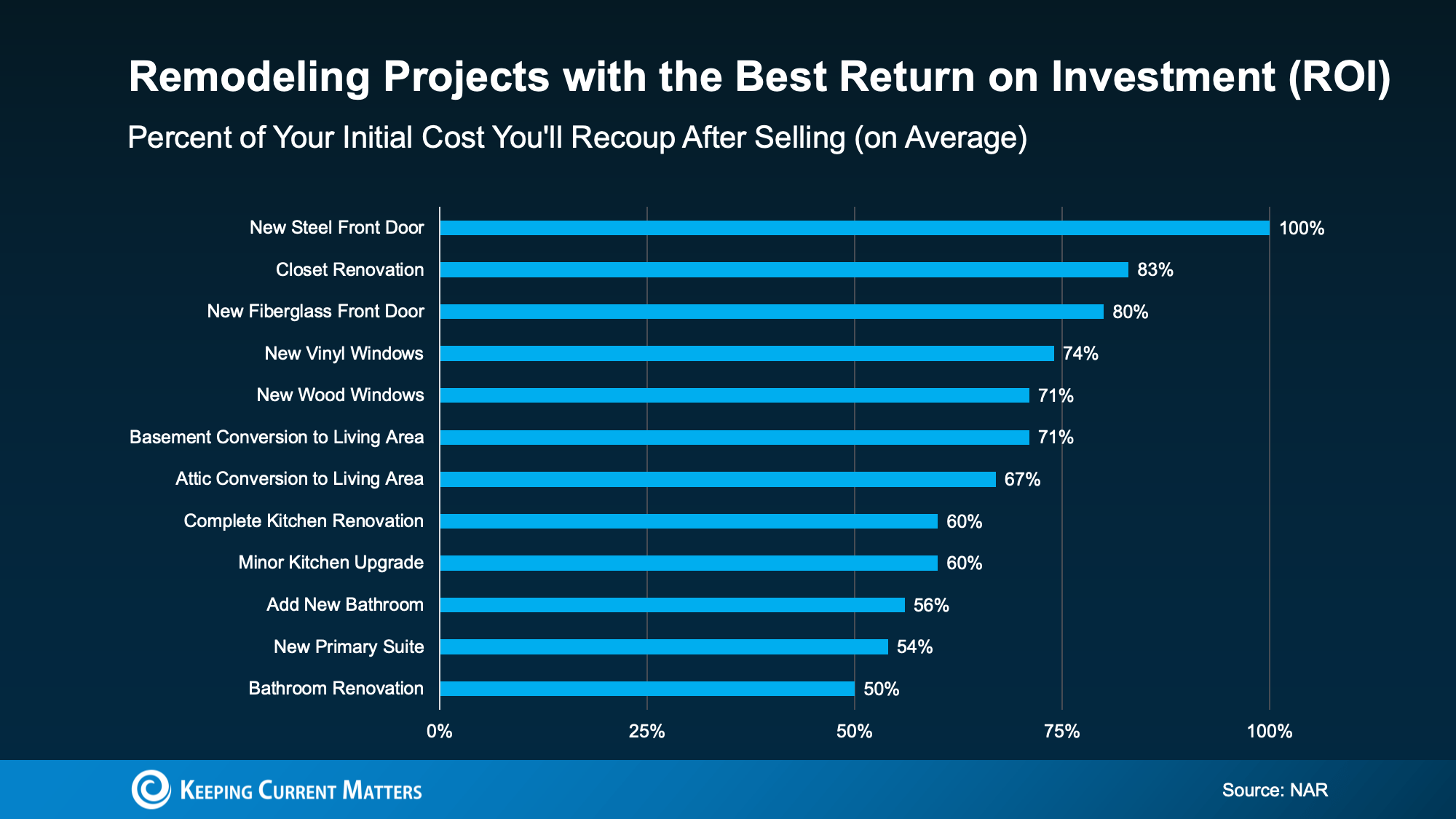 As you can see, there’s a wide range of projects on that list. Yes, some are bigger-ticket items, like kitchens or baths. But others are smaller updates with surprisingly strong ROI.
A new front door is a great project. But it’s not something to use your equity for. But revamping your kitchen? That’s where your equity can come in and lighten the load.
Where To Go from Here
Whether the project you’ve been thinking about is on this list or not, chat with an agent to make sure it’s worth the time, money, and effort before calling in any contractors.
Because the goal isn’t to do everything, it’s to invest where it counts.
And if you want to use your equity to get one of the bigger projects done, meet with a financial advisor too. Because you’ll want to make sure you’ll maintain a good loan-to-value (LTV) threshold even after using your equity. That way you have all the information you need to make your decision.
Bottom Line
Whether you’re selling next year or just giving your house some TLC, the right home improvements today can set you up for success tomorrow. And the best part? Your equity may be the key to making it happen.
What’s one upgrade you’ve been thinking about – and wondering if it’s worth it?
Have a quick conversation with an agent to find out if it’s the right decision for your home.

by Omar Cruz | Mar 3, 2026 | Downsize, Equity, For Sellers, Senior Market
This blog is written by Keeping Current Matters:
What if you didn’t have a mortgage payment on your next house? It may sound a little unrealistic. But for a number of homeowners, it’s actually doable.
Nearly 3 in 10 homes purchased today are bought in cash, according to the National Association of Realtors (NAR). That’s far more than the pre-pandemic norm (see graph below):
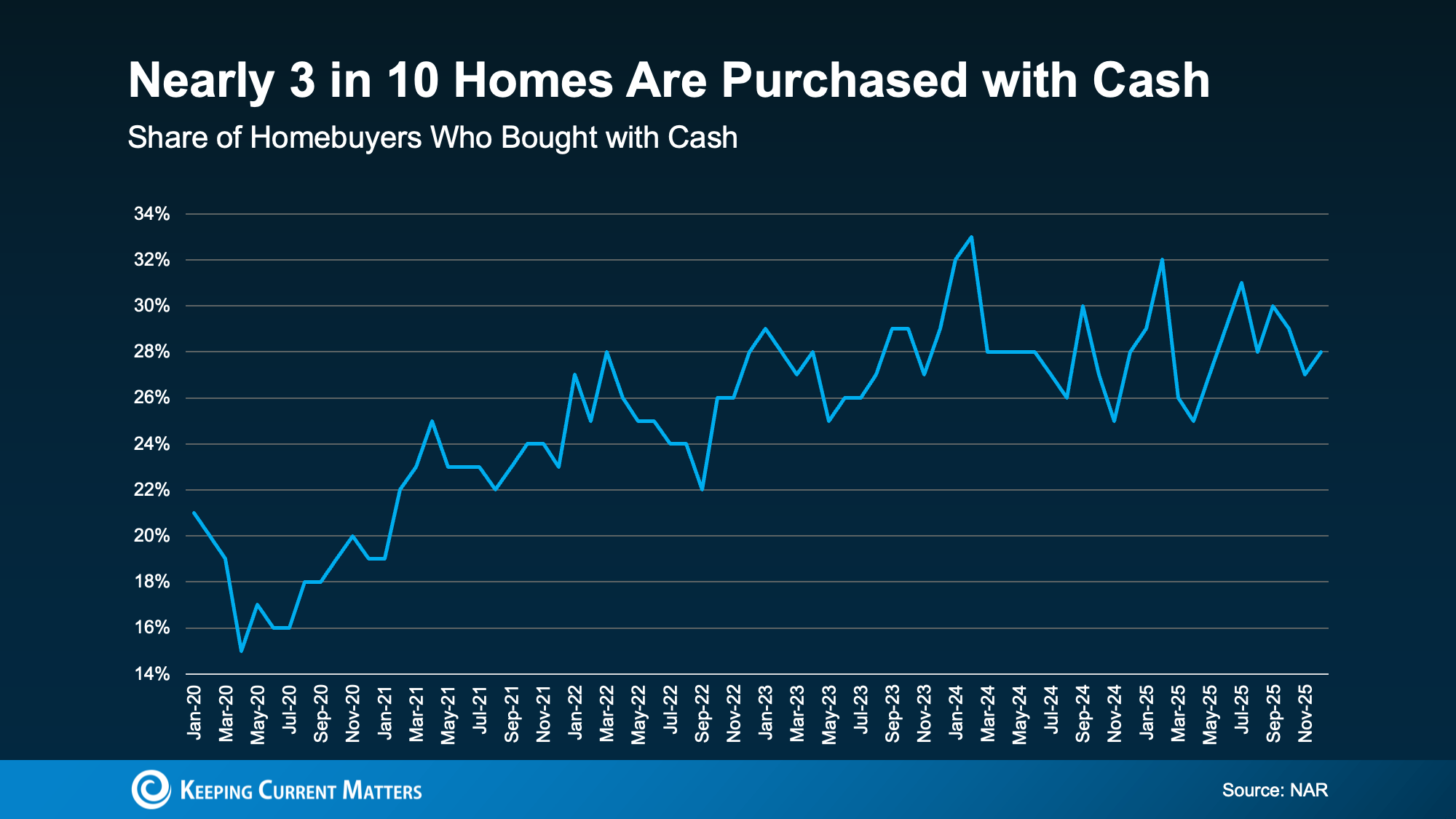 So, how are so many buyers pulling that off? The answer is simple: home equity.
Back in 2020-2021, mortgage rates and the number of homes for sale were both at all-time lows. And that combination pushed home prices up, fast.
If you owned a home during that time, it likely gained significant value – maybe even enough to buy your next house in cash. NAR explains:
“. . . rising home equity has armed many existing homeowners with the financial leverage to make cash offers, allowing them to convert years of price appreciation into immediate purchasing power.”
Here’s why you may want to go that route yourself, if you have enough equity to do it.
1. Your Offer Becomes More Attractive
Sellers value certainty. And an all-cash offer removes one of the biggest unknowns in a transaction: financing. As Rocket Mortgage explains:
“Cash offers are attractive to sellers. Sellers often prefer to work with cash buyers if they can because they don’t have to worry about a buyer’s financing falling through at the last minute.”
In many markets, an all-cash offer can give you a serious edge.
2. You Can Close Faster
And since you don’t have to worry about underwriting, lender approvals, and loan processing, the time it takes to close shrinks. Cotality puts it this way:
“Cash buyers have always enjoyed an edge over borrowers. They remove financing risk, reduce delays, and often close in days rather than weeks.”
If the owner of the house you’re buying is already under contract on their next home or they just need to move fast (like for a new job), that speed is a real draw.
3. You Won’t Have Monthly Mortgage Payments
When you buy in cash, you don’t have to finance your purchase. That means you don’t have to worry about what today’s mortgage rates are and you own the house outright from the day you close. And that’s a big deal.
No mortgage.
No monthly payment.
Full ownership.
That financial freedom opens the door for other big lifestyle benefits. Zillow explains:
“Paying in cash means you own your home outright. This eliminates the need for monthly mortgage payments, freeing up your finances for other priorities like savings, travel, or home improvements.”
4. You May Get a Better Deal
And here’s one more thing that surprises a lot of homeowners: cash buyers often pay less for the house.
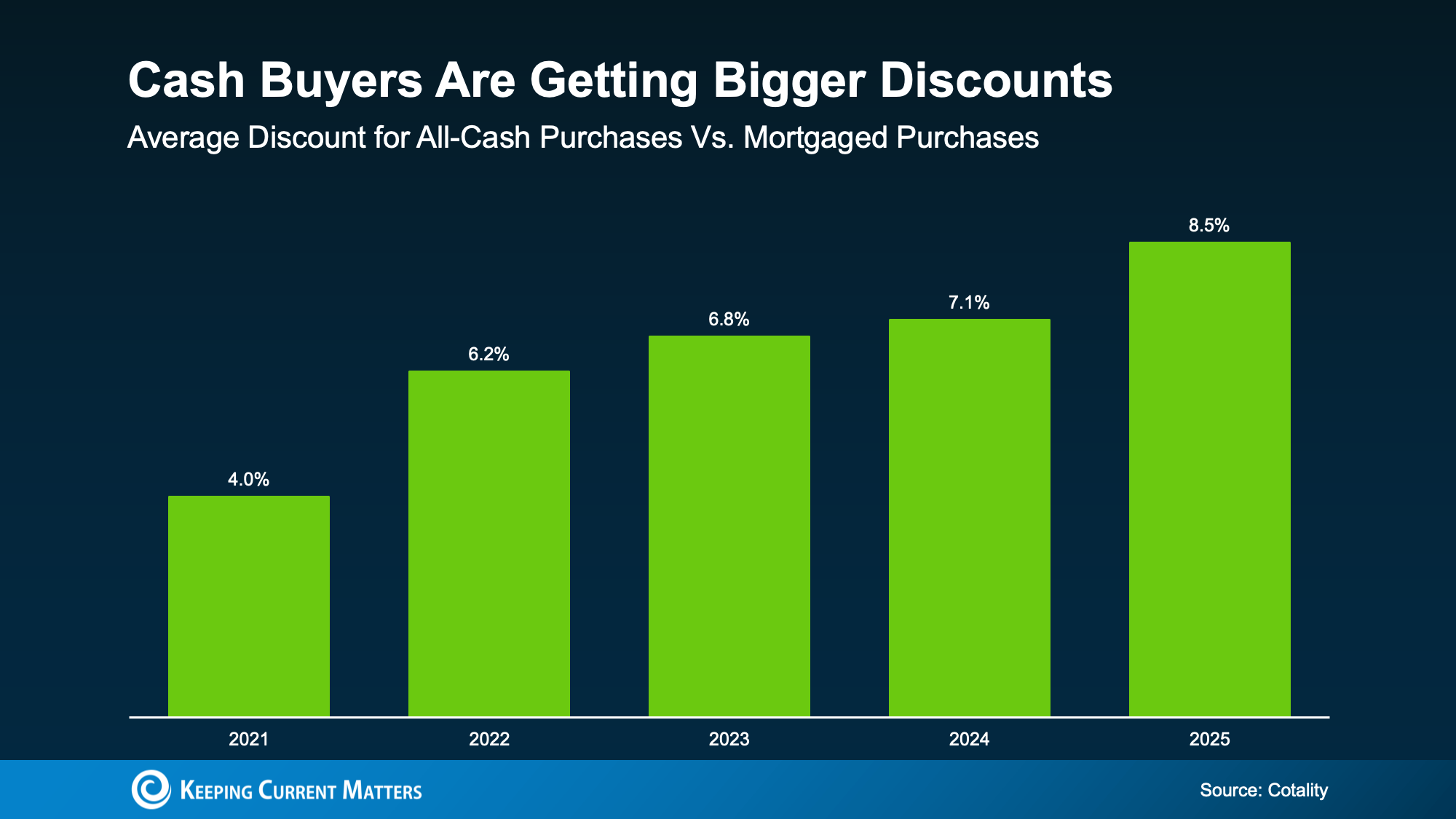
According to Cotality, all-cash buyers tend to spend roughly 9% less on the house than buyers who use a mortgage. That’s because some sellers are willing to accept lower offers to get a deal done quickly, with more certainty of closing, and fewer financing hoops to jump through. As Cotality explains:
“From a seller’s point of view, a lower but reliable offer can feel preferable to a higher one that may collapse weeks later.”
And that advantage grows with each passing year (see graph below):
 Is an All-Cash Move Realistic for You?
Not every homeowner will buy their next house outright in cash. And that’s okay.
But the bigger takeaway is this: the equity you’ve built may give you more options than you think.
Whether that means downsizing and eliminating a mortgage entirely, or just relocating with stronger negotiating power, your current house may be what makes it possible.
Bottom Line
Before assuming you’ll need another traditional mortgage, it’s worth asking one simple question: How much equity do you really have? Because the answer might change what you thought your next move could look like.
Curious what your home equity could do for you? Ask a local real estate agent to run the numbers and see what kind of buying power you’re really sitting on.

by Omar Cruz | Feb 26, 2026 | Equity, For Sellers, Senior Market
This blog is written by Keeping Current Matters.
For a lot of parents or grandparents, watching a family member struggle to buy their first home right now is hard. That’s because you saw firsthand how homeownership gave your life more stability and helped grow your net worth – and you want your loved ones to have those same opportunities.
But with all the affordability challenges in recent years, that can feel like an uphill battle – even though it’s slowly improving lately. Here’s what you may not realize. You may be in a unique position to help (thanks to the equity in your current house).
The Equity Advantage You May Not Be Thinking About
You’ve likely owned your home for years, maybe even decades. And during that time, two things happened:
- Home values rose
- Your mortgage balance shrank (or you paid it off entirely)
That combination has created substantial equity for many homeowners like you.
And while you may think of that equity as something you want to have in your pocket for retirement, it can also serve another purpose: helping the next generation clear the biggest hurdle in their way.
The #1 Thing Holding Young Buyers Back
When John Burns Research & Consulting (JBREC) asked renters what’s keeping them from buying, the top answer wasn’t mortgage rates or home prices. It was the upfront cost, particularly saving enough for their down payment (see graph below):
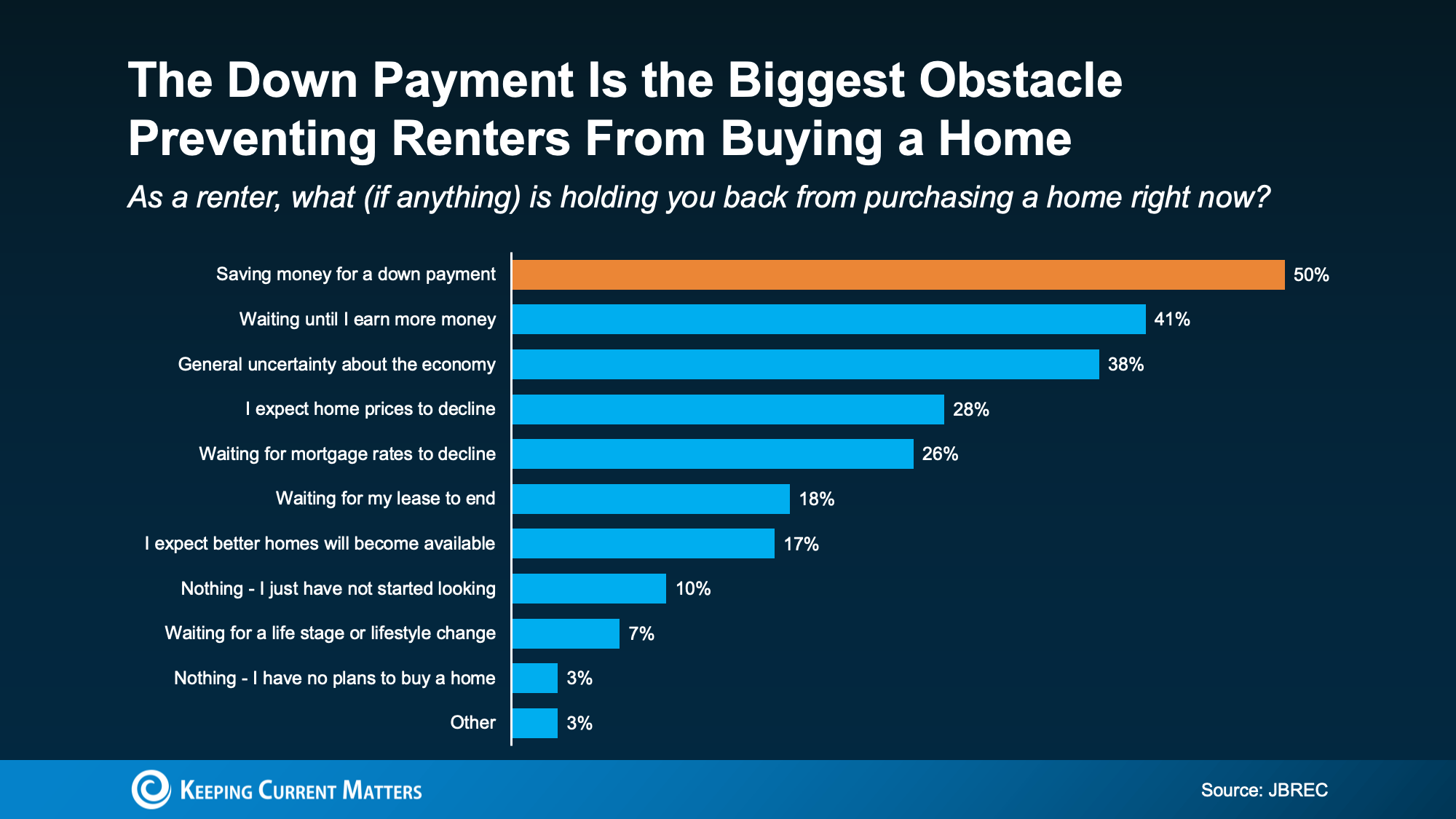 That’s where you may be able to make more of a difference than you realize. You can’t control rates or prices. But you may be able to use your equity to help with this upfront expense. And giving money to your loved one so they buy a home doesn’t mean putting your own future at risk.
Even a small portion of your equity can put them in a position to finally get the keys to their first place – and, if you’re strategic about it, you’d still have a lot leftover for when you retire.
With an estimated $68 and $84 trillion of wealth expected to transfer from older generations to younger ones over the next two decades, many families are already thinking differently about when and how that wealth will be passed down. Maybe it makes sense for your family to think about it, too.
Help from Loved Ones Is Making a Move Possible for Many First-Time Buyers
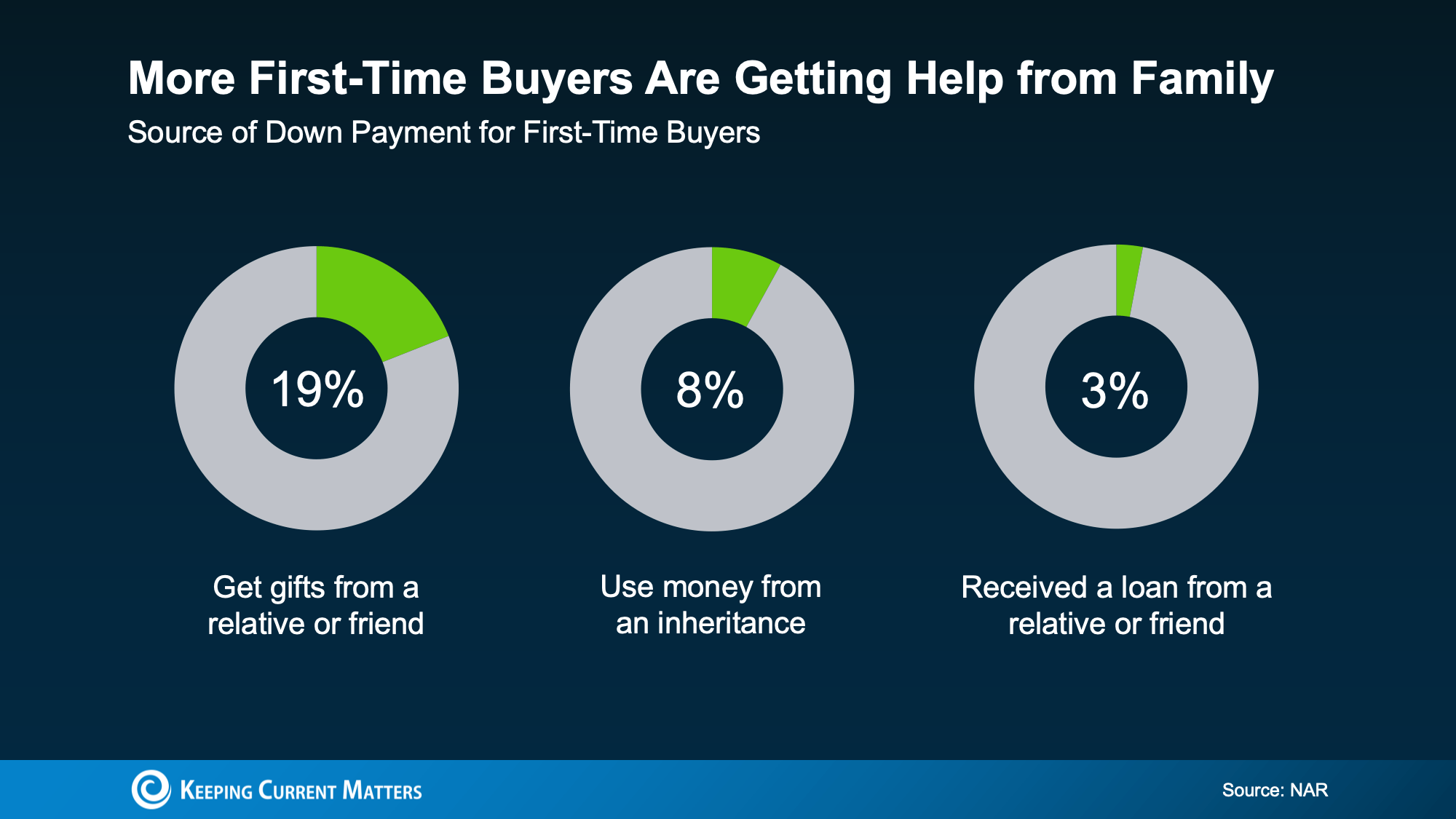
A growing share of young buyers is using gifts and loans from their loved ones to springboard into homeownership. According to the National Association of Realtors (NAR), nearly 1 in 5 first-time buyers use a cash gift from their family or loved ones for their down payment.
And other young buyers are using their inheritance or a loan from someone they know to finally break into the market (see charts below):
 This Is About Opportunity, Not Obligation
Every family’s situation is different, and your decision should be made carefully. It’s just that, if you’ve built up a lot of equity, you may have more room to help than you think.
It’s not just a financial gift. It’s giving stability, security, and a foundation that could change their lives for the better – especially at a time when they may not be able to do it on their own.
Bottom Line
If you’re curious what your home equity could make possible, for you or for your loved ones, start with a simple conversation with a local real estate agent. Because sometimes the most meaningful investment you can make is for the next generation.

by Omar Cruz | Feb 16, 2026 | Equity, For Sellers
This blog is written by “Keeping Current Matters”.
You may have heard homeowners today have a lot of equity built up. But what does that really mean? Let’s break it down.
Because your equity isn’t just a number, it’s a powerful asset that can help you take your next big step in life.
How Much Equity Does the Typical Homeowner Have?
Here’s how it works. As you pay down your loan and home prices rise through the years, the share of your home that you own free and clear grows. That’s your equity.
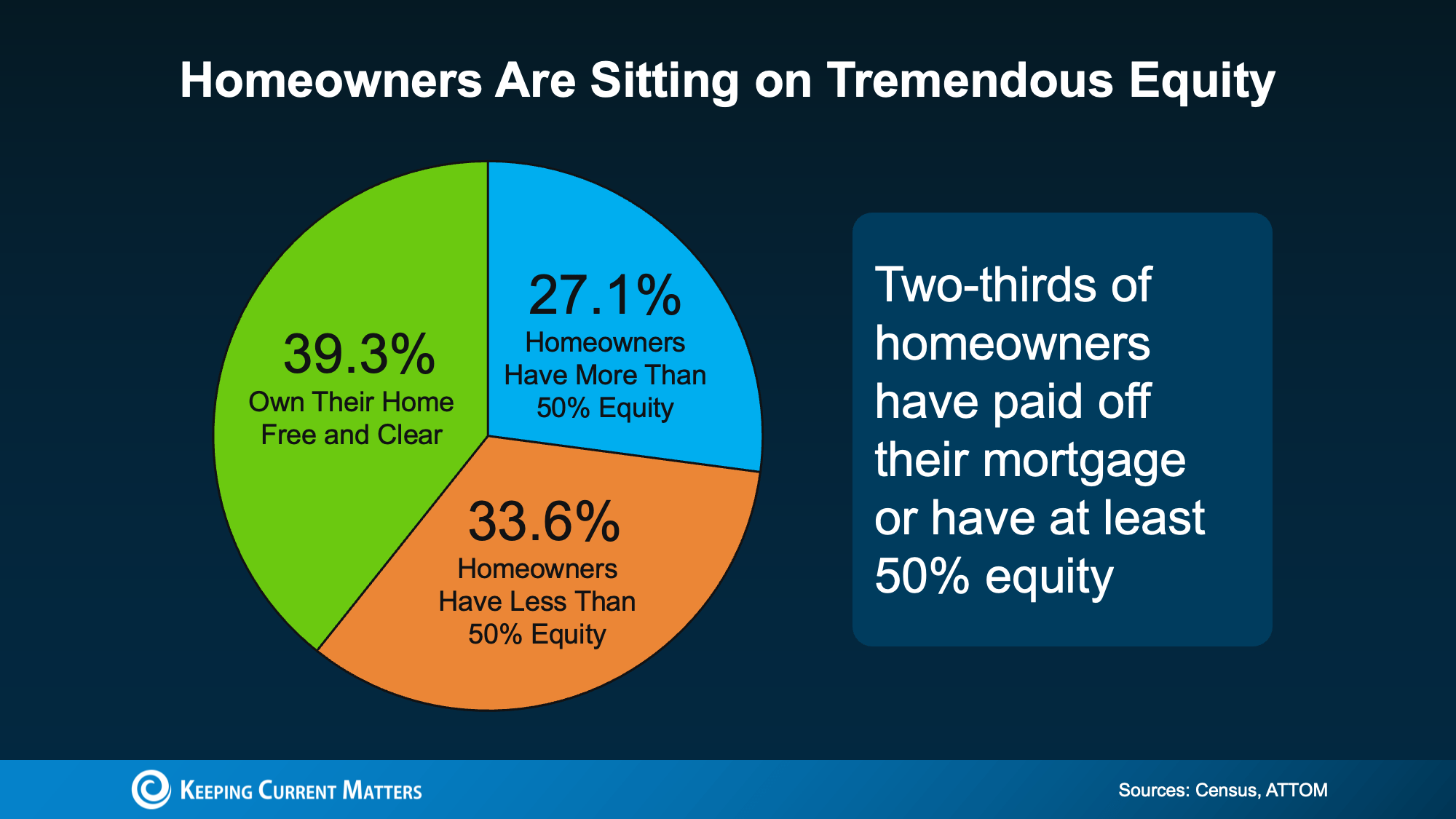
And according to data from the Census and ATTOM, two-thirds of homeowners have a substantial amount of it today.
39% own their home outright without owing anything on it. And another 27% have at least 50% equity in their homes (see chart below):
 That’s a big deal. And just in case you’re wondering how that translates into real dollars, Cotality says the typical homeowner has almost $300k in equity today. That’s six figures.
And whether you have that much, even more, or a bit less, here are a few examples of how you can use it.
Ways You Could Use Your Home Equity
1. Move Into a Home That Better Fits Your Life
Your needs change over time. Maybe your home is starting to feel cramped, or maybe you have more space than you need now that your adult children have moved out. Either way, you can use your equity as a down payment on a home that’s a better fit for what you need now, and going forward. You may even have enough equity to buy your next house in cash.
2. Upgrade Your Current Home
And if you’re not ready to move just yet, you could reinvest it in your current home instead. Renovations like a kitchen refresh or updated bathrooms could add value when it’s time to sell down the line. Just be sure to talk to a real estate agent before you tackle your project list, so you can prioritize updates that’ll give you the biggest return later on.
3. Fund a Major Life Goal
Equity can also help fund your life goals – whether it’s starting a business, saving for retirement, covering education costs, or helping out someone you love. Some homeowners are even passing down some of that wealth to help fund a loved one’s down payment on a home.
4. Avoid Foreclosure in Tough Times
If you’re struggling with payments, your equity can also be a lifeline. Many homeowners who hit financial hardships can sell their homes and walk away with money in their pockets instead of facing foreclosure. If that’s something on your mind, talk to a real estate expert about your options and how your equity can help.
Your Next Steps
If you’re interested in using your equity for one of the reasons above, here’s what to do:
- Step 1: Ask a local agent for a personalized equity assessment on your home.
- Step 2: Meet with a financial advisor if you’re interested in using that equity.
Because when it comes to tapping into this resource, there are a few things you’ll want to keep in mind – like making sure you still have a good loan-to-value ratio (LTV) even if you use some of your equity.
That means, as a general rule of thumb, you want to maintain at least 20% equity in your home as a financial cushion – something many homeowners didn’t know back in the crash of 2008.
The good news is, according to the Intercontinental Exchange, most of today’s equity meets that guideline:
“As of Q4, mortgage holders have $17.3T in home equity, including $11.2T in tappable equity ‒ accessible via cash-out refinances or home equity lines while maintaining 20% equity in the property . . . ”
Bottom Line
Your home equity is one of the biggest financial assets you have. Whether you’re thinking about moving, remodeling, or working toward a big goal, it’s worth exploring your options. Reach out to a financial advisor to learn more.
What’s one goal you have that you’d go after right now, if you had the funds for it?

by Omar Cruz | Feb 4, 2026 | Downsize, Equity, For Sellers, Senior Market
This blog is written by “Keeping Current Matters.”
For a growing number of homeowners, retirement isn’t some general idea anymore. It’s starting to feel very real.
According to Realtor.com and the Census, nearly 12,000 people will turn 65 every day for the next two years. And the latest data shows as many as 15% of those older Americans are planning to retire in 2026. And another 23% will do the same in 2027.
If you’re considering retiring soon too, here’s what you should be thinking about.
Why Downsize?
Now’s the perfect time to reflect on what you want your life to look like in retirement. Even though your finances will be going through a big change, you don’t necessarily want to feel like you’re living with less.
But odds are, what you do want is for life to feel easier.
Easier to enjoy.
Easier to manage.
Easier to maintain day-to-day.
The Top Reasons People Over 60 Move
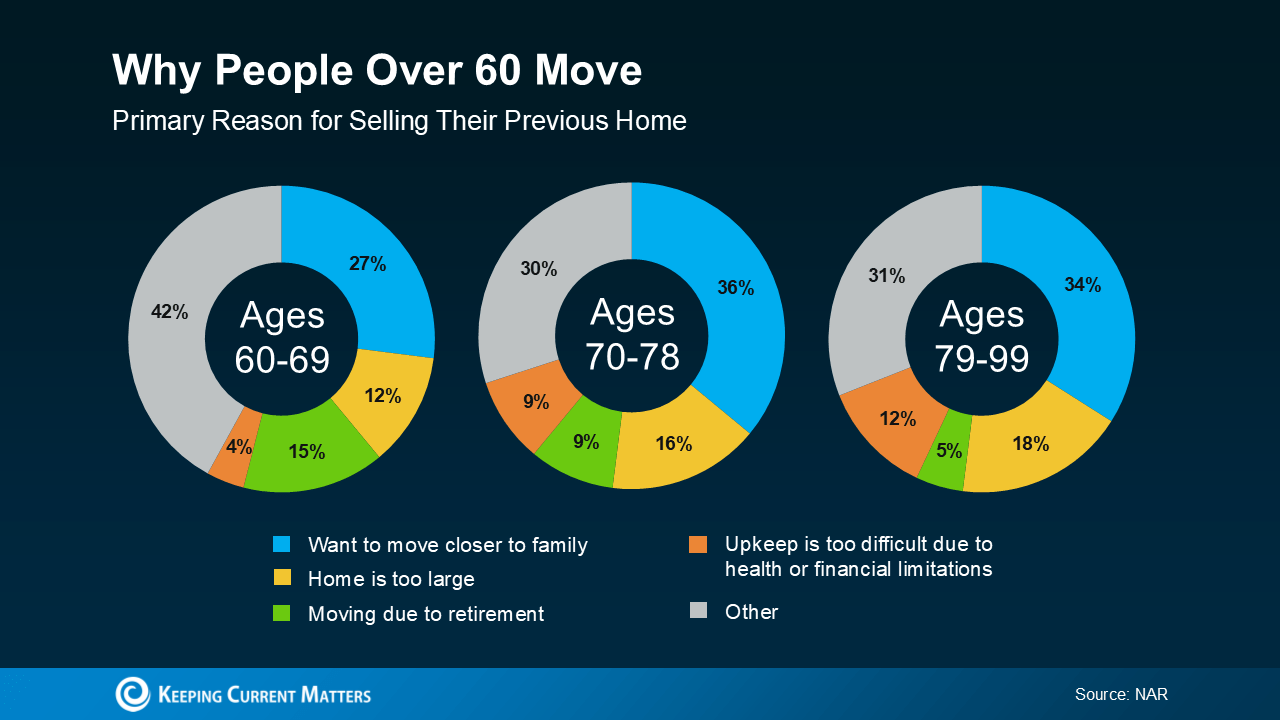
You can see these benefits show up in the data when you look at why people over 60 are moving. The National Association of Realtors (NAR) finds the top 4 reasons aren’t about timing the market or chasing top dollar. They’re about lifestyle:
- Being closer to children, grandchildren, or long-time friends, so it’s easier to spend more time with the people who matter most
- Wanting a smaller, more functional home with fewer stairs and easier upkeep
- Retiring and no longer needing to live near the office, so it’s easier to move wherever you want
- Opting for something smaller to reduce monthly expenses tied to utilities, insurance, and maintenance
No matter the reason, the theme is the same: downsizing isn’t about giving something up. It’s about gaining control and choosing simplicity. And it brings peace of mind to know your home fits the years ahead, not the years behind.
And the best part? It’s more financially feasible now than many homeowners would expect.
The #1 Thing Helping So Many Homeowners Downsize
Here’s the part that makes it possible. Thanks to how much home values have grown over the years, many longtime homeowners are realizing they’re in a stronger position than they thought to make that move.
According to Cotality, the average homeowner today has about $299,000 in home equity. And for older Americans, that number is often even higher – simply because they’ve lived in their homes longer.
When you stay in one place for years (or even decades), two things happen at the same time:
- Your home value has time to grow.
- Your mortgage balance shrinks or disappears altogether.
That combination creates more options than you’d expect, even in today’s market.
So, whether you just retired or you’re about to, it’s not too soon to start thinking about what comes next. Sure, it can be hard to leave the house you made so many years of memories in, but maybe it’s time to close one chapter to open a new one that’s just as exciting.
Bottom Line
Downsizing is about setting yourself up for what comes next – on your terms.
If retirement is on the horizon and you’ve started wondering what your current house (and your equity) could make possible, the first step isn’t selling. It’s understanding your options.
It’s time to talk to an agent. A simple, no-pressure conversation can help you see what downsizing might look like – and whether it makes sense for you.

by Omar Cruz | Dec 26, 2025 | Equity, For Sellers, Home Prices
Hearing talk about home prices falling? That may leave you worried about whether your house is losing value. But here’s what you need to know. While some local markets have seen small price dips this year, home prices are not falling nationally. So, don’t let the headlines scare you.
The vast majority of the country is actually seeing prices rise.
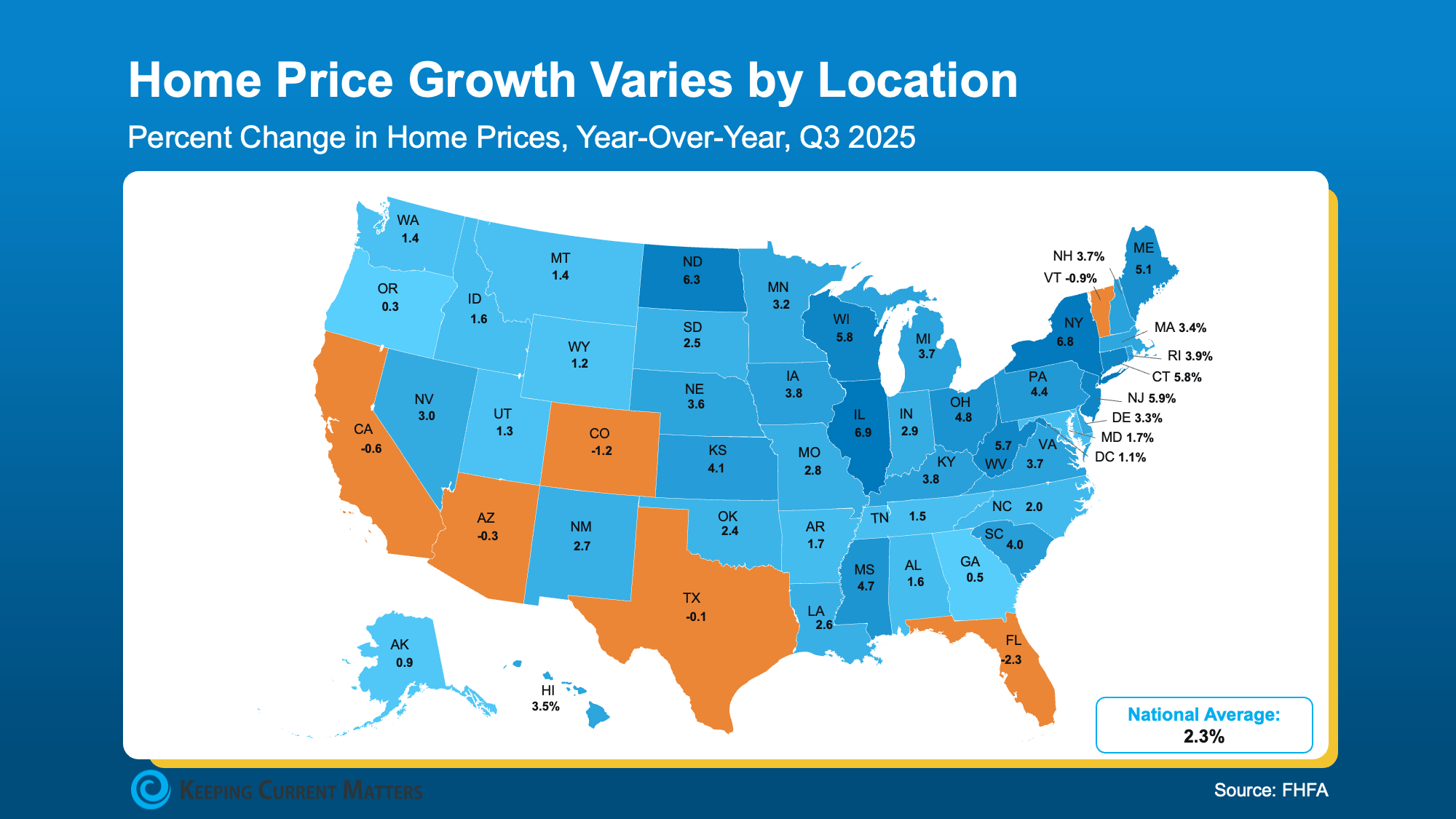
While that may feel surprising after the headlines you’ve seen, the map below uses year-over-year data from the Federal Housing Finance Agency (FHFA) to make that clear:
 Let’s break down what this really shows.
Most states are seeing prices rise (the blue in that map). Not fall. Now, the gains aren’t as big as they’ve been in recent years, but that’s okay. The story is still, prices are growing. And that positive majority is exactly why data from the National Association of Realtors (NAR) shows, nationally, home prices are up 2.1% compared to last year.
But the headlines don’t draw attention to this. They feed on the negative. But even that isn’t as bad as it sounds.
Yes, there are some states where homes have lost value over the past 12 months (the orange in the map above). That’s what all the chatter is drawing attention too. But here’s what the data really says.
The dips aren’t happening everywhere. And in the select states where prices are inching down, it’s slight. The range here is -0.1 to roughly -2%.
And those states are the ones where prices spiked too high, too fast during the pandemic housing boom. There was always going to be a come down period after that. Now, we’re in it. In those places, prices are leveling off. And that’s a sign of normalization, not collapse.
In plain terms: Home prices aren’t crashing. And this isn’t doom and gloom or the sign of broader trouble.
Most Homeowners Still Have Plenty of Value
Just to drive that point home, here’s one more thing to reassure you. Even in the few places where prices dipped slightly, most homeowners are still way ahead. Additional context from Zillow helps prove that point:
- Only about 4% of homes are worth less than what the owner originally paid.
- And 96% of homes are still worth more than their homeowners paid for them.
But don’t just take their word for it, see for yourself. When you zoom out and look at how much home prices have grown over the past five years, it’s a lot easier to understand why so many homeowners are still in such great shape.
Nationally, prices are up almost 49% in the last 5 years alone, and just about everywhere saw double-digit price growth in that time frame. That’s why there’s no orange in this map (see below):
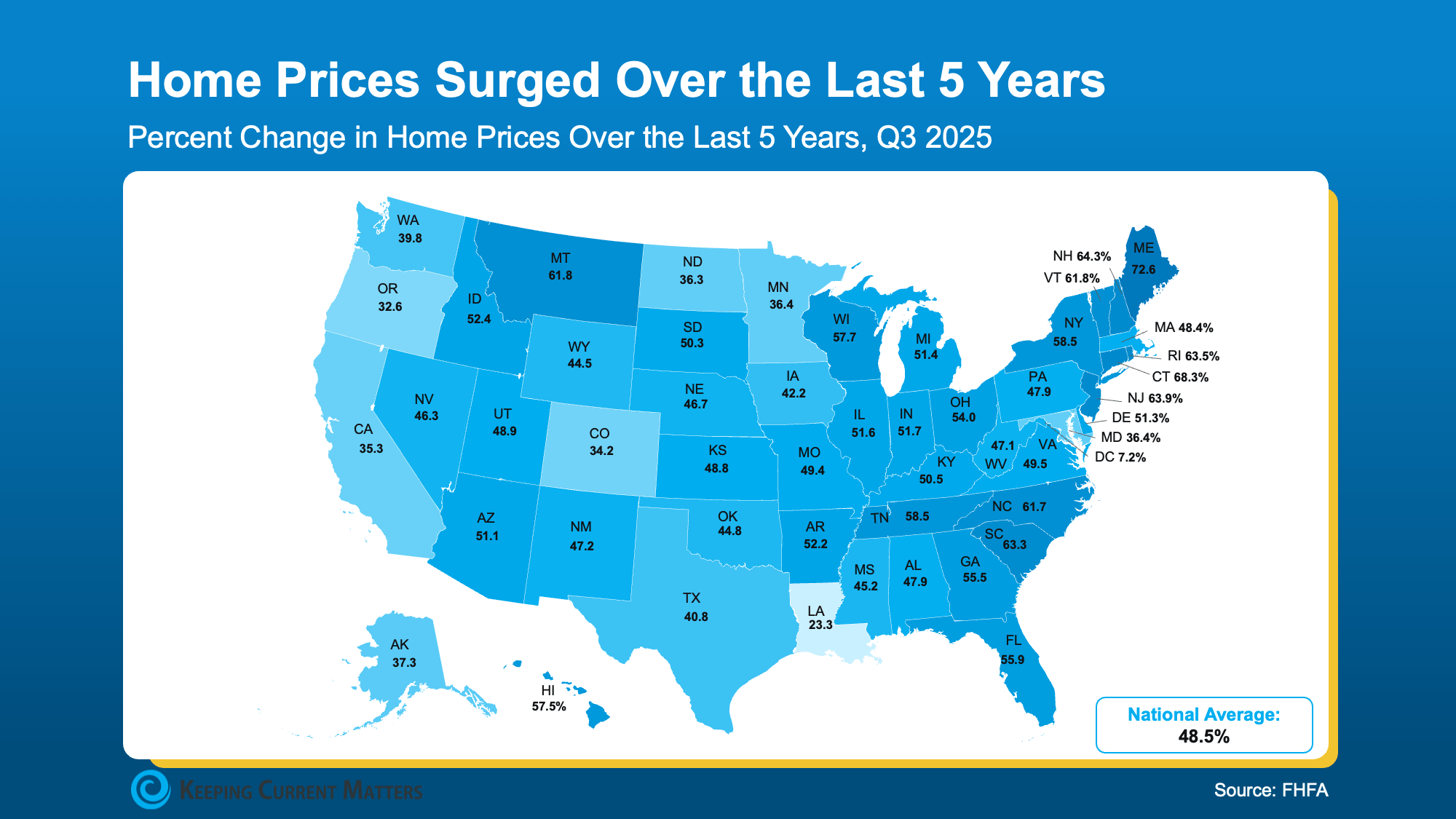 The truth is, across the board, homeowners are still sitting on substantial gains. So, the -0.1 to -2% declines some states are seeing now? That’s easily absorbed.
So, don’t let the headlines scare you. What’s happening with home prices this year varies a lot from one area to the next. But the takeaway is clear: a small dip in some areas doesn’t mean your home’s value is collapsing.
It means select local markets are correcting – and most of the time these are the ones that saw prices rise the most during the pandemic. You’re probably still in great shape.
Bottom Line
If you’re hearing talk about price drops or crashes, a closer look at the data can help put things in perspective. That’s only happening in some markets. Most of the nation is still seeing prices rise.
And for the vast majority of homeowners, the long-term gains far outweigh any recent softening.
If you want help understanding what’s happening in your local market, connect with a local real estate agent.
