
by Omar Cruz | Apr 30, 2026 | Agent Value, Downsize, For Sellers, Selling Tips, Senior Market
At some point, as you start thinking about the years ahead, this question tends to come up:
“Could I stay here long-term… or would it make more sense to move?”
It’s not always urgent. It often shows up in small moments, like going up and down the stairs, keeping up with the maintenance, or just thinking about what the next chapter of your life might look like in this home.
And for most people, the answer is simple. They want to stay.
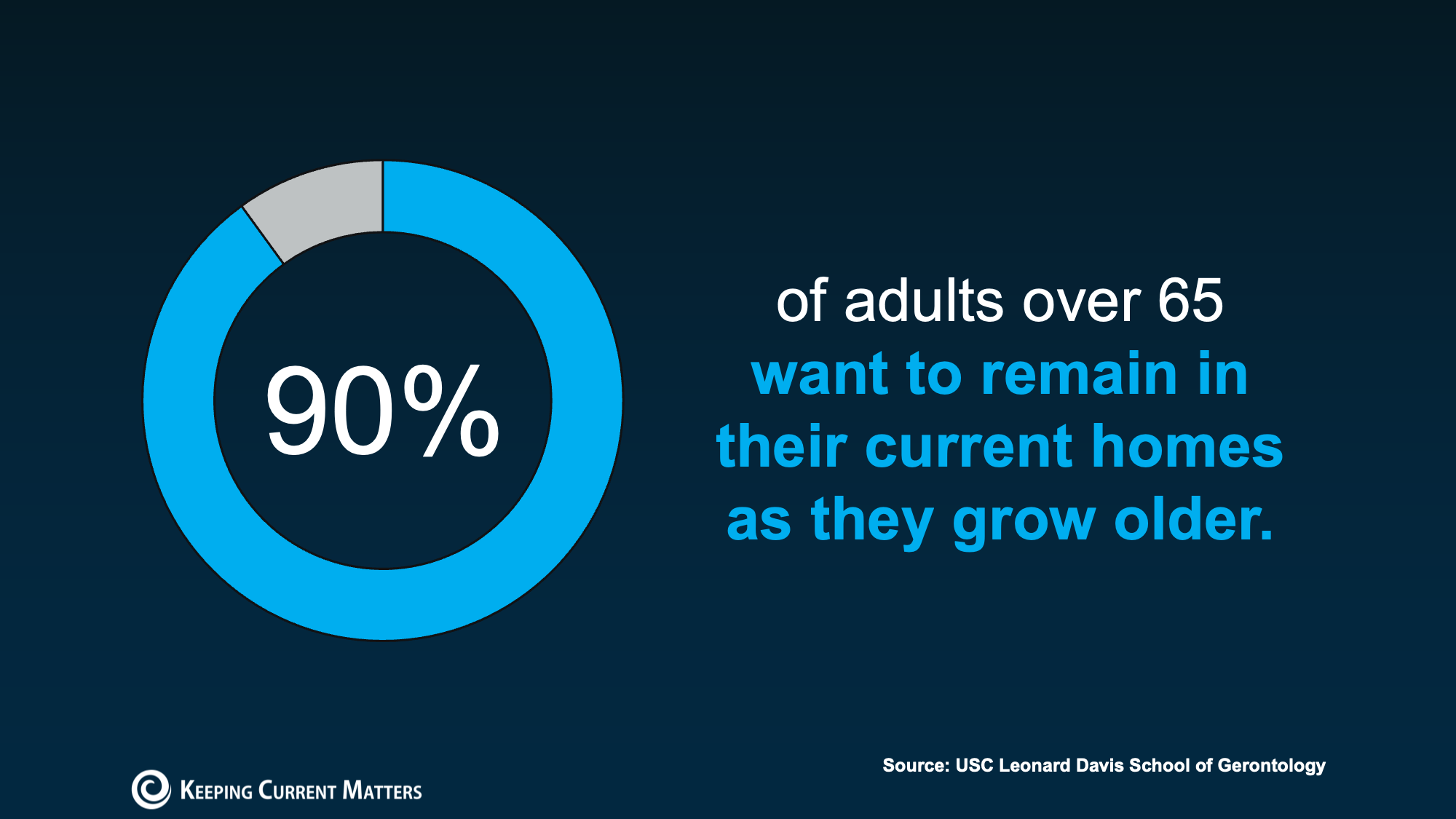
The USC Leonard Davis School of Gerontology found that about 90% of adults over 65 prefer to stay in their homes as they get older (see below):
 But even if staying feels like the right answer, it’s still worth thinking ahead about what that might actually look like. That’s where the right agent can really help.
What You Need To Plan for If You’re Staying in Your Home
Aging in place is definitely possible. But it’s better if you have a plan. And here’s why. The home that once worked perfectly may need to change with you over the years. And it’s easier if you can anticipate those expenses.
- Sometimes that means small updates, like adding grab bars in the shower.
- Other times, you’ll have to make bigger decisions, like reworking layouts or moving key spaces to the first floor.
Some of those changes are going to be simple. Others can be a meaningful investment. And that’s why thinking about it early matters. Not because you need to decide anything right now, but because it gives you time.
- Time to understand what your home may need.
- Time to explore your options.
- Time to find the right contractors.
- Time to space out the expense of the upgrades.
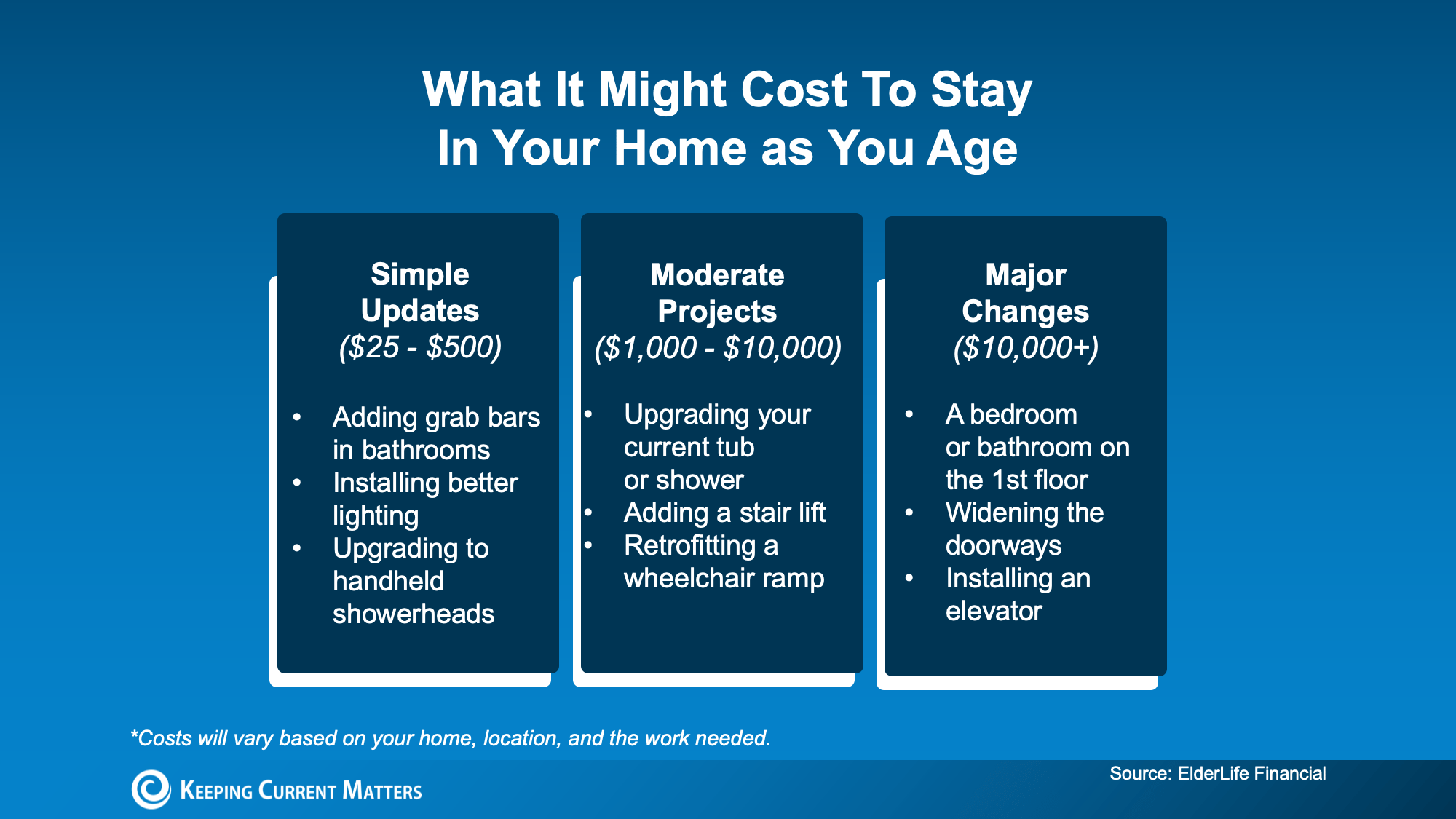
According to ElderLife Financial, here’s a rough baseline of what it could cost depending on what needs to be done (see below):
 And don’t worry. If your heart is really set on staying, but the costs feel like a concern, it helps to know you have options. Depending on your situation, there may be financial assistance programs available, along with tools like home warranties to help manage unexpected costs.
Just remember, if you’re thinking about making updates, it’s always worth having a quick conversation before you start. A real estate agent can help you understand which changes tend to make sense for your situation and how they may impact your home’s value based on your local market.
When Moving Might Make More Sense
But staying isn’t always the best fit for every situation. According to Pegasus Senior Living:
“While most seniors hope to age in place, practical considerations sometimes make selling a home the wiser choice.”
Sometimes, it comes down to a simple shift: when the home that once made life easier starts to make it harder.
That might look like:
- Maintenance or yardwork that’s starting to feel overwhelming
- Stairs or layouts that are getting harder to manage day-to-day
- Or needing more support or care or being too far from loved ones
And sometimes, it’s not about necessity at all. It’s about lifestyle. Some homeowners just don’t want to live through major renovations. Others are ready to simplify, downsize, or move somewhere that better fits this next chapter, whether that’s a smaller home, a 55+ community, or a place closer to family.
For them, moving simply means making daily life easier.
Bottom Line
There’s no one-size-fits-all answer here.
Some people stay and make updates. Others move to simplify things. Either can be the right choice. The goal isn’t to pick one today. It’s to understand your options early, so when the time comes, you feel confident instead of rushed.
And if you ever want a sounding board to think through what the future could look like for you, a local real estate agent is there to help.

by Omar Cruz | Apr 21, 2026 | Affordability, Buying Tips, For Buyers, Senior Market
Author is Keeping Current Matters
For a lot of people, the math on buying a home just doesn’t really work right now. Maybe that’s how it feels for you, too. You look at the cost of buying. Then you look at the cost of childcare. And it starts to feel like you have to choose one or the other.
But some families are finding a way to make both work by doing something a little different: teaming up to purchase a multi-generational home.
One Reason This Is Becoming More Common
It’s no secret that affordability has been a challenge in recent years. But for families with young kids, there’s an added layer that can make it feel even harder: childcare.
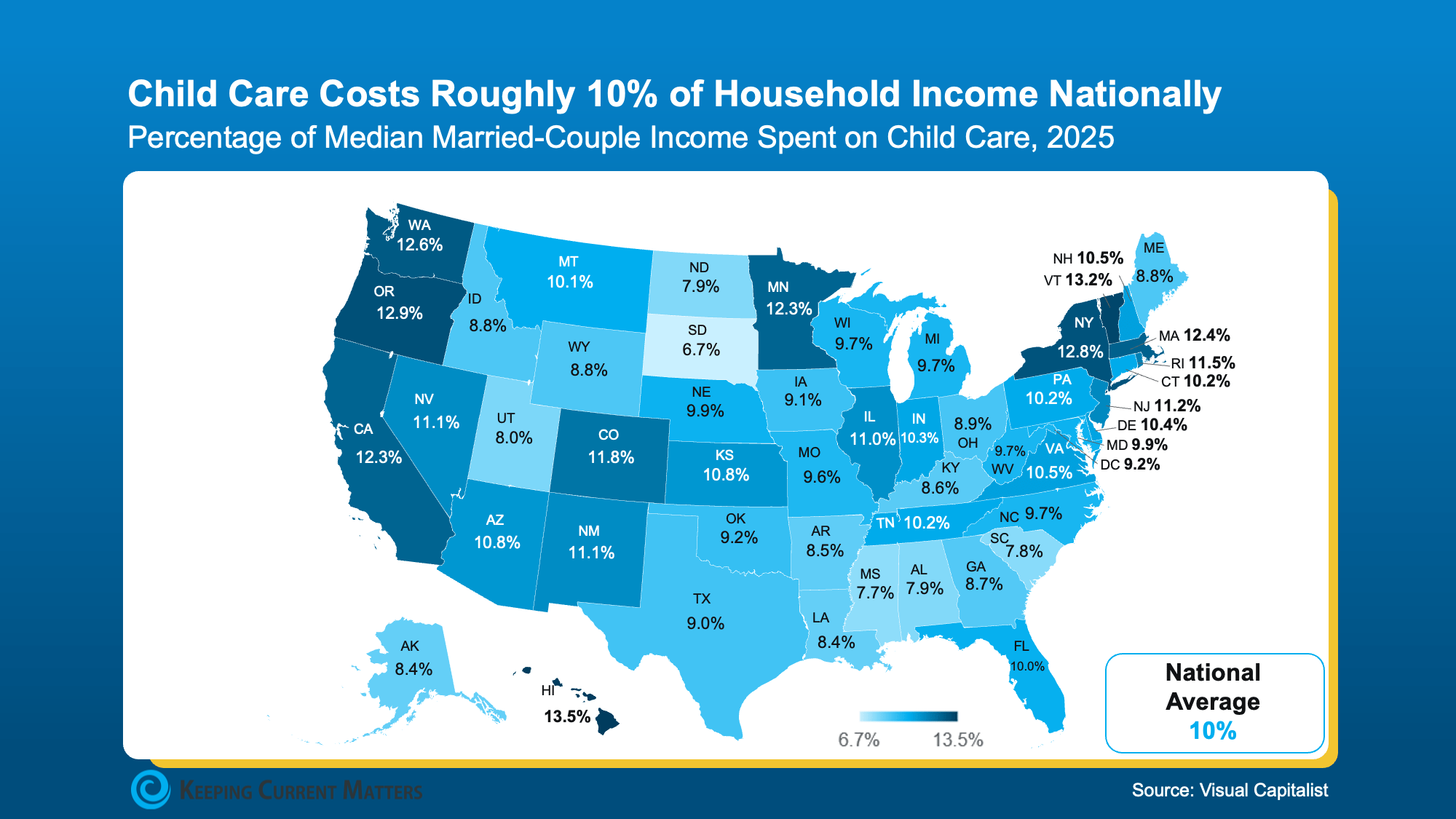
According to the Department of Health and Human Services, childcare should take up no more than 7% of your monthly income. But in reality, the average married couple spends closer to 10% (see map below):
 When you combine that with the cost of buying a home, it’s easy to see why things can feel stretched. That’s exactly why more families are starting to rethink how they approach both.
The Solution More People Are Turning To: Multi-Generational Living
One option gaining traction? Multi-generational living. That’s when parents, grandparents, or other relatives buy a house together and live under the same roof. And it’s not just about convenience anymore. It’s becoming a go-to strategy.
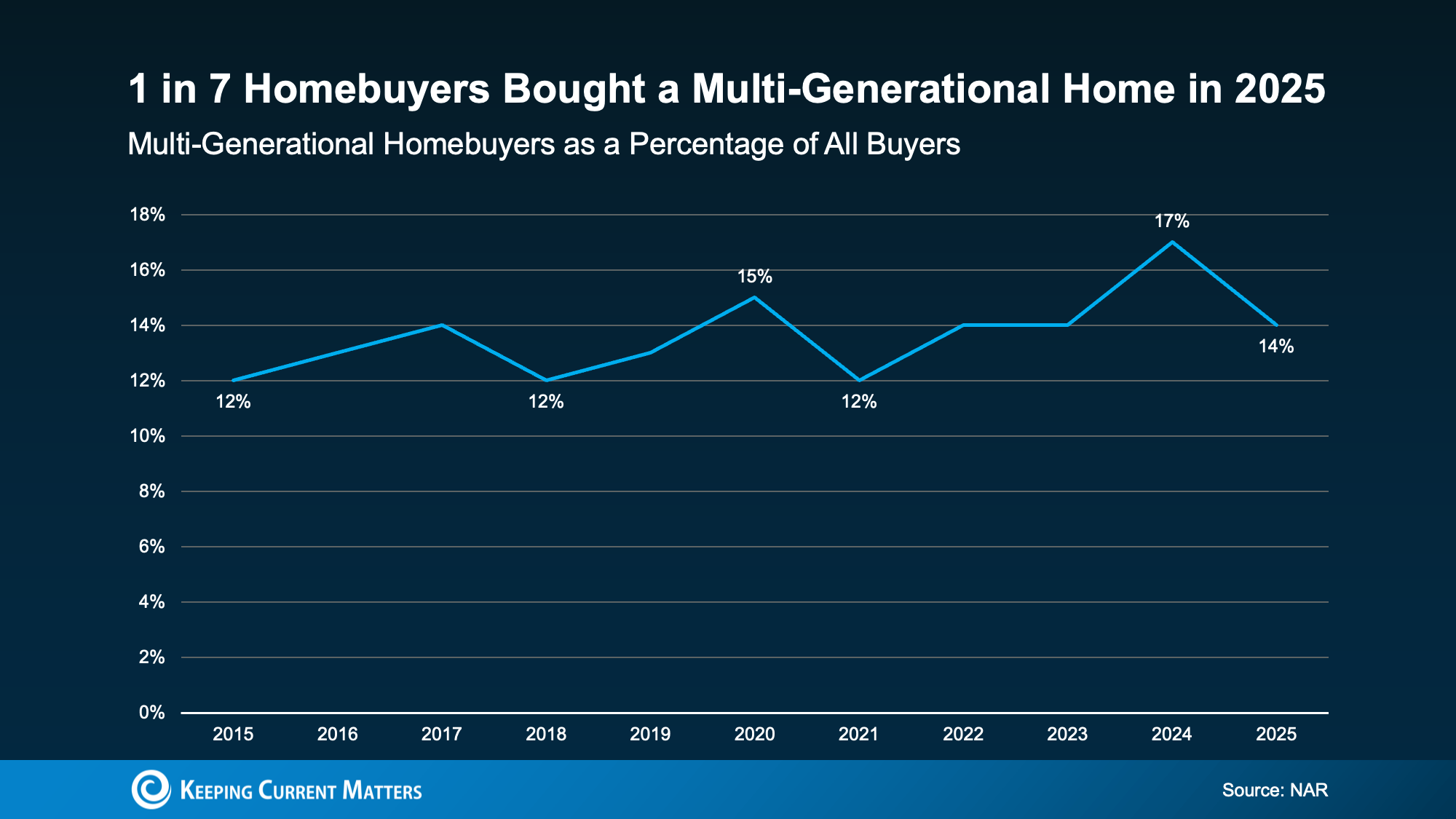
You can see it in the data. According to the National Association of Realtors (NAR), almost 1 in 7 homebuyers (14%) bought a multi-generational home in 2025 (see graph below):
 And for the first time, childcare is showing up as a key reason why they chose this option. As NAR explains:
“This year’s report features two new primary reasons for purchasing a multi-generational home: grandchildren living in the home (12%) and to help reduce the cost of childcare (6%).”
Why It Works
Buying a multi-generational home solves two big challenges at the same time.
- First, it shares the financial responsibility. If you pool multiple incomes together, you may be able to afford a home you couldn’t have on your own.
- Second, it can also solve the childcare puzzle. When grandparents or other relatives live in the home, they may be able to help with daily care, which can significantly reduce or even eliminate daycare costs.
And for many people, that combination is what finally makes their move possible.
If the costs of childcare and housing together have made buying feel out of reach right now, it may be worth exploring creative options like buying a home with your loved ones.
Bottom Line
If you want more information on multi-generational homes, talk to a local agent about what’s available in your area.
Sometimes the path to homeownership isn’t doing it alone. It’s doing it together.

by Omar Cruz | Mar 3, 2026 | Downsize, Equity, For Sellers, Senior Market
This blog is written by Keeping Current Matters:
What if you didn’t have a mortgage payment on your next house? It may sound a little unrealistic. But for a number of homeowners, it’s actually doable.
Nearly 3 in 10 homes purchased today are bought in cash, according to the National Association of Realtors (NAR). That’s far more than the pre-pandemic norm (see graph below):
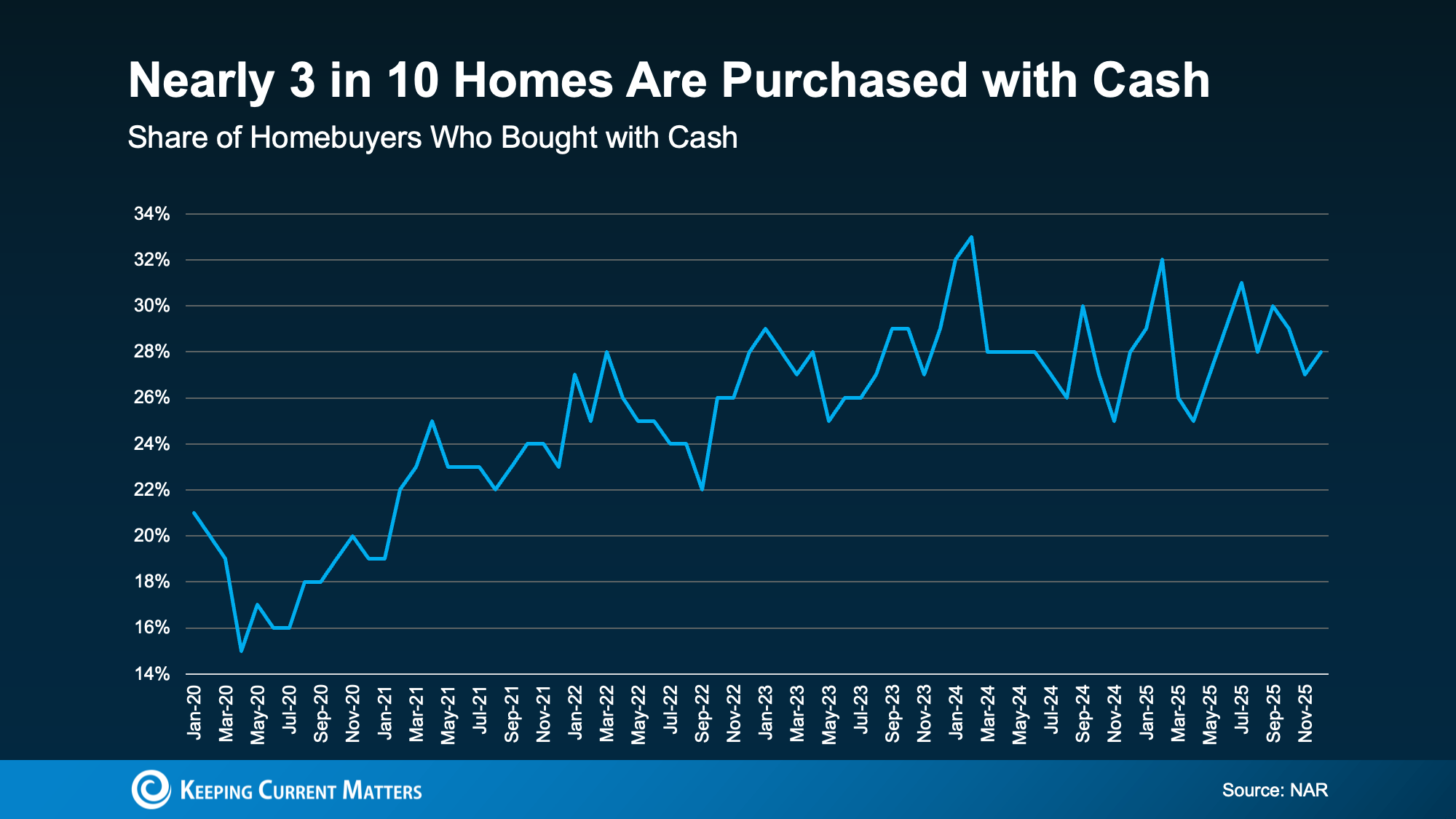 So, how are so many buyers pulling that off? The answer is simple: home equity.
Back in 2020-2021, mortgage rates and the number of homes for sale were both at all-time lows. And that combination pushed home prices up, fast.
If you owned a home during that time, it likely gained significant value – maybe even enough to buy your next house in cash. NAR explains:
“. . . rising home equity has armed many existing homeowners with the financial leverage to make cash offers, allowing them to convert years of price appreciation into immediate purchasing power.”
Here’s why you may want to go that route yourself, if you have enough equity to do it.
1. Your Offer Becomes More Attractive
Sellers value certainty. And an all-cash offer removes one of the biggest unknowns in a transaction: financing. As Rocket Mortgage explains:
“Cash offers are attractive to sellers. Sellers often prefer to work with cash buyers if they can because they don’t have to worry about a buyer’s financing falling through at the last minute.”
In many markets, an all-cash offer can give you a serious edge.
2. You Can Close Faster
And since you don’t have to worry about underwriting, lender approvals, and loan processing, the time it takes to close shrinks. Cotality puts it this way:
“Cash buyers have always enjoyed an edge over borrowers. They remove financing risk, reduce delays, and often close in days rather than weeks.”
If the owner of the house you’re buying is already under contract on their next home or they just need to move fast (like for a new job), that speed is a real draw.
3. You Won’t Have Monthly Mortgage Payments
When you buy in cash, you don’t have to finance your purchase. That means you don’t have to worry about what today’s mortgage rates are and you own the house outright from the day you close. And that’s a big deal.
No mortgage.
No monthly payment.
Full ownership.
That financial freedom opens the door for other big lifestyle benefits. Zillow explains:
“Paying in cash means you own your home outright. This eliminates the need for monthly mortgage payments, freeing up your finances for other priorities like savings, travel, or home improvements.”
4. You May Get a Better Deal
And here’s one more thing that surprises a lot of homeowners: cash buyers often pay less for the house.
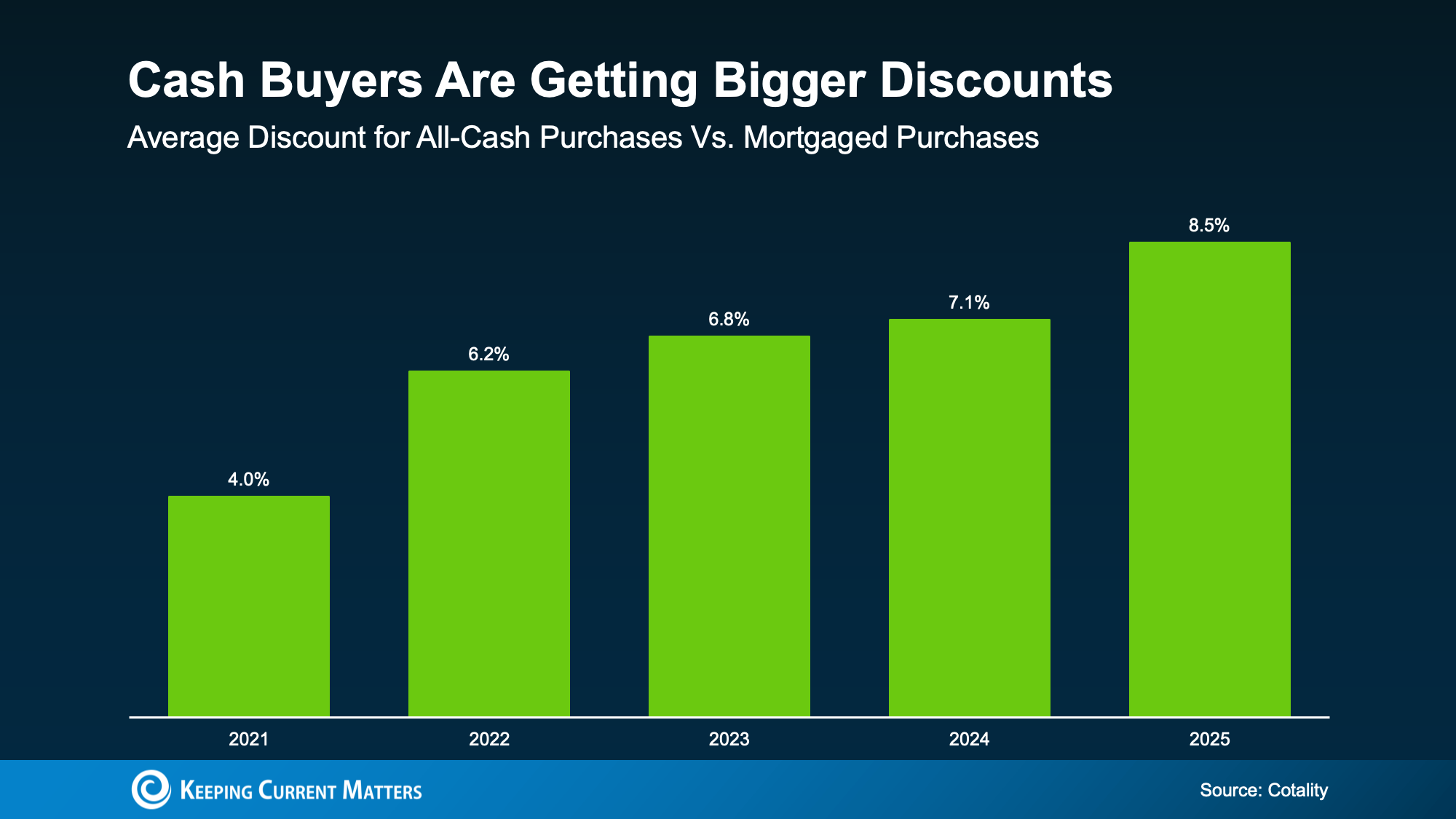
According to Cotality, all-cash buyers tend to spend roughly 9% less on the house than buyers who use a mortgage. That’s because some sellers are willing to accept lower offers to get a deal done quickly, with more certainty of closing, and fewer financing hoops to jump through. As Cotality explains:
“From a seller’s point of view, a lower but reliable offer can feel preferable to a higher one that may collapse weeks later.”
And that advantage grows with each passing year (see graph below):
 Is an All-Cash Move Realistic for You?
Not every homeowner will buy their next house outright in cash. And that’s okay.
But the bigger takeaway is this: the equity you’ve built may give you more options than you think.
Whether that means downsizing and eliminating a mortgage entirely, or just relocating with stronger negotiating power, your current house may be what makes it possible.
Bottom Line
Before assuming you’ll need another traditional mortgage, it’s worth asking one simple question: How much equity do you really have? Because the answer might change what you thought your next move could look like.
Curious what your home equity could do for you? Ask a local real estate agent to run the numbers and see what kind of buying power you’re really sitting on.

by Omar Cruz | Feb 26, 2026 | Equity, For Sellers, Senior Market
This blog is written by Keeping Current Matters.
For a lot of parents or grandparents, watching a family member struggle to buy their first home right now is hard. That’s because you saw firsthand how homeownership gave your life more stability and helped grow your net worth – and you want your loved ones to have those same opportunities.
But with all the affordability challenges in recent years, that can feel like an uphill battle – even though it’s slowly improving lately. Here’s what you may not realize. You may be in a unique position to help (thanks to the equity in your current house).
The Equity Advantage You May Not Be Thinking About
You’ve likely owned your home for years, maybe even decades. And during that time, two things happened:
- Home values rose
- Your mortgage balance shrank (or you paid it off entirely)
That combination has created substantial equity for many homeowners like you.
And while you may think of that equity as something you want to have in your pocket for retirement, it can also serve another purpose: helping the next generation clear the biggest hurdle in their way.
The #1 Thing Holding Young Buyers Back
When John Burns Research & Consulting (JBREC) asked renters what’s keeping them from buying, the top answer wasn’t mortgage rates or home prices. It was the upfront cost, particularly saving enough for their down payment (see graph below):
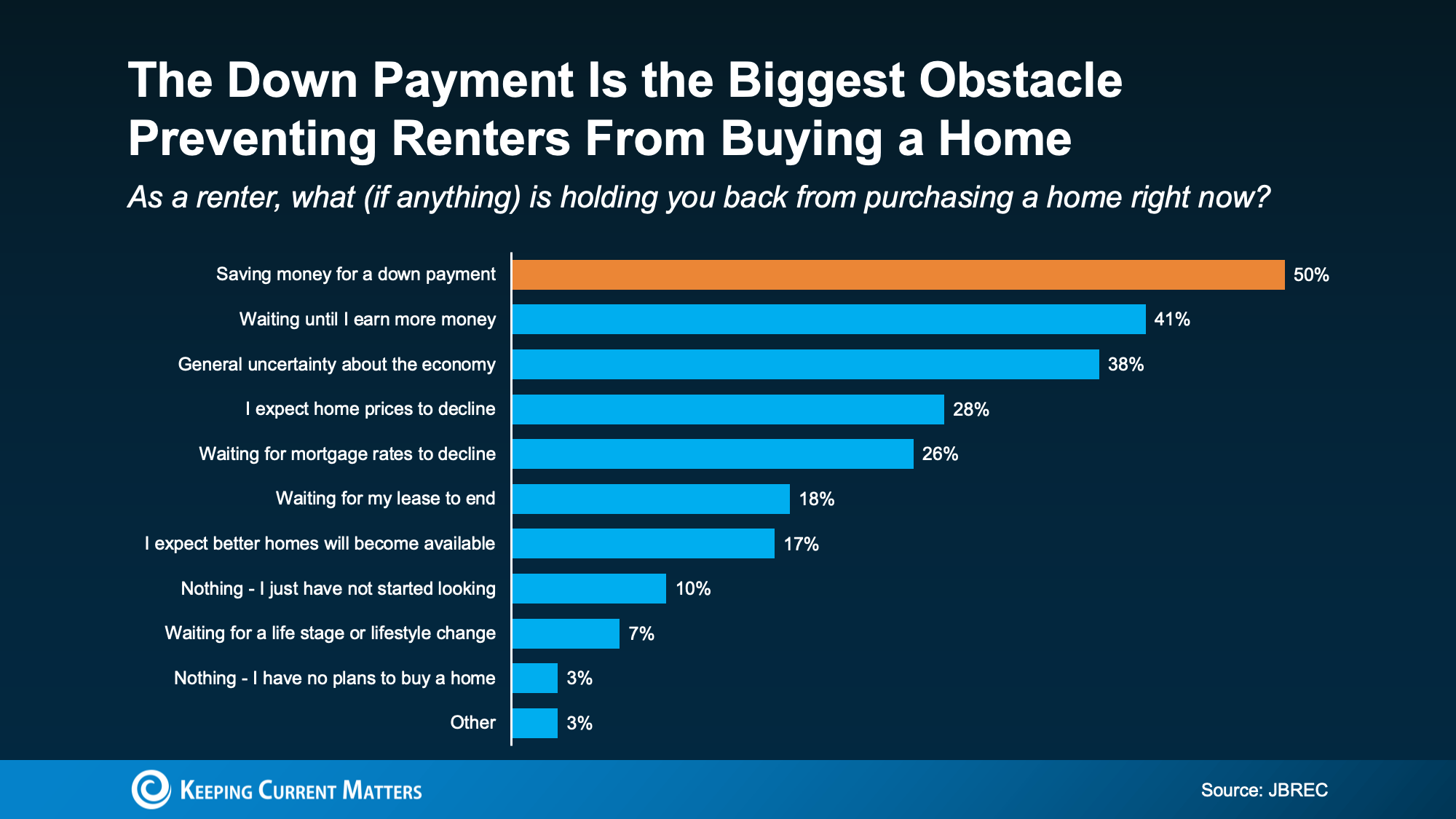 That’s where you may be able to make more of a difference than you realize. You can’t control rates or prices. But you may be able to use your equity to help with this upfront expense. And giving money to your loved one so they buy a home doesn’t mean putting your own future at risk.
Even a small portion of your equity can put them in a position to finally get the keys to their first place – and, if you’re strategic about it, you’d still have a lot leftover for when you retire.
With an estimated $68 and $84 trillion of wealth expected to transfer from older generations to younger ones over the next two decades, many families are already thinking differently about when and how that wealth will be passed down. Maybe it makes sense for your family to think about it, too.
Help from Loved Ones Is Making a Move Possible for Many First-Time Buyers
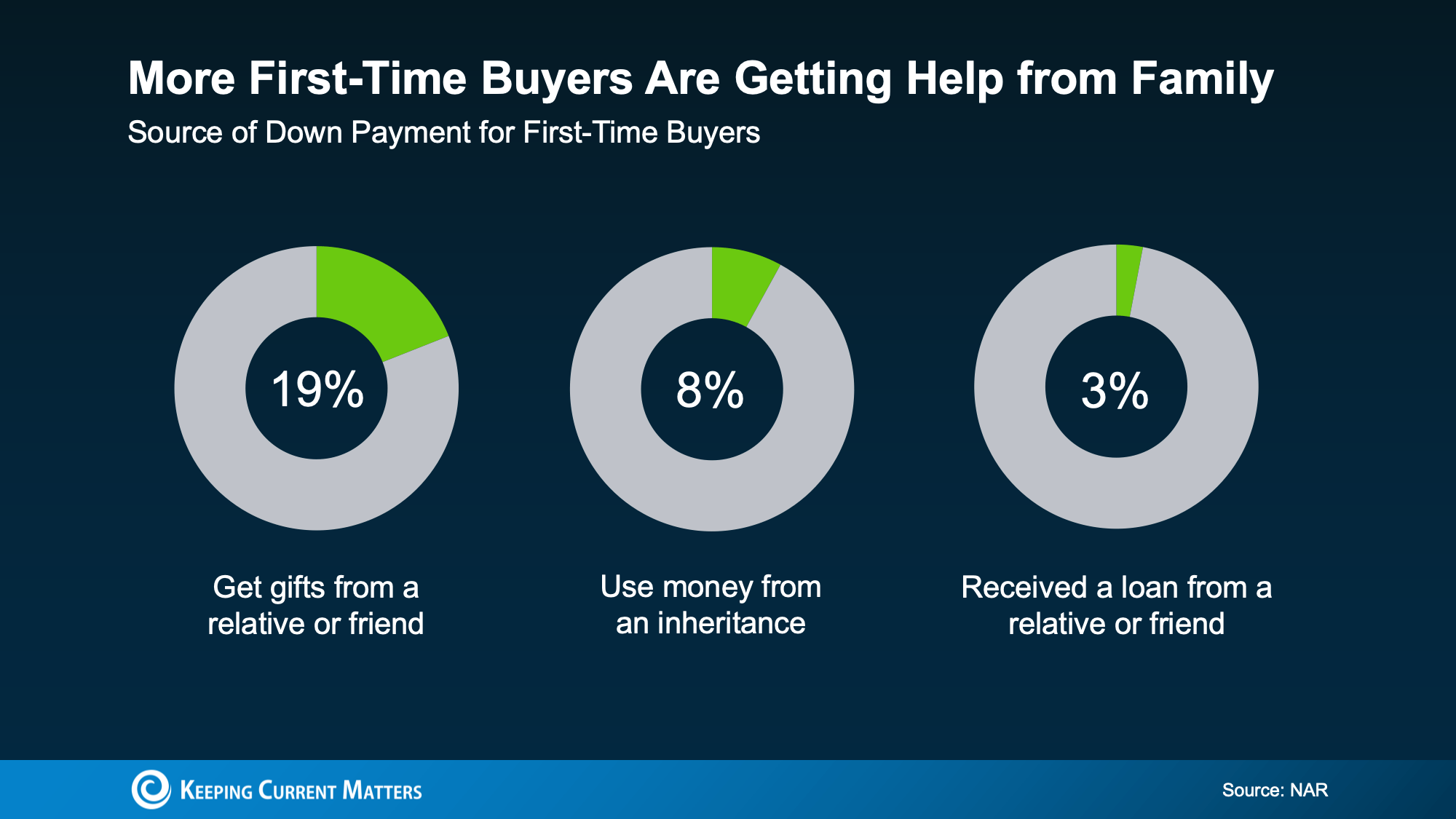
A growing share of young buyers is using gifts and loans from their loved ones to springboard into homeownership. According to the National Association of Realtors (NAR), nearly 1 in 5 first-time buyers use a cash gift from their family or loved ones for their down payment.
And other young buyers are using their inheritance or a loan from someone they know to finally break into the market (see charts below):
 This Is About Opportunity, Not Obligation
Every family’s situation is different, and your decision should be made carefully. It’s just that, if you’ve built up a lot of equity, you may have more room to help than you think.
It’s not just a financial gift. It’s giving stability, security, and a foundation that could change their lives for the better – especially at a time when they may not be able to do it on their own.
Bottom Line
If you’re curious what your home equity could make possible, for you or for your loved ones, start with a simple conversation with a local real estate agent. Because sometimes the most meaningful investment you can make is for the next generation.

by Omar Cruz | Feb 4, 2026 | Downsize, Equity, For Sellers, Senior Market
This blog is written by “Keeping Current Matters.”
For a growing number of homeowners, retirement isn’t some general idea anymore. It’s starting to feel very real.
According to Realtor.com and the Census, nearly 12,000 people will turn 65 every day for the next two years. And the latest data shows as many as 15% of those older Americans are planning to retire in 2026. And another 23% will do the same in 2027.
If you’re considering retiring soon too, here’s what you should be thinking about.
Why Downsize?
Now’s the perfect time to reflect on what you want your life to look like in retirement. Even though your finances will be going through a big change, you don’t necessarily want to feel like you’re living with less.
But odds are, what you do want is for life to feel easier.
Easier to enjoy.
Easier to manage.
Easier to maintain day-to-day.
The Top Reasons People Over 60 Move
You can see these benefits show up in the data when you look at why people over 60 are moving. The National Association of Realtors (NAR) finds the top 4 reasons aren’t about timing the market or chasing top dollar. They’re about lifestyle:
- Being closer to children, grandchildren, or long-time friends, so it’s easier to spend more time with the people who matter most
- Wanting a smaller, more functional home with fewer stairs and easier upkeep
- Retiring and no longer needing to live near the office, so it’s easier to move wherever you want
- Opting for something smaller to reduce monthly expenses tied to utilities, insurance, and maintenance
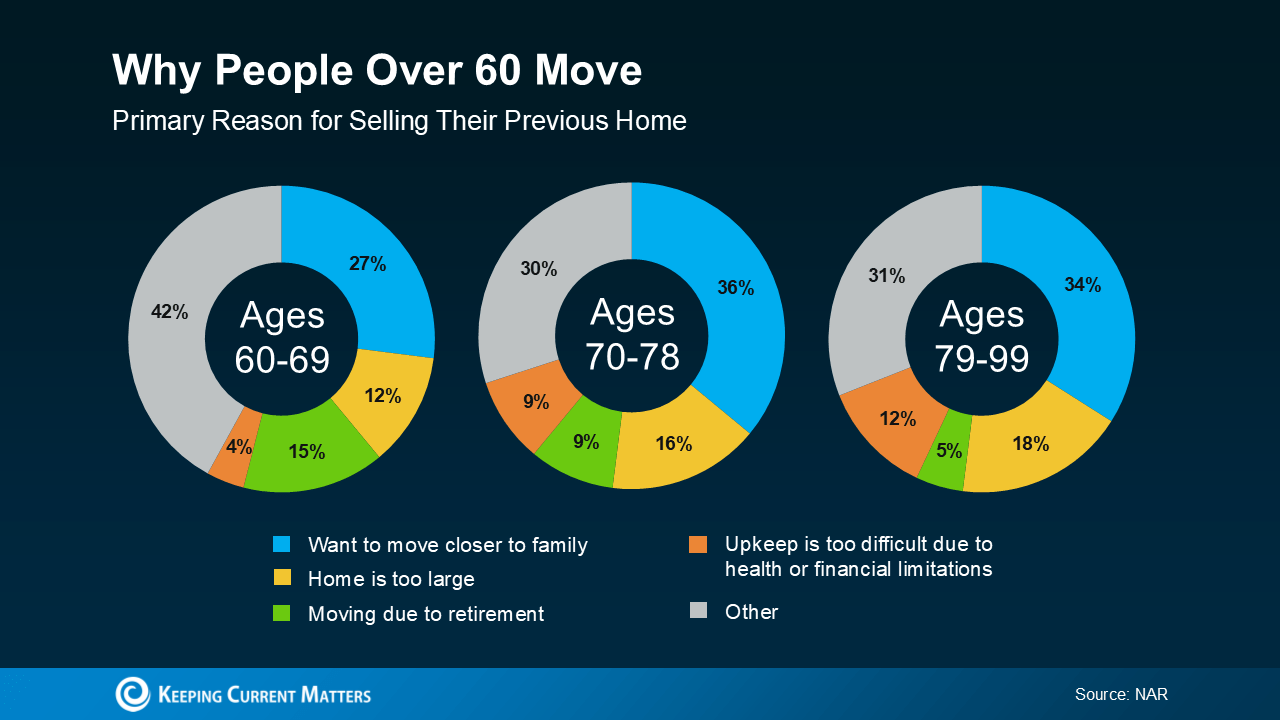
No matter the reason, the theme is the same: downsizing isn’t about giving something up. It’s about gaining control and choosing simplicity. And it brings peace of mind to know your home fits the years ahead, not the years behind.
And the best part? It’s more financially feasible now than many homeowners would expect.
The #1 Thing Helping So Many Homeowners Downsize
Here’s the part that makes it possible. Thanks to how much home values have grown over the years, many longtime homeowners are realizing they’re in a stronger position than they thought to make that move.
According to Cotality, the average homeowner today has about $299,000 in home equity. And for older Americans, that number is often even higher – simply because they’ve lived in their homes longer.
When you stay in one place for years (or even decades), two things happen at the same time:
- Your home value has time to grow.
- Your mortgage balance shrinks or disappears altogether.
That combination creates more options than you’d expect, even in today’s market.
So, whether you just retired or you’re about to, it’s not too soon to start thinking about what comes next. Sure, it can be hard to leave the house you made so many years of memories in, but maybe it’s time to close one chapter to open a new one that’s just as exciting.
Bottom Line
Downsizing is about setting yourself up for what comes next – on your terms.
If retirement is on the horizon and you’ve started wondering what your current house (and your equity) could make possible, the first step isn’t selling. It’s understanding your options.
It’s time to talk to an agent. A simple, no-pressure conversation can help you see what downsizing might look like – and whether it makes sense for you.
