
by Omar Cruz | May 1, 2026 | Featured, For Buyers, Home Prices, Inventory, Mortgage Rates
Author: Keeping Current Matters
There’s a lot of uncertainty right now, and that’s leading to some dramatic headlines. And if you’re thinking about buying a home, that can make you feel a little less sure about your decision.
A recent study by CNBC asked homebuyers what they’re most worried about, and three themes kept coming up again and again:
- Mortgage rates
- The number of homes for sale
- Home prices
But a lot of what you may be hearing on those is based more on misconceptions. Not facts. So, let’s break it down and separate fact from fiction.
Misconception #1: “I’ll Just Wait, Because Mortgage Rates Are Going To Fall Dramatically”
One idea doing its rounds on social is that mortgage rates are going to drop dramatically soon. So, it’s better to wait to buy.
But is that really what’s expected?
While mortgage rates have come down a bit in the last few weeks, forecasts don’t show a major drop ahead. The most likely scenario is that rates stay somewhere in the low 6% range this year.
And that’s not a big change from where rates are now (see graph below):
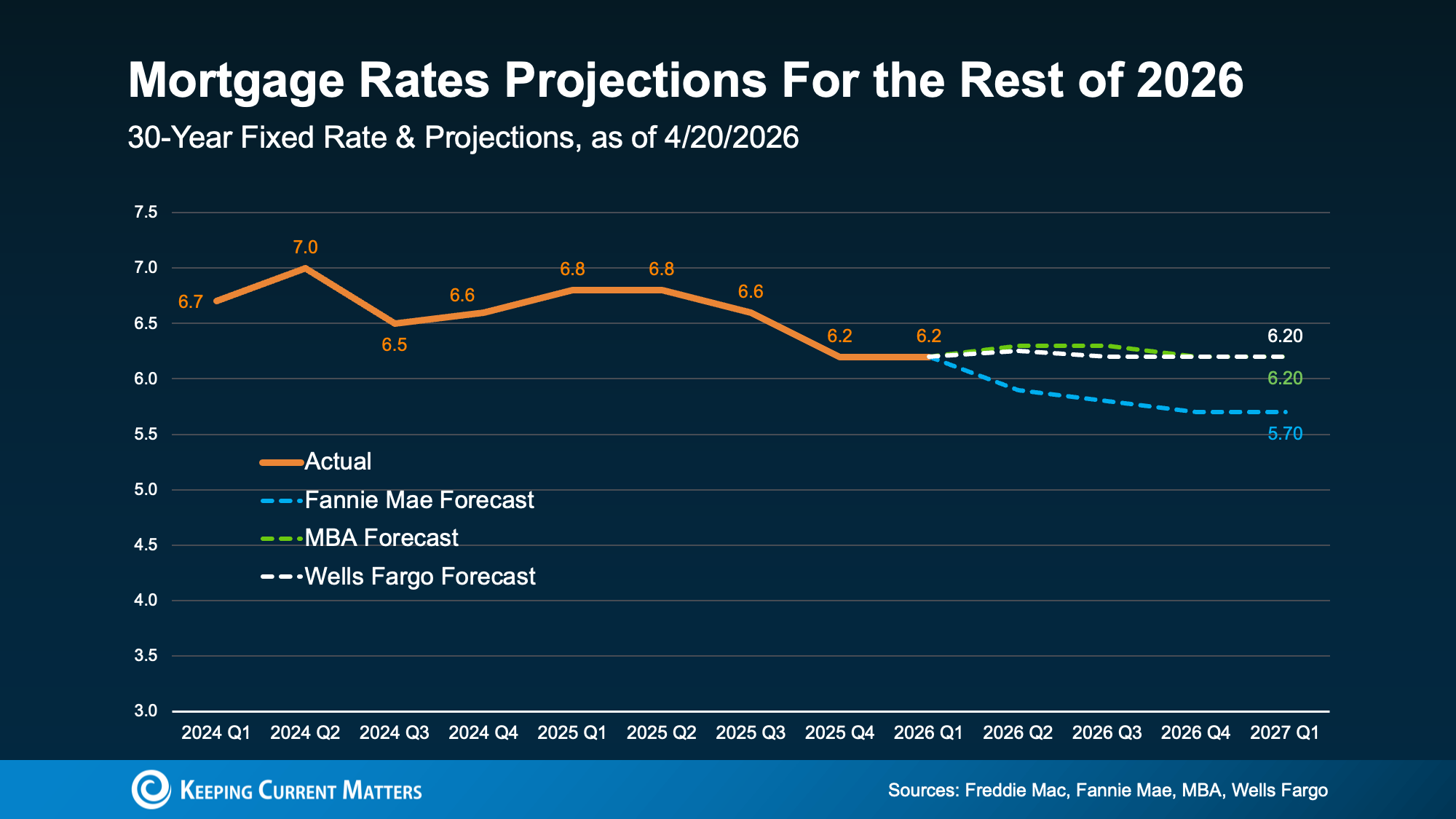 Of course, this depends on where inflation and the economy go from here. But, based on what we know today, waiting for a big drop in rates may not work out the way some people hope. As U.S. News explains:
“Mortgage rates aren’t expected to change much over the next several quarters . . .”
Not to mention, even with rates where they are today, it’s already more affordable than a year ago. So, even if they don’t change much, it’s still better than it was.
Misconception #2: “There Are Too Many Homes for Sale Right Now”
You’ve probably heard inventory is up. And nationally, it is. The number of homes for sale is 8% higher than this time last year. But that’s not a bad thing. In fact, it’s one of the reasons buyers have a bit more breathing room right now.
The problem is the headlines are making something good sound bad. They’re focusing on how this is the most inventory we’ve had since 2019 or how many homes builders are building. And that can make it sound like the number of homes for sale is rising too far, too fast.
But that’s not what the bigger picture shows.
Data from Realtor.com proves that, even though inventory is up compared to last year, it’s still nearly 14% lower than it was during the last normal housing market (2017-2019):
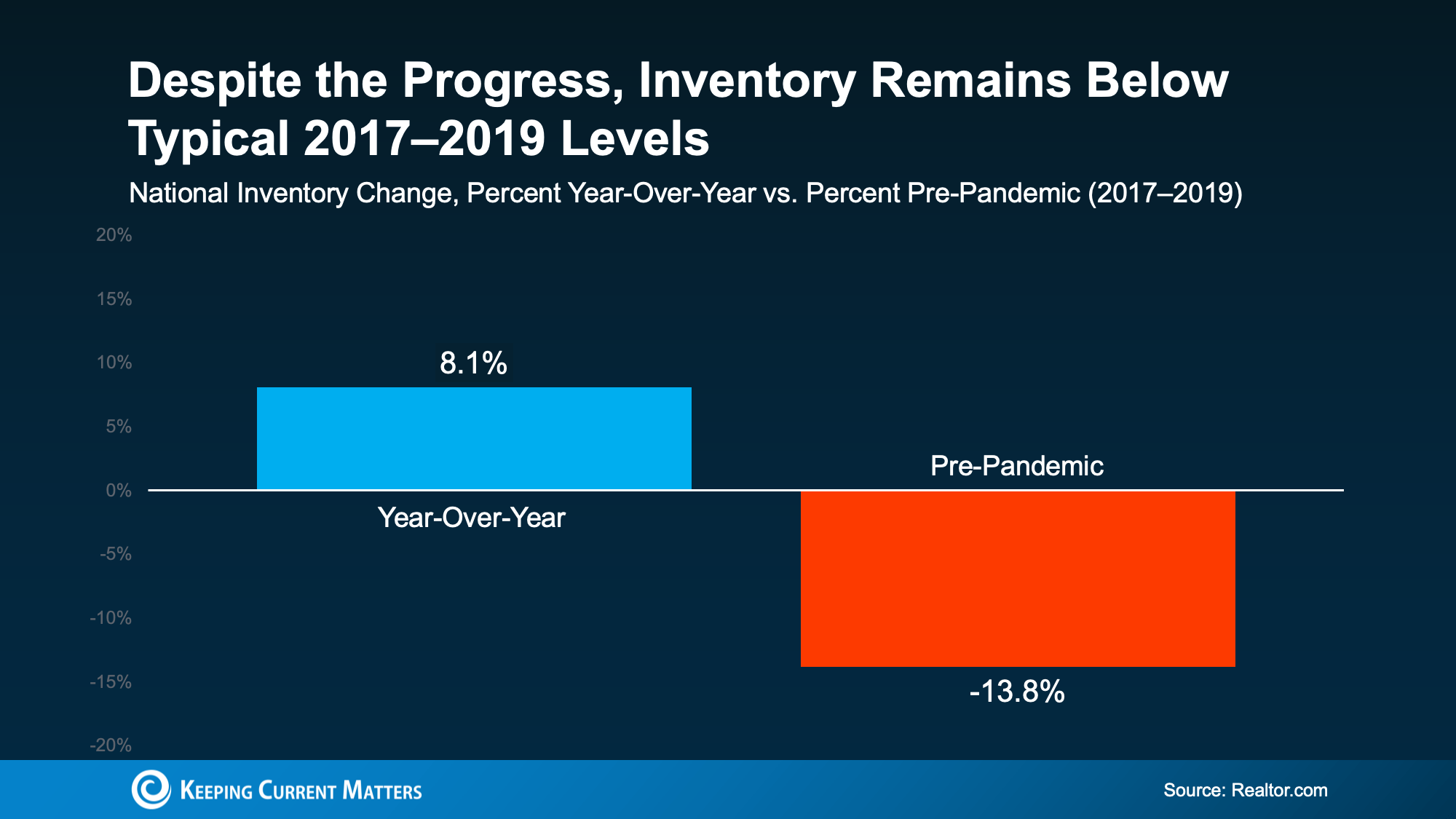 While it can vary a lot based on where you live, only 9 states have more inventory than pre-pandemic today. That’s a key reason why there still aren’t enough homes for sale to trigger something like the crash back in 2008.
Misconception #3: “Home Prices Are About To Crash”
You’ve probably seen this one, too. The confusion is coming from the fact that some metros are experiencing slight price declines. And influencers are running with that and saying prices are crashing. But that’s not the reality.
Most areas are seeing prices rise, not fall. And that’s because:
- Many homeowners aren’t selling because they don’t want to give up the low mortgage rate they locked in a few years ago. And that’s keeping a lid on how much inventory can grow.
- Since inventory is still below pre-pandemic norms, there aren’t enough homes for sale to cause a price crash.
- And even in markets with more inventory, some sellers are choosing to pull their homes off the market instead of cutting prices.
And those are 3 big reasons prices aren’t headed for a crash.
And even in the markets experiencing mild declines, the drops aren’t enough to cancel out the big gains most homeowners have seen in the last 5 years (see graph below):
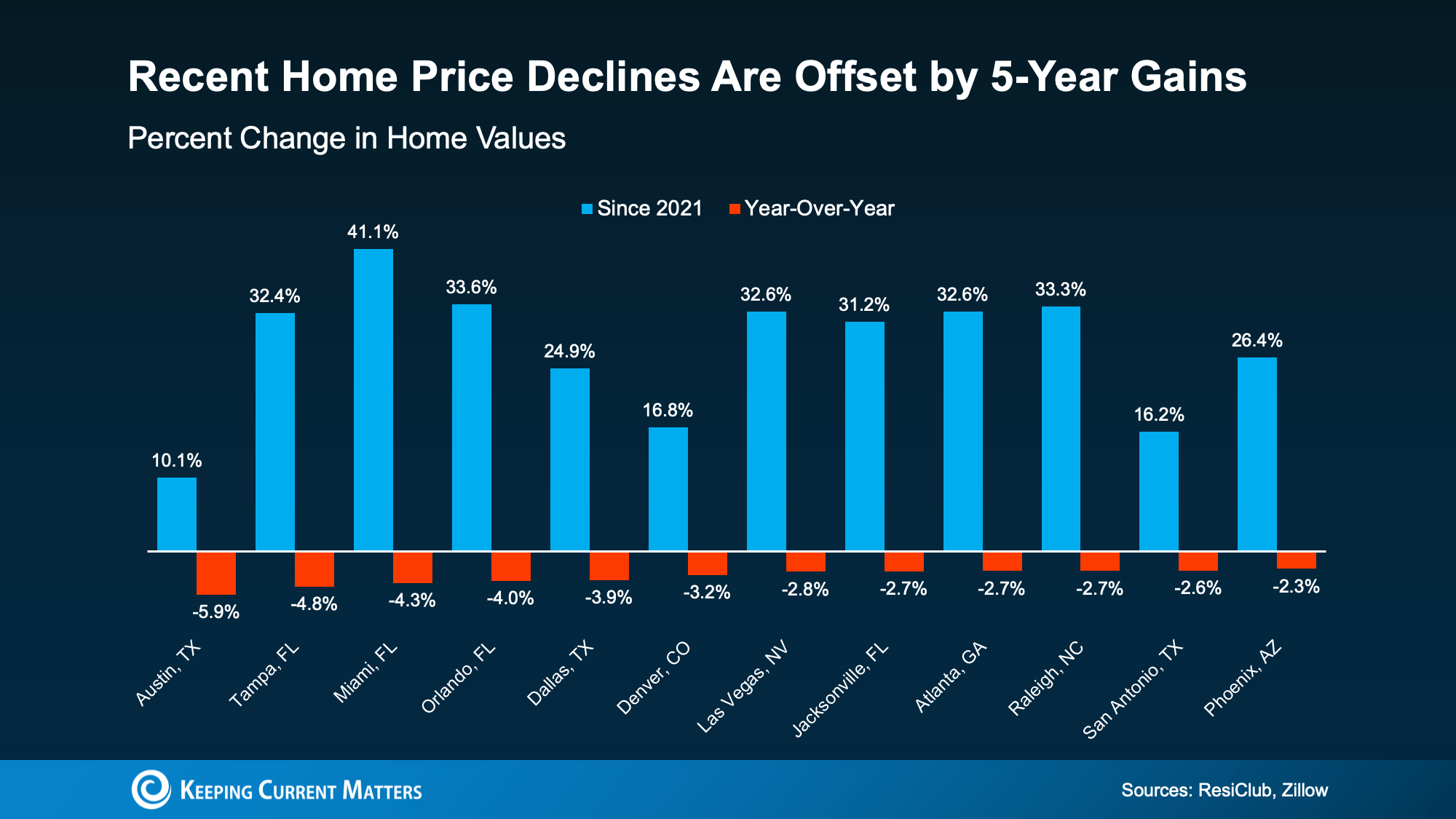 That’s not a crash. That’s just prices moderating after a few record-breaking years.
Bottom Line
Online posts are going to make things sound worse than they are. If you want a true, data-bound look at what’s really happening in today’s market, lean on a real estate agent.
Connect with a local agent so you have someone to separate fact from fiction today.

by Omar Cruz | May 1, 2026 | Affordability, Buying Tips, Featured, First-Time Buyers, For Buyers
Author: Keeping Current Matters.
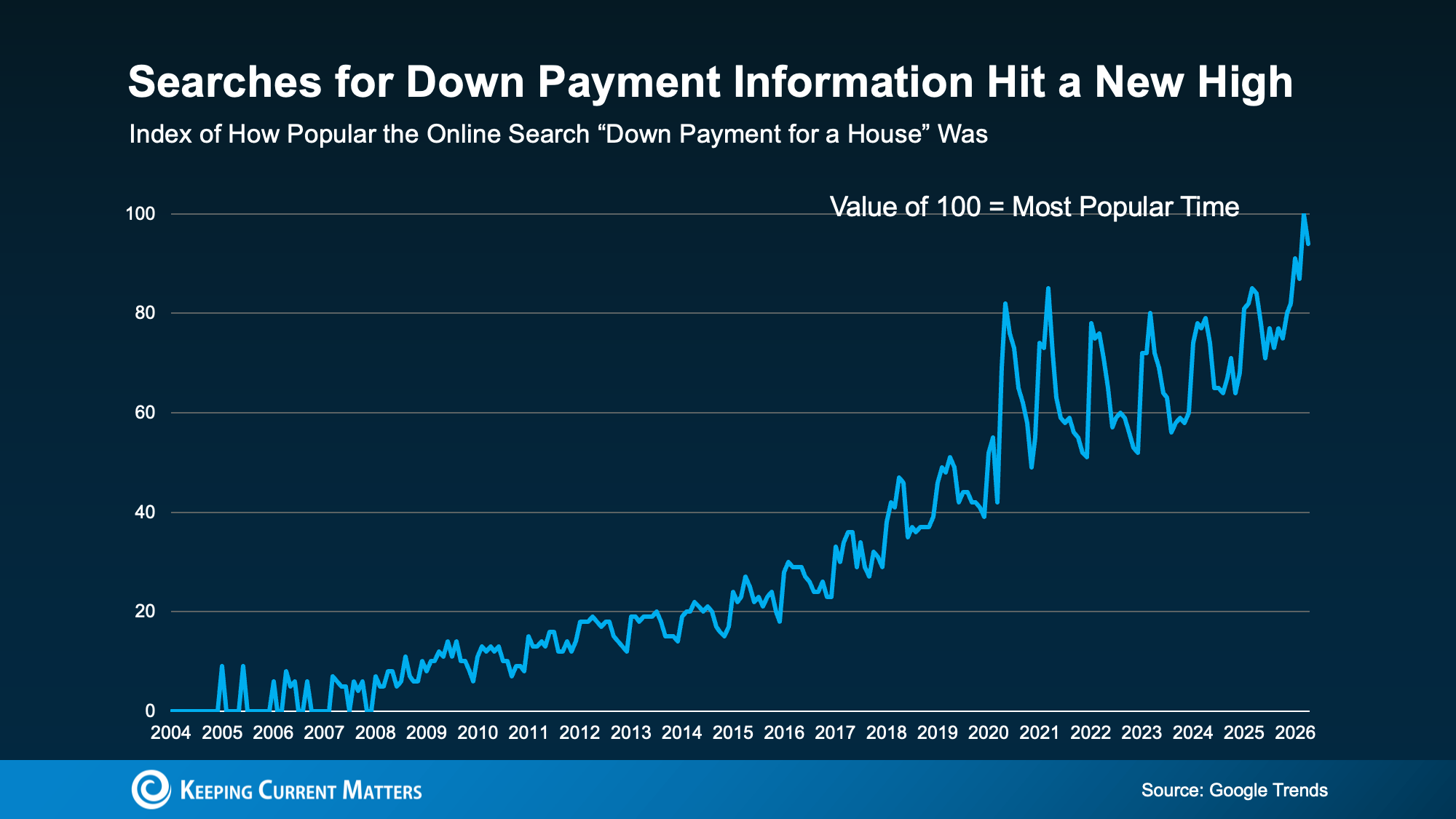
According to Google Trends, online searches for down payment information recently hit an all-time high. And that’s a clear sign more buyers are trying to figure out what they really need to save before making a move (see graph below):
 If you’re wondering the same thing, you can always turn to the internet for answers. But a lot of the time, it’s better to ask a local expert. Because here’s what a pro would tell you.
The 20% Down Payment Myth
The idea that you need 20% down to buy a home is one of the biggest misconceptions around the homebuying process. And the data debunks the myth.
While there are benefits to putting that much money down, most first-time buyers put down far less.
Here’s why. Unless it’s stated by your lender, you typically don’t have to have a 20% down payment. There are even some loan options designed to help you get into a home with a much smaller upfront cost. As the Mortgage Reports explains:
“The amount you need to put down will depend on a variety of factors, including the loan type and your financial goals. If you don’t have a large down payment saved up, don’t worry—there are plenty of options available, and you don’t need to put down the traditional 20% . . . many homebuyers are able to secure a home with as little as 3% or even no down payment at all . . .”
For example, FHA loans allow down payments as low as 3.5%, while VA and USDA loans offer zero down payment options for qualified applicants, like Veterans.
And those options are just one reason so many first-time buyers are able to buy without a 20% down payment.
What Buyers Are Actually Putting Down
So, if buyers aren’t doing 20%, how much do they actually put down?
According to the National Association of Realtors (NAR), the median down payment for first-time homebuyers is only 10%. That’s half of what you probably expected.
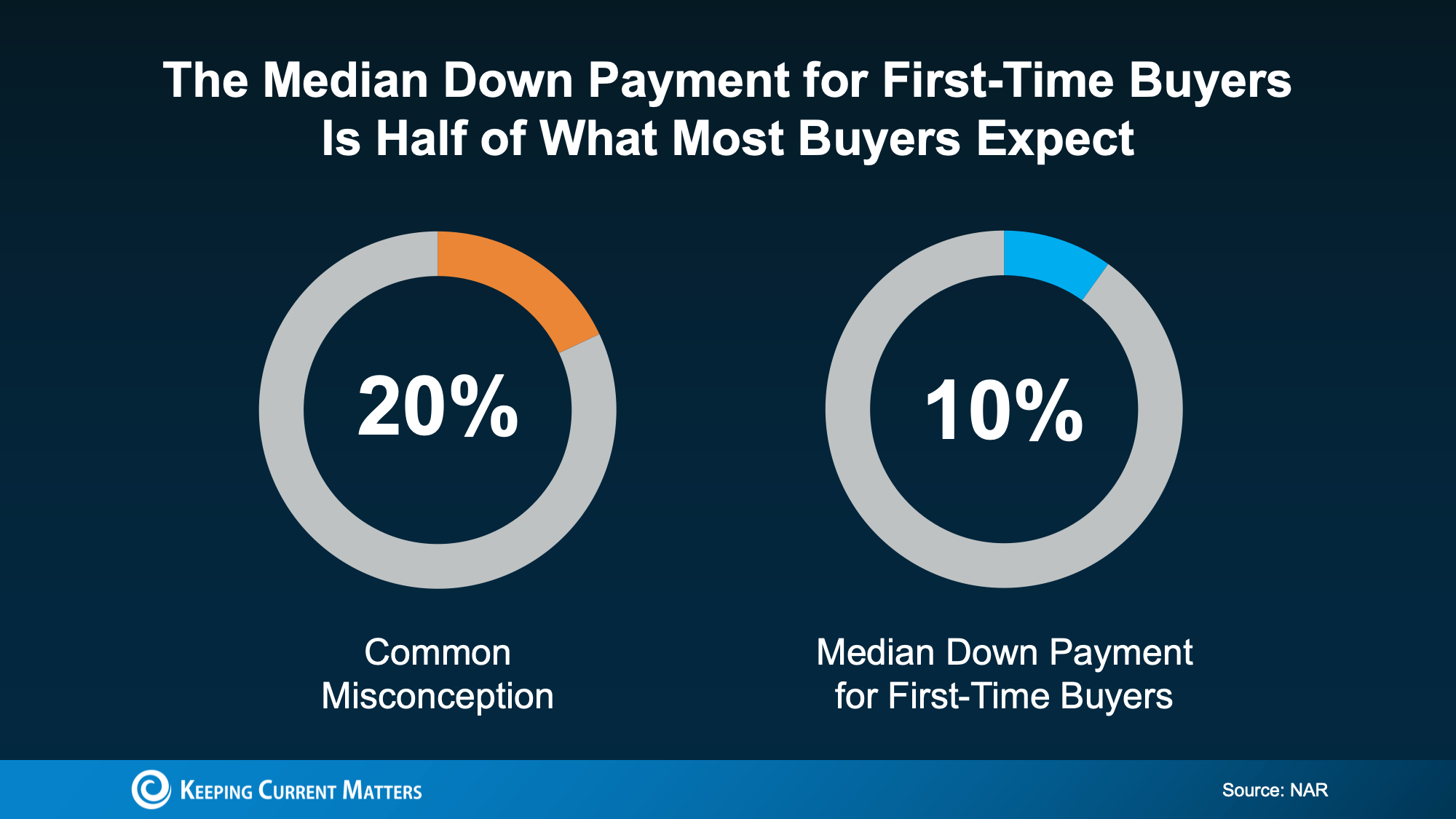 That means if you’re aiming to save 20% because you think you have to, you may be setting a timeline that’s longer than necessary.
And here’s some more good news. It’s not only that you may be able to buy with less money down than you thought, but there are also options to help you get to your down payment goal even faster.
Why You Should Look into Down Payment Assistance Programs
There are a lot of programs designed to help you save for a down payment – and they can make a big difference in how fast you hit your savings target. Unfortunately, buyers don’t realize how many there are, or that they may qualify for help.
Research from Realtor.com shows almost 80% of first-time homebuyers qualify for down payment assistance (DPA), but only 13% actually use it (see chart below):
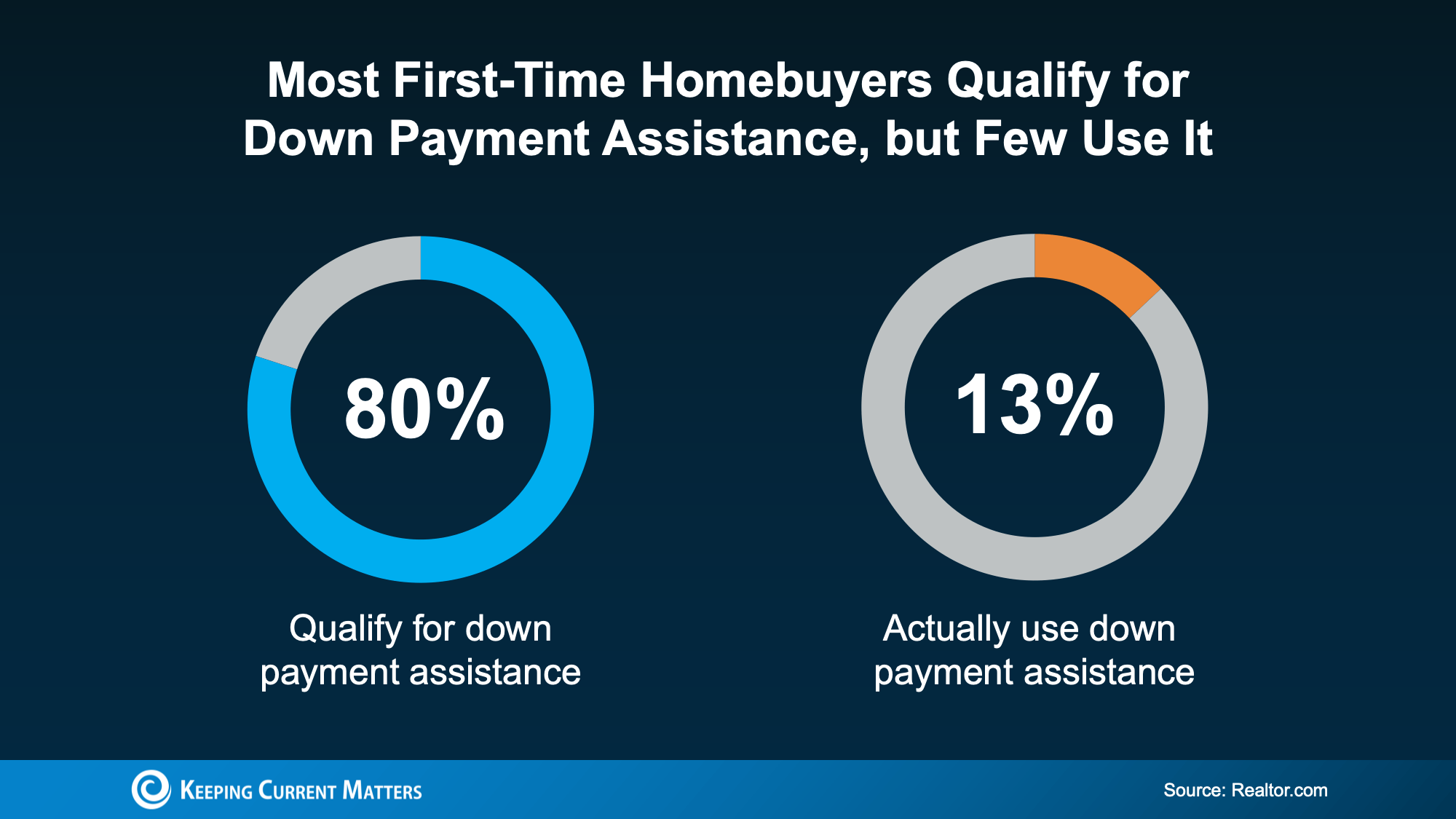 And that’s another big miss holding would-be buyers like you back.
In the U.S., there are over 2,600 homeownership programs available, many offering significant financial support. As Down Payment Resource shares:
“With an average benefit of $18,000, down payment assistance (DPA) remains one of the most essential tools for addressing the nation’s affordability challenges. Programs continue to expand in scope, serving a broader range of incomes, property types and borrower needs, including first-generation, military and repeat buyers.”
Imagine how much further your savings could go with an extra $18,000 you can use to buy. In some cases, you may even be able to stack multiple programs, giving what you’ve saved an even bigger boost.
Bottom Line
The simple truth is: most first-time buyers don’t put 20% down. And if you’ve been waiting to buy until you have that saved, you may be setting a timeline that’s longer than necessary.
To find out what you really need to save and if you qualify for any help, connect with a trusted lender who can walk you through your options. You may be able to buy sooner than you thought.

by Omar Cruz | Mar 27, 2026 | Agent Value, Featured, For Sellers, Selling Tips
You may have seen headlines on social saying the number of buyers backing out of their contracts is on the rise, and has recently reached a high not seen since 2017. That can sound intimidating. But it varies a lot by market.
And here’s the key thing to understand if you want to sell. A lot of the time, there’s one common cause. And it’s something you can actually control.
Here’s what you can do to get ahead of the biggest dealbreaker before it ever becomes a problem.
The Top Dealbreaker: Issues That Pop Up During the Inspection
A Redfin survey shows over 70% of recently cancelled contracts happened because of issues during the home inspection (see graph below):
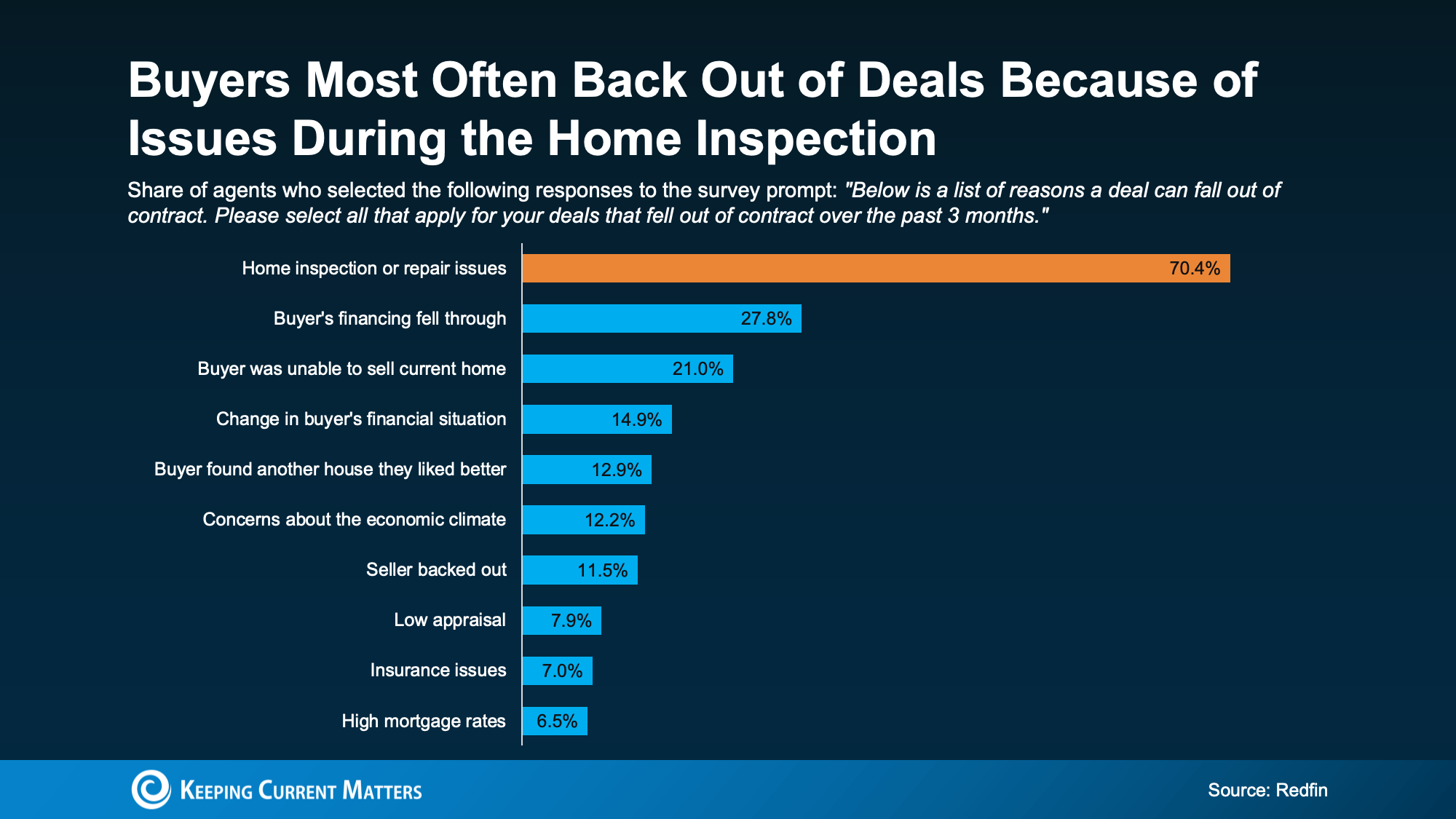 And that makes sense. Because today’s buyers have something they didn’t have a couple of years ago: options.
Why Fixing Things Before You List Matters More Today
A few years back, when buyers felt rushed or boxed in due to the limited number of homes for sale, they were more willing to overlook issues.
But in today’s market, skipping essential repairs is one of the fastest ways to lose a deal.
Now that there are more homes to choose from, buyers can be more selective. If a house feels risky, outdated, or like it’s hiding expensive surprises, they’re a lot more likely to walk away. So, what do you have to fix? Just ask an agent.
How Your Agent Can Help Give You the Edge
A local agent will be able to walk through your house and offer advice on what to tackle based on your specific home, your market, and what buyers are prioritizing in your area. They’ll also have first-hand knowledge about some of the biggest turnoffs for buyers today. And you can use that expertise to prevent future headaches.
For example, according to Zillow, these are some of the issues buyers will care the most about:
- Roof leaks or damage: sagging, leaking, etc.
- Plumbing problems: standing water, leaks, water damage, etc.
- Electrical concerns: outdated or exposed wiring, missing GFCI outlets, etc.
- HVAC issues: non-functioning units
- Pest or insect damage: termite colonies, etc.
- Hazardous materials: lead, mold, asbestos, etc.
- Safety/code violations: missing smoke detectors, windows stuck closed, etc.
- Structural problems: cracks in the foundation, sagging floors, etc.
Odds are, not all of this even applies to your house. Maybe only 1-2 things do. Or maybe none of them do. It just depends. But an agent will have the tools and resources to help you figure it out and stay one step ahead.
The Benefits of a Pre-Listing Inspection
To buyers, these aren’t cosmetic issues. They’re trust issues. And that’s what you need to watch out for today. Once buyers start wondering “what else might be wrong,” it’s hard to recover momentum.
That’s why some agents are even recommending a pre-listing inspection as a sneak peek into what buyers will see on their own inspection. With that insight, you can:
- Fix concerns before you list, or disclose issues upfront
- Avoid having to respond or negotiate under pressure
- Stop scrambling to find contractors with availability before your closing date
But remember, you don’t have to fix everything. You just have to be strategic about what you do tackle, so you and your buyer aren’t caught off guard.
And that’s why you need an agent who can:
- Decide if a pre-listing inspection is worth it where you live
- Recommend a trusted inspector (if you decide to get one)
- Look at the results with you to identify true dealbreakers in your market
- Help you decide what to fix or what to credit
- Make sure you avoid overspending or under-preparing
Bottom Line
One of the biggest dealbreakers for buyers today is inspection issues – and that’s something you can control. You just need to be proactive about high-impact repairs before you list.
If you want help figuring out where to focus, connect with an agent.
Author: Keeping Current Matters

by Omar Cruz | Mar 26, 2026 | Agent Value, Buying Tips, Featured, First-Time Buyers
Buying your first home is exciting, but it can also be a little nerve-wracking because it’s something you’ve never done before. And trying to think of everything you need to do can feel like a lot. But here’s the key.
You don’t have to figure everything out on your own. And you don’t have to do it all at once. Just tackle it one thing at a time.
Here’s a simple list of 3 main things you should focus on to help you get started.
1. Assemble Your Team: Don’t Do This Alone
Buying a home is a team sport. And having the right professionals by your side can make a world of difference. Here’s who you need to find:
- A local real estate agent is your guide from the first showing to closing day. They’ll make sure you understand all the details along the way, so you feel confident in your decision.
- A trusted lender will walk you through loan options, monthly payments, and what’s realistic for your situation. That information is something you’re going to want early on.
2. Prep Your Finances: Set the Foundation First
This is what determines what you can afford, how competitive you’ll be, and how confident you’ll feel when it’s time to make an offer. Here’s how to get ready:
- Check your credit score. Your credit score impacts the loan options you’ll qualify for and even the mortgage rate you’ll get. Knowing this number early gives you time to work on raising your score, if you want to.
- Save for your down payment and closing costs. Most buyers focus on the down payment, but closing costs matter too. Having savings set aside for both helps you avoid last-minute stress and surprises.
- Look into assistance programs. Many first-time buyers qualify for programs that’ll give their homebuying savings a boost. This can make buying possible sooner than you expect.
- Talk to a lender about mortgage options. Fixed-rate, adjustable-rate, FHA, VA, and conventional loans all work differently. Understanding the options helps you choose what fits your goals best.
- Get pre-approved. A pre-approval tells you what a lender would be willing to give you for your home loan. This’ll help you figure out your price range and set you up to move fast when the right home comes along.
- Figure out your budget. Your mortgage is just one part of homeownership. Budgeting for your utilities, home insurance, and everyday expenses and maintenance will help make sure your payment feels comfortable, not stressful.
3. Gather Your Documents: Save Time (and Stress)
When you’re officially ready to kick off the buying process, lenders are going to need to verify your income, assets, and financial history. Having these documents ready-to-go upfront can speed up the process and reduce back-and-forth. Here’s what Bankrate says you need to prep:
- W-2s and tax documents (past 2 years). These show income stability and help
lenders verify your earnings over time.
- Recent pay stubs (generally the past 1–2 months). Pay stubs confirm your current income and employment status.
- Bank statements (past 2–3 months). These show your savings, spending patterns, and where your down payment funds are coming from.
- Investment account statements (past 2-3 months). If you’re using investments as part of your financial picture, lenders may ask for these as well.
- Copy of your driver’s license. This verifies your identity and is required for loan processing.
- Residential history (past 2 years). Lenders use this to confirm stability and background information.
- Statements for any outstanding debts (past 2 months). Student loans, auto loans, and credit cards affect your debt-to-income ratio, so lenders will want to know about them.
- Proof of supplemental income. Bonuses, commissions, side work, or child support may count toward your income if documented properly.
Note: the exact time frames and list of documents may vary lender to lender. This is just a general rule of thumb to help you get the ball rolling.
Bottom Line
Buying your first home doesn’t mean you have to have everything figured out. It just requires a plan.
If you start with your finances, organize your documents, and surround yourself with the right people, you’ll be in great shape when the time comes to make a move.
And if you want more information on anything in this list or just need help getting started, reach out to an agent.
Author: Keeping Current Matters

by Omar Cruz | Feb 13, 2026 | Affordability, Featured, First-Time Buyers, For Buyers
This Blog is written by “Keeping Current Matters”.
There’s finally a little good news for anyone who’s been priced out or sitting on the sidelines.
Buying a home is getting more affordable.
Monthly payments have started to come down, and the squeeze buyers have been feeling for the past few years is slowly loosening. Now, that doesn’t mean everyone can suddenly afford a home, but with how tough the market’s been, the improvement we’re seeing matters.
Affordability Is Finally Moving in the Right Direction
One of the best ways to see this shift is by looking at how much of a household’s income it takes to buy a home.
According to Zillow, housing is typically considered affordable when it takes 30% or less of your monthly income to cover your expenses. That includes your mortgage payment, taxes, insurance, and basic maintenance.
For the past few years, the math was well above that threshold, and it made buying a home unachievable for many. But now, we’re slowly moving back toward a balance. Zillow research shows it’s taking less of a typical household’s income to buy a home than it did just a few years ago (see graph below):
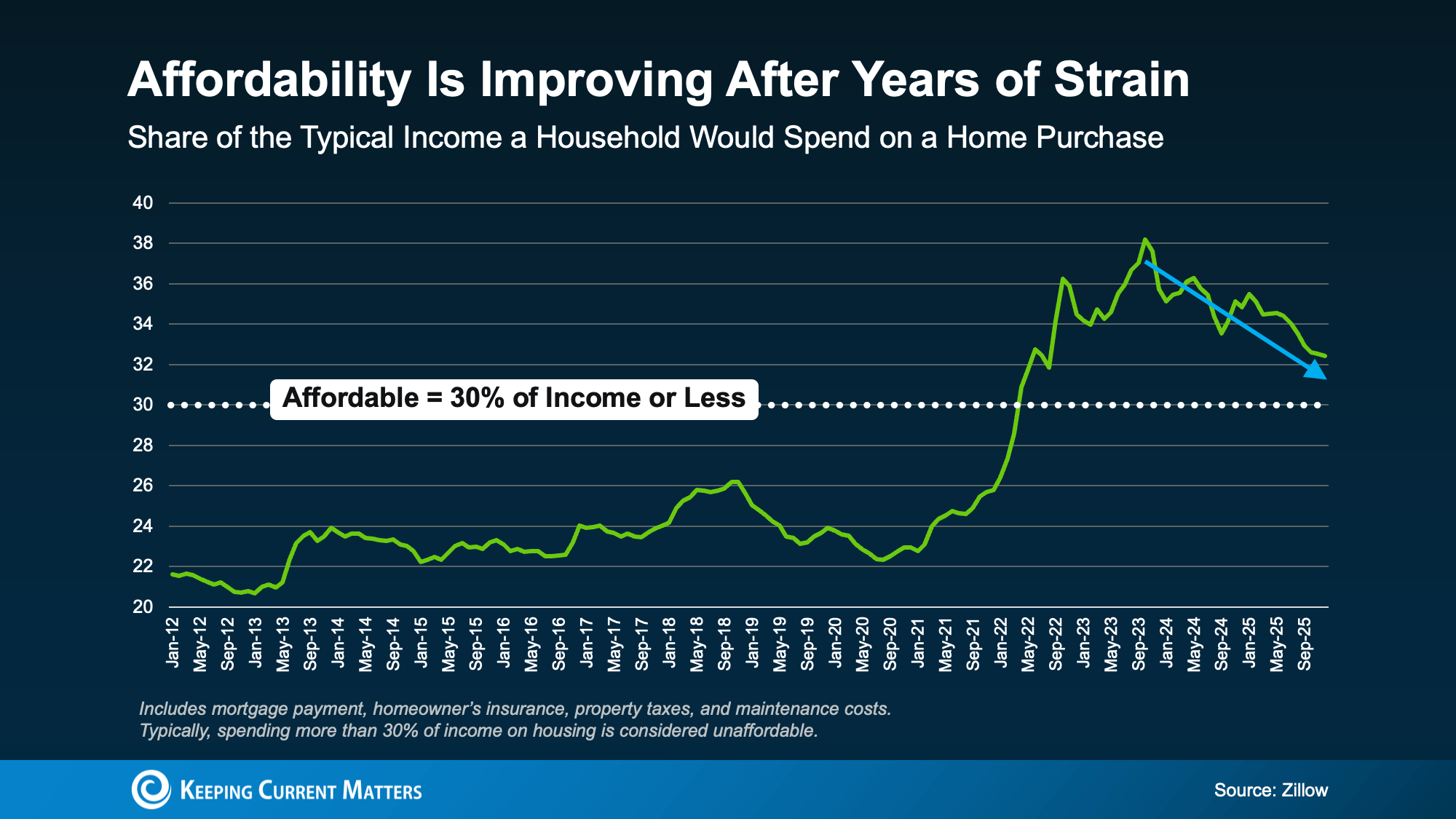 Now, we’re not all the way back to Zillow’s threshold of 30% of your income or less, so affordability is still tight. But things are trending in the right direction.
Why Affordability Is Improving
So, what’s driving the change? A lot of the focus lately has been on mortgage rates and how much they’ve come down over the course of the past year. But that’s not the only factor working in favor of buyers right now. Here are three trends benefiting buyers today:
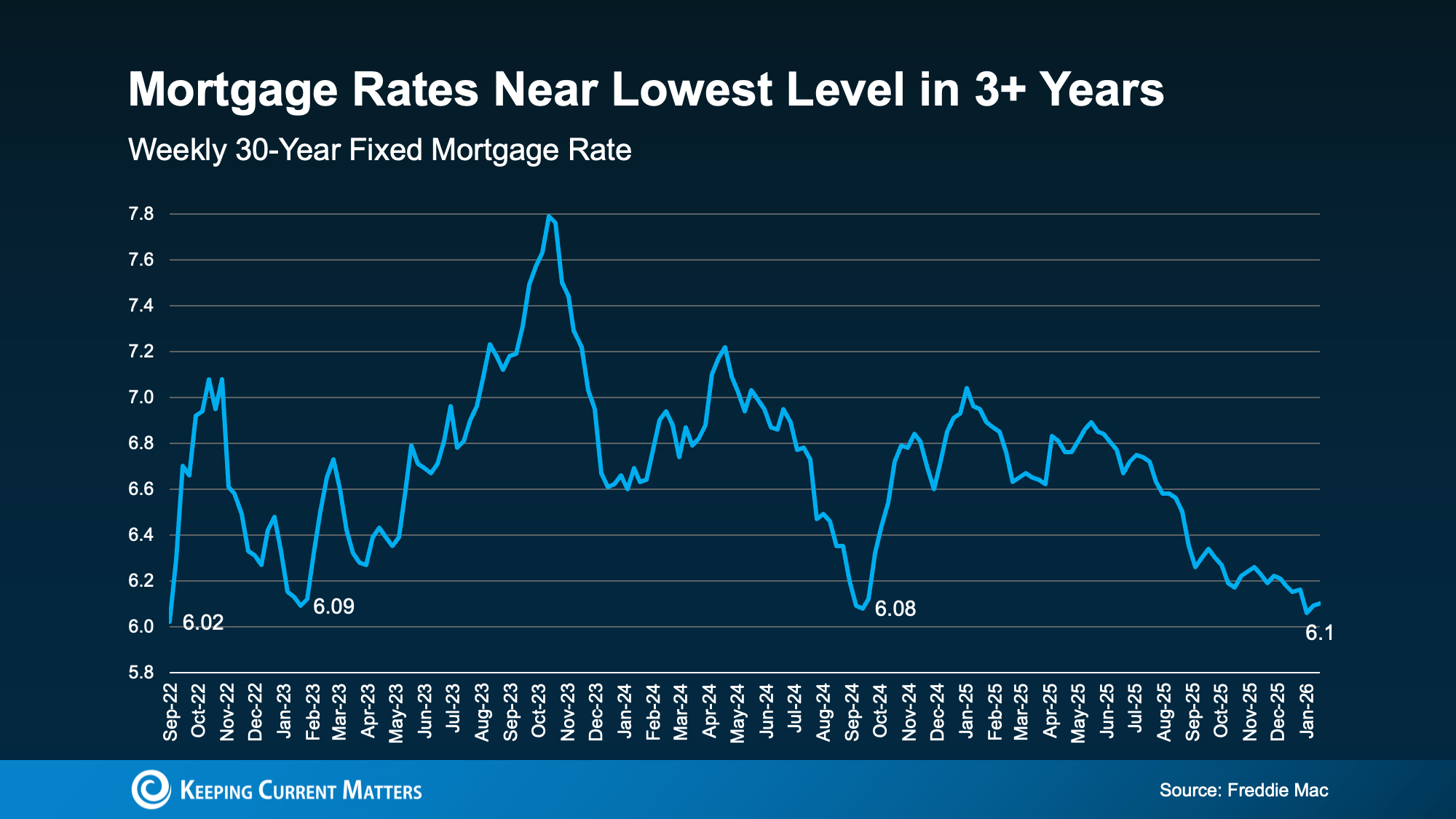
1. Mortgage rates have eased. Rates are near their lowest level in more than three years, which helps lower monthly payments (see graph below):
2. Home price growth has cooled. Prices aren’t falling nationally, but they’re growing much more slowly than they were a few years ago. That means buyers today aren’t facing the same sharp jumps in purchase prices, which helps keep monthly payments more manageable – and buying more predictable.
3. Wages are growing faster than home prices. This one matters a lot. As Mark Fleming, Chief Economist at First American, explains:
“When income growth exceeds house price growth, house-buying power improves—even if mortgage rates don’t decline meaningfully.”
None of this makes buying cheap, but it does explain why the math is starting to work a little better for buyers than it did even a just a year ago. Put simply, the forces that hurt affordability over the past few years are finally easing. Fleming again explains it well:
“Affordability remains challenging, but for the first time in several years, the underlying forces are finally aligned toward gradual improvement. Mortgage rates may drift down only slowly, but income growth exceeding house price appreciation will provide a boost to house-buying power — even in a higher-rate world. Affordability won’t snap back overnight, but like a ship finally catching a steady tailwind, it’s now sailing in the right direction.”
These three factors combined are why economists expect affordability to keep improving in 2026.
Where Homes Are Becoming Affordable First
But how much is affordability really going to improve? In some places, noticeably. Zillow says some markets are expected to fall back under their affordability threshold (30% of your income or less) by the end of the year:
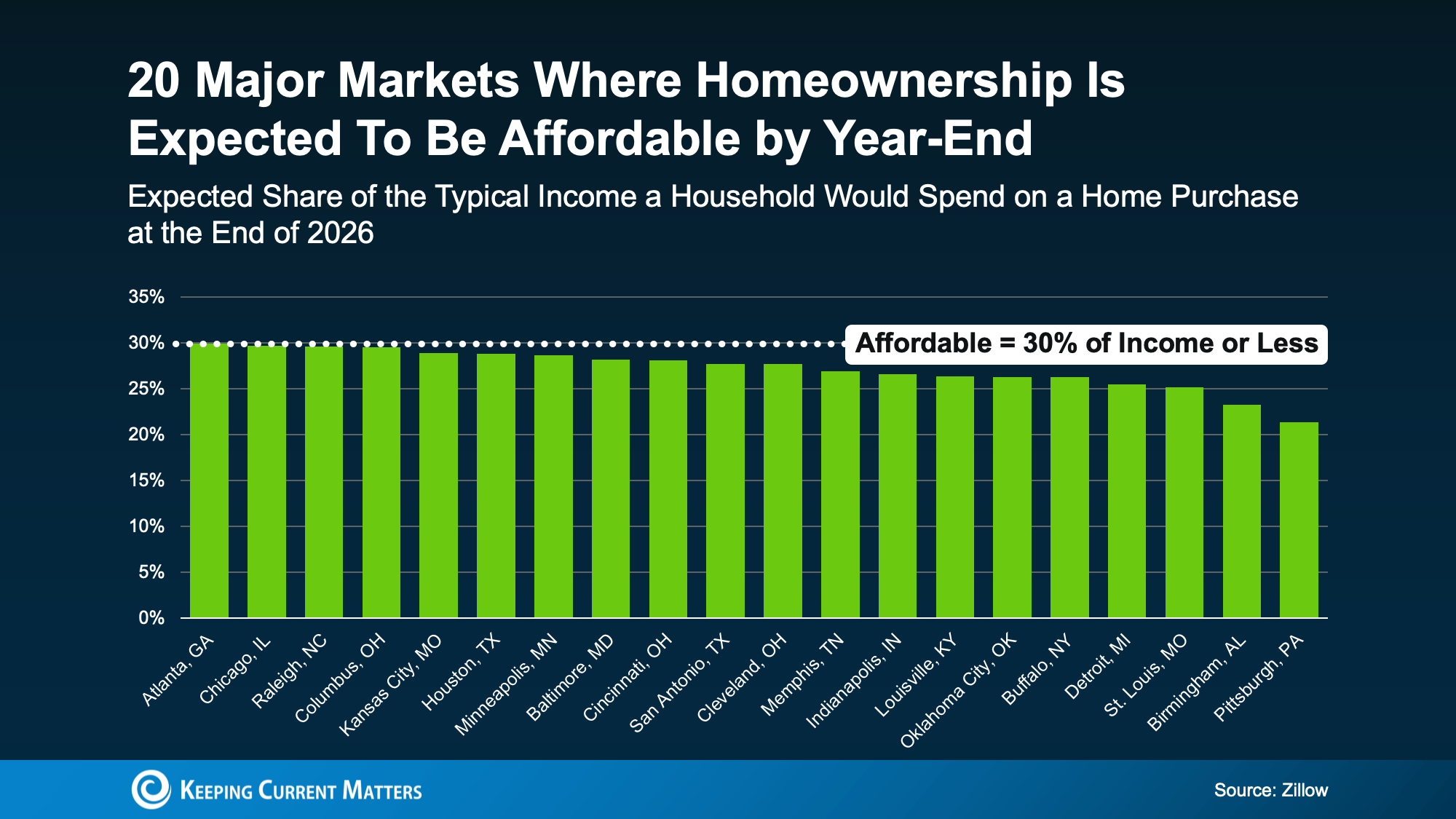
But that doesn’t mean you have to be in one of these markets or wait until year-end to buy. Other places are already seeing big improvements in affordability. So, talk to a local agent about what’s happening in your market. You may find you’re able to buy after all.
Bottom Line
For the first time in quite a whole, affordability is easing. That’s a meaningful shift.
And because this improvement isn’t happening everywhere at the same speed, understanding what’s changing locally is what really makes a difference. If you want to see how these trends show up in your area, talk with a local real estate agent.

by Omar Cruz | Jan 22, 2026 | Featured, For Sellers, Selling Tips
This blog is written by Keeping Current Matters.
Planning to sell this spring? While you may be tempted to hold off until the first blooms or the spring showers hit, that’s actually waiting too long to get started by today’s standards.
Buyers have more options than they did a few years ago. So, it’s worth it to tackle repairs now and make sure your house is set up to stand out because you don’t want to be caught scrambling right before the spring rush. Or, running out of time to do the work your house really needs.
The key is focusing on updates that actually matter. And that’s exactly where return-on-investment (ROI) data comes in handy.
Which Projects Tend to Pay Off?
Every year, Zonda looks at which home improvements deliver the most bang for the buck when you go to sell the home. And the results can be a little surprising.
The green in the chart below shows the updates where sellers have the biggest potential to add value based on that research:
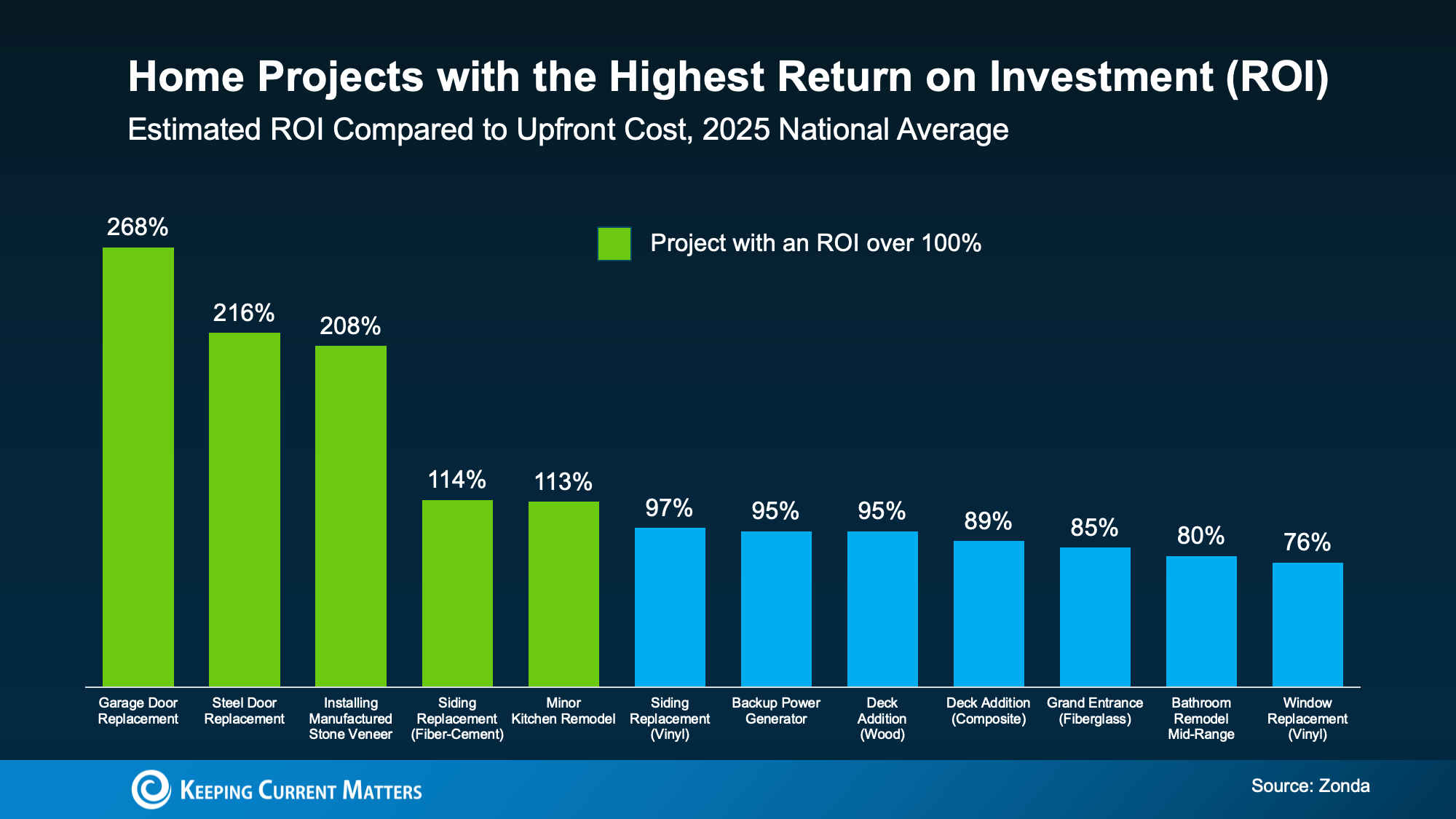 While there’s a wide range of projects represented in this data, the cool part is that some of the top winners aren’t big to-do’s. They’re just swapping out doors.
Small Updates, Big Visual Impact
This goes to show little projects can have a big impact. So, you don’t have to spend a fortune. And you don’t need to tackle everything on this list. But in today’s market, doing nothing can work against you.
Now that buyers have more homes to choose from, a lot of them are going to opt for what’s move-in ready.
The best advice? Focus on what your house needs, whether it’s listed here or not – like the repairs you’ve been putting off. A front door or shutters in need of a little TLC. Piles of leaves in the yard. Scuffed up paint where your kids play inside. Those details matter too.
Mallory Slesser, Interior designer and Home Stager, explains it to the National Association of Realtors (NAR) this way:
“If you’re looking for affordable updates that pack a punch, dollar for dollar, I would say painting; changing out light fixtures; changing out hardware; maybe new draperies or window treatments. Those are all cost-effective ways to make a big statement. It really changes the space.”
These seemingly small things help buyers focus on the home itself – not the work they think they’ll have to do after moving in. And that’s paying off for other sellers. Buyers are often willing to spend more on homes that feel well cared for, updated, and move-in ready.
This Chart Is a Starting Point, Not a Strategy
Here’s the important thing to remember. National data like this is a guideline. Buyer preferences are going to vary by location, price point, and even neighborhood. That means a project that boosts value in one area might be unnecessary (or even overkill) in yours.
That’s why the first step should always be to talk with a local real estate professional before you start.
An experienced agent can help you answer questions like:
- Which updates do buyers in your market expect?
- What can you skip without hurting your sale?
- Where will a small investment make the biggest difference?
- Is it better to update, or sell as-is?
That guidance helps you avoid over-improving and under-preparing.
Bottom Line
If you’re looking to sell this spring, you still have time to make updates that help your home stand out – without taking on a full renovation.
If you’re not sure where to start, talk to a local about what makes sense for your house. A quick conversation can help you prioritize the updates that’ll pack the biggest punch.
What’s one upgrade you’ve been thinking about – and wondering if it’s worth it?
