
by Omar Cruz | Mar 26, 2026 | Agent Value, Buying Tips, Featured, First-Time Buyers
Buying your first home is exciting, but it can also be a little nerve-wracking because it’s something you’ve never done before. And trying to think of everything you need to do can feel like a lot. But here’s the key.
You don’t have to figure everything out on your own. And you don’t have to do it all at once. Just tackle it one thing at a time.
Here’s a simple list of 3 main things you should focus on to help you get started.
1. Assemble Your Team: Don’t Do This Alone
Buying a home is a team sport. And having the right professionals by your side can make a world of difference. Here’s who you need to find:
- A local real estate agent is your guide from the first showing to closing day. They’ll make sure you understand all the details along the way, so you feel confident in your decision.
- A trusted lender will walk you through loan options, monthly payments, and what’s realistic for your situation. That information is something you’re going to want early on.
2. Prep Your Finances: Set the Foundation First
This is what determines what you can afford, how competitive you’ll be, and how confident you’ll feel when it’s time to make an offer. Here’s how to get ready:
- Check your credit score. Your credit score impacts the loan options you’ll qualify for and even the mortgage rate you’ll get. Knowing this number early gives you time to work on raising your score, if you want to.
- Save for your down payment and closing costs. Most buyers focus on the down payment, but closing costs matter too. Having savings set aside for both helps you avoid last-minute stress and surprises.
- Look into assistance programs. Many first-time buyers qualify for programs that’ll give their homebuying savings a boost. This can make buying possible sooner than you expect.
- Talk to a lender about mortgage options. Fixed-rate, adjustable-rate, FHA, VA, and conventional loans all work differently. Understanding the options helps you choose what fits your goals best.
- Get pre-approved. A pre-approval tells you what a lender would be willing to give you for your home loan. This’ll help you figure out your price range and set you up to move fast when the right home comes along.
- Figure out your budget. Your mortgage is just one part of homeownership. Budgeting for your utilities, home insurance, and everyday expenses and maintenance will help make sure your payment feels comfortable, not stressful.
3. Gather Your Documents: Save Time (and Stress)
When you’re officially ready to kick off the buying process, lenders are going to need to verify your income, assets, and financial history. Having these documents ready-to-go upfront can speed up the process and reduce back-and-forth. Here’s what Bankrate says you need to prep:
- W-2s and tax documents (past 2 years). These show income stability and help
lenders verify your earnings over time.
- Recent pay stubs (generally the past 1–2 months). Pay stubs confirm your current income and employment status.
- Bank statements (past 2–3 months). These show your savings, spending patterns, and where your down payment funds are coming from.
- Investment account statements (past 2-3 months). If you’re using investments as part of your financial picture, lenders may ask for these as well.
- Copy of your driver’s license. This verifies your identity and is required for loan processing.
- Residential history (past 2 years). Lenders use this to confirm stability and background information.
- Statements for any outstanding debts (past 2 months). Student loans, auto loans, and credit cards affect your debt-to-income ratio, so lenders will want to know about them.
- Proof of supplemental income. Bonuses, commissions, side work, or child support may count toward your income if documented properly.
Note: the exact time frames and list of documents may vary lender to lender. This is just a general rule of thumb to help you get the ball rolling.
Bottom Line
Buying your first home doesn’t mean you have to have everything figured out. It just requires a plan.
If you start with your finances, organize your documents, and surround yourself with the right people, you’ll be in great shape when the time comes to make a move.
And if you want more information on anything in this list or just need help getting started, reach out to an agent.
Author: Keeping Current Matters

by Omar Cruz | Mar 11, 2026 | Agent Value, For Sellers, Price It Right/Overpricing, Selling Tips
This blog is written by Keeping Current Matters.
Online searches for “can’t sell house” just hit an all-time high according to Google Trends. So, if your house has been sitting on the market without any bites, you’re not the only one. But it’s also not the end of the road.
Homes are selling every day, so you can turn this around. You just need to take another look at your approach.
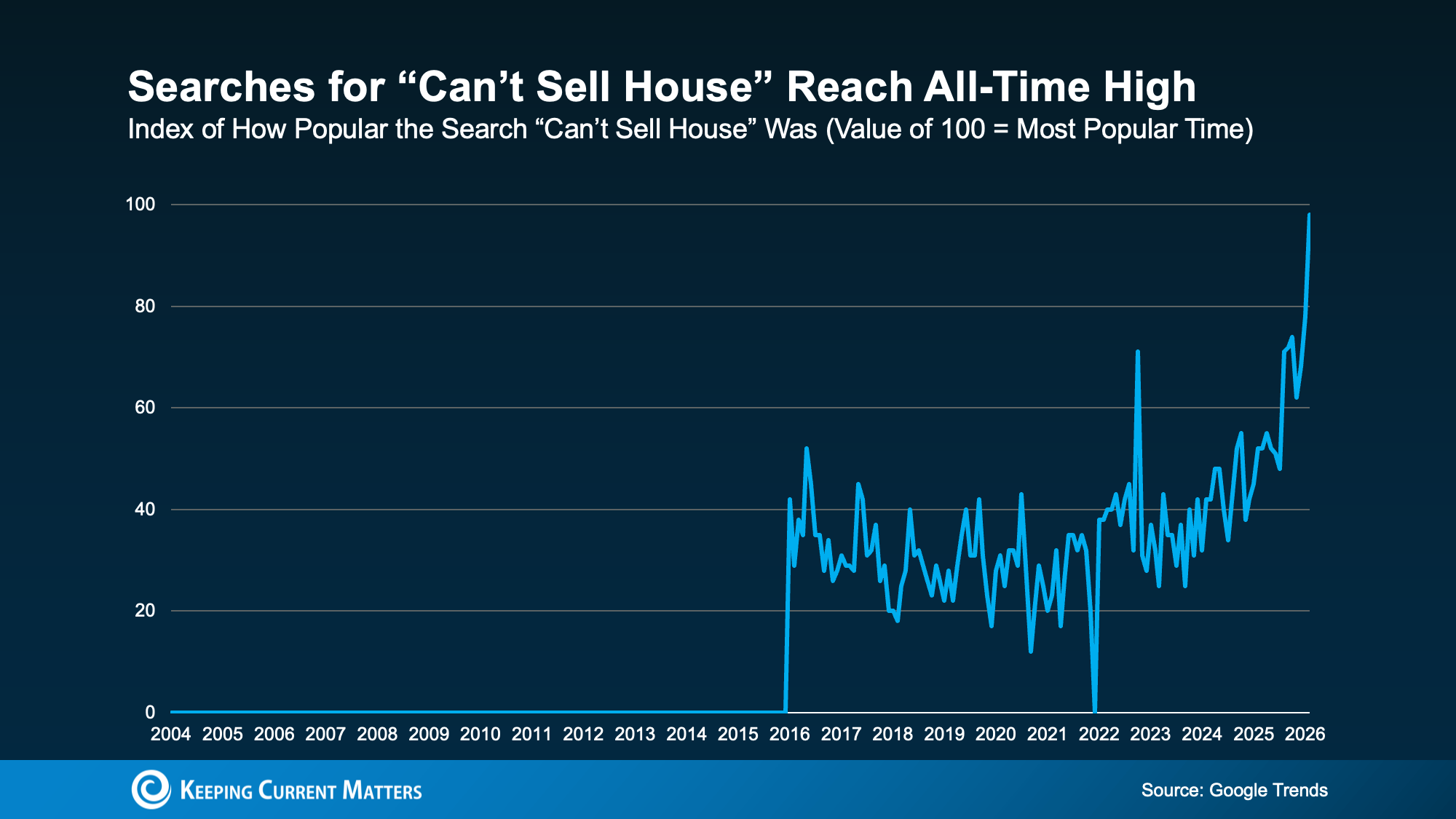 If you’re feeling this pain, know this: an online search engine isn’t where you should go for your answers. It’s much better to talk to your agent. Because a search engine doesn’t know your market or your house. But your agent does.
While a quick search or an AI platform may give you some tips on what to try, only an expert agent can actually diagnose what’s going on – and how to fix it.
For example, your agent knows most homes that struggle to sell today are usually being held back by one (or more) of these three things.
1. Presentation: Buyers Will Compare Everything
When inventory was tight a few years ago, buyers overlooked imperfections because they had to, or they’d lose out to another bidder. Now? That’s no longer the case.
Today’s buyers scroll through dozens of listings in just minutes. They compare condition, updates, lighting, finishes, layout, and more – all side by side. If your home feels dated, cluttered, or in need of repairs, buyers will notice and it’ll knock your house right off their list of contenders.
This doesn’t mean you need a full renovation. But it does mean first impressions matter again. To compete today, you need curb appeal. Clean spaces. Neutral colors. Professional photos. If there are scuffs on the walls, obvious repairs, or too many outdated features, it could be what’s holding you back.
2. Pricing: If the Price Isn’t Compelling, It’s Not Selling
This is maybe the hardest one to hear, but what your neighbor sold their house for a few years ago isn’t necessarily the same price you’ll get today. As Selma Hepp, Chief Economist at Cotality, says:
“For sellers, the days of pricing aggressively and expecting instant offers are largely over. Homes that are well-priced and well-presented will still sell, but pricing discipline matters more than it did during boom years.”
Buyers are budget-conscious right now. If your home is priced based on outdated expectations instead of current demand, buyers may still look at your house online… but they likely won’t write an offer. Or, they’ll make an offer that you think is too low.
Pricing too high for this market is one of the top things sellers miss the mark on today. And those who aren’t willing to meet the market where it is or entertain offers may feel stuck.
3. Access: If Buyers Can’t See It, They Can’t Buy It
It sounds obvious but limited showing availability can kill your momentum. If your house isn’t easy to see because you’re restricting showings to evenings only, no weekends, or requiring a 24-hour notice, you’re cutting your buyer pool down by more than you may realize.
And the more friction you create, the fewer buyers walk through the door.
In a market where buyers have more options, the last thing you want to do is give them a reason to skip your house. Availability matters because if no one sees it, no one buys it.
Don’t Let Search Results Decide Your Next Step
When your house isn’t selling, it’s tempting to spiral and wonder if it’s the market or if something’s wrong with your house. But instead of searching for answers online, here’s what to do.
Sit down with your agent and ask three honest questions:
- What are buyers looking for in today’s market?
- What feedback are we getting from showings?
- Why do you think my house hasn’t sold yet?
That conversation will bring a lot more clarity than any search engine results.
Bottom Line
If your listing feels stuck, it’s not a sign you shouldn’t sell. It’s the market giving you feedback. And feedback is powerful when you use it.
Start with a real conversation with a real agent about what’s working and what’s not. Your agent will be able to tell you which small adjustments could totally change the momentum. Because in this market, the sellers who adapt are the ones who move.

by Omar Cruz | Feb 25, 2026 | Agent Value, For Sellers, Price It Right/Overpricing, Selling Tips
This blog is written by Keeping Current Matters.
There’s one decision you’re going to make when you sell that determines whether your house sells quickly or it sits. Whether buyers make an offer or scroll past it. Whether you walk away with the maximum return, or you end up cutting the price later.
And that’s your asking price.
The #1 Mistake Sellers Make Today: Trusting the Wrong Number
If you’re thinking of moving and trying to figure out what your house may sell for, it’s tempting to start with an online home value tool. They’re fast, free, and easy. And you don’t have to talk to anyone. But here’s the problem: they don’t know your house.
And that can be a bigger drawback than you realize.
Where Online Estimates Fall Short
Online tools often lag behind the market. They look in the rearview mirror, relying on closed sales and delayed information. And in that sense, they’re using incomplete data.
That’s not a miss in how these systems are built. Some information just isn’t available online. Bankrate explains:
“While these tools can be a useful starting point, keep in mind that they typically do not provide the most accurate pricing. Algorithms can only rely on the information available; they can’t account for things like a home’s condition or renovations made since the last public information was updated.”
They can’t see:
- The unique features that make your house special
- All the work you’ve put in to keep it in good condition
- Or, how in-demand your specific neighborhood is right now
So, while they may do a good job in some cases, they can’t be as accurate as a local agent who has boots on the ground day in and day out.
In a market where buyers have more options, a seemingly small margin of error can cost you thousands if you price too low, or weeks of lost momentum and time if you price too high.
If you want to sell for the most money and in the least amount of time, you don’t want the fast answer on how to price your house. You want the right one.
That’s why the savviest homeowners today don’t rely on algorithms when it actually matters. They rely on people, specifically trusted local agents.
What an Expert Agent Brings to the Table
According to 1000WATT, sellers overwhelmingly believe real estate agents have the best sense of a home’s true value, far more than any automated tools.
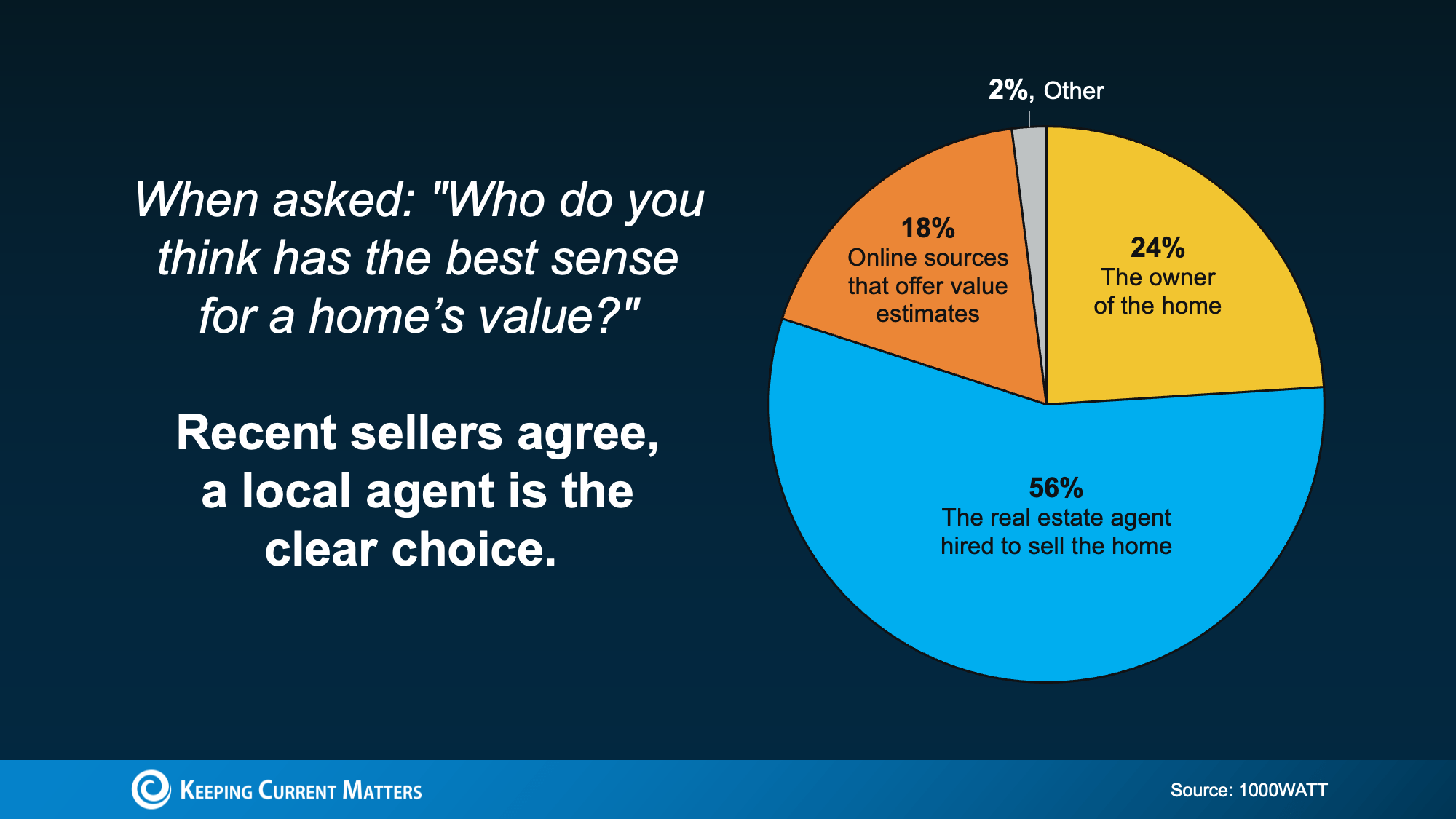 That confidence isn’t accidental. As Bankrate puts it:
“A professional appraiser or real estate agent can visit the home in person, assess the neighborhood as a whole as well as the individual property, perform more thorough market research, and consider subjective details.”
And those details matter. A skilled local agent doesn’t just pull reports. They know what’s happening right now:
- What buyers are paying this month, not last month, or even last year
- How does your home compare to the current competition in your neighborhood
- Which features add value based on what buyers are willing to pay for today
- How to price your house to create urgency in this market
And once an agent steps foot in your house, they may even find your online estimate undershot your value. So, if you stuck with the estimate you got online, you’d actually be leaving money on the table. And no one wants that.
Bottom Line
While online tools can give you a rough starting point, only a local expert can give you a price that actually works.
If you want to know the right number for your house, not just the easiest one to find, connect with a local real estate agent.

by Omar Cruz | Nov 4, 2025 | Agent Value, For Sellers, Inventory, Selling Tips
A few years ago, inventory hit a record low. Just about anything sold – and fast. But now, there are far more homes on the market. Listings are up almost 20% from this time last year. And in some areas, supply is even back to levels we last saw in 2017–2019. For sellers, that means one thing:
Your house needs to stand out and grab attention from day one.
That’s especially true when you consider why the number of homes for sale is up. Here’s how it works. Available inventory is a mix of:
- Active Listings: homes that have been sitting on the market, but haven’t sold yet
- New Listings: homes that were just put on the market
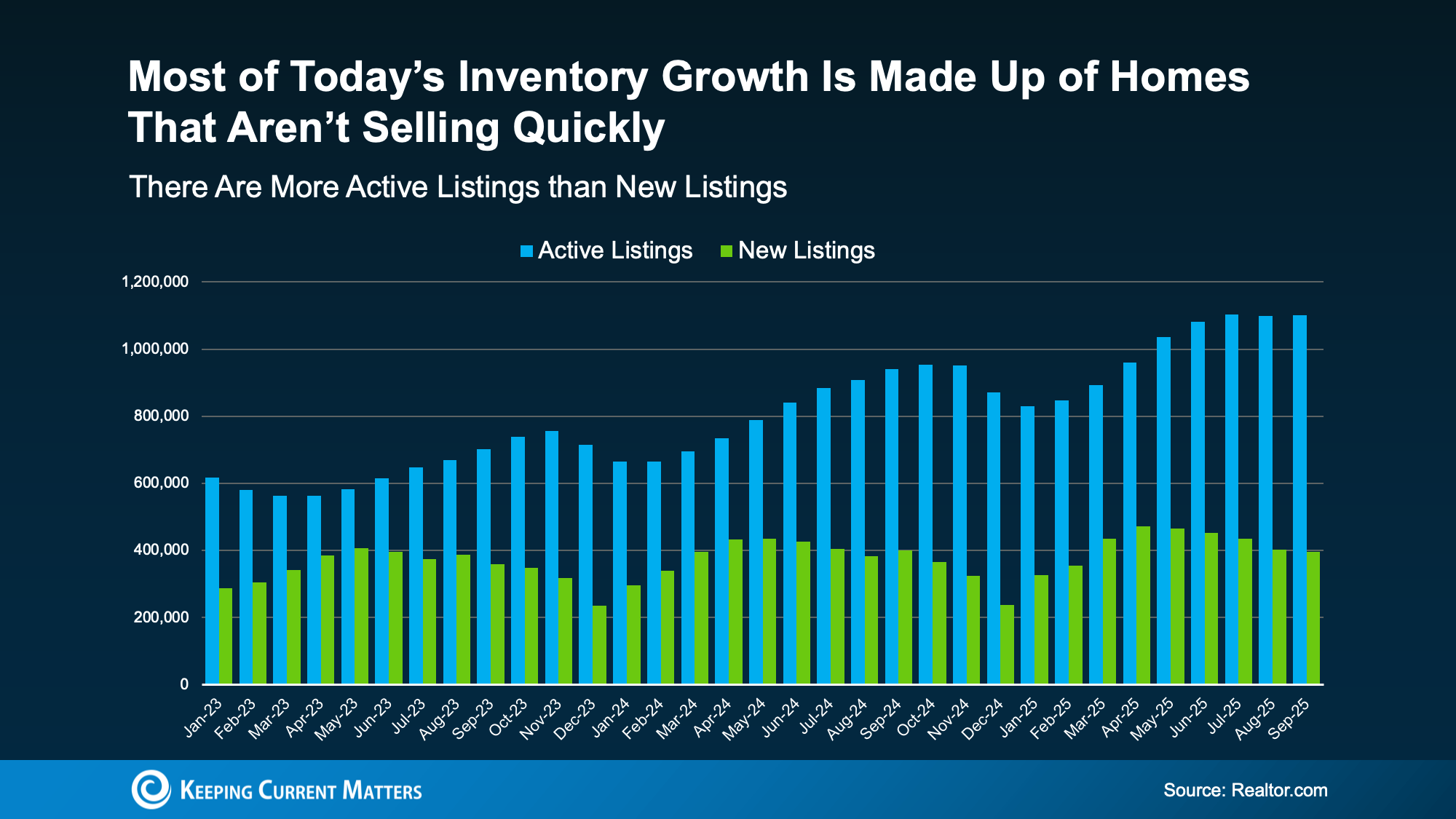
Data from Realtor.com shows most of the inventory growth lately is actually from active listings that are staying on the market and taking longer to sell (see the graph below).
The blue bars show active listings. These are the homes that are sitting month to month and not selling. The green bars are new listings, the homes that were just put on the market. And it’s clear there are fewer new listings compared to how many are staying on the market unsold.
 Since you don’t want your house to be one of the ones that take a long time to sell, let’s break down where things can go sideways and how to set yourself up to sell quickly.
Why Some Homes Sell and Others Sit
The secret to selling in today’s market is simple. Make sure your house is easy for buyers to say yes to as soon as it is listed.
Price it based on current conditions (not what your neighbor sold for 3 years ago). Make important repairs. And highlight the best things about your house. If you do that, it will sell in any market – sometimes even faster than you’d think. Because the truth is, homes that are priced right today are still selling.
It’s the homeowners who are clinging to outdated expectations that are seeing their house sit and their listing go stale. According to Redfin and HousingWire, here are some of the most common reasons sales stall out:
- Priced it too high from the start
- Skipped necessary repairs before listing
- Didn’t stage the house well
- Sellers won’t negotiate with buyers
- Limited availability for showings
- Ineffective marketing or listing pictures
Most of those things didn’t matter as much just a few years ago. When inventory was at a record low, sellers could skip the prep, name their price, and still walk away with multiple offers over their asking price.
But today’s market is different now that inventory has grown. And that means your approach needs to be different too.
You don’t want to try out old strategies and aim too high just to see what sticks. Your first few weeks on the market are everything. That’s when your listing gets the most attention – and when pricing or presentation mistakes hurt the most. Get it wrong up front and your house will sit…and sit. Get it right, and it’ll be snatched up before you know it.
The Right Agent Helps Your House Stand Out
Selling quickly isn’t about luck. It’s about knowing how to play to the market you’re in. And that’s where your agent comes in.
A great agent will analyze your local market, suggest a price based on the latest comparables sold in your neighborhood, and create a marketing plan that makes buyers pay attention from day one. They’ll also walk you through any repairs you need to make or whether you need to bring in a staging company. As the National Association of Realtors (NAR) explains:
“Home sellers without an agent are nearly twice as likely to say they didn’t accept an offer for at least three months; 53% of sellers who used an agent say they accepted an offer within a month of listing their home.”
That’s the power of getting it right (and getting expert help) from the start.
Bottom Line
There are more homes for sale today, but that doesn’t have to work against you.
When your house is priced right, shows well, and is marketed effectively, it will sell. Connect with an agent if you want to know how to make that happen in your market this fall.

by Omar Cruz | Oct 9, 2025 | Agent Value, For Sellers
These days, you’re going to want to get your price right when you get ready to sell your house. Honestly, it’s more important than ever. Why? While you may want to list high just to see what happens, that’s a plan that can easily backfire, and it’s going to cost you in today’s market.
And the risk isn’t just missing out on offers, it’s missing out on the move you needed to make in the first place.
The Real Pitfall of Overpricing
Many homeowners remember what their neighbor’s house sold for a few years ago, and they want to chase that same sky-high number. The problem is, that was a different market.
Today, there are more homes for sale. Buyers have more options to choose from. They don’t have to get into bidding wars where they offer way over asking just to compete. Now they can come in at, or even below, list price. And if you’re not open to that, they’ll move on. Lisa Sturtevant, Chief Economist at Bright MLS, explains:
“Buyers will have more leverage in many, but not all, markets. Sellers will need to adjust price expectations to reflect the transitioning market.”
But here’s the good news. You still have one big advantage as a seller. According to the Federal Housing Finance Agency (FHFA), home values went up by a staggering 54% over the last 5 years. So, even if you compromise just a little bit on your sale price today, odds are you’ll still come out way ahead.
The challenge? Most sellers aren’t thinking about it that way. They’re stuck on what a neighbor got months or years ago – and that’s a costly mistake.
Overpricing Can Stall Your Whole Move
Here’s what happens. A seller lists too high. Buyers stay away. No offers come in. The house sits. And suddenly, that seller is facing a tough decision. Do they cut the price? Stick it out? Or give up altogether?
Unfortunately, a late price cut may not be enough. Buyers often see that as a red flag that something’s wrong with the house. That’s why some sellers are opting to just pull their listing off the market entirely.
In a recent survey from John Burns Research and Consulting (JBREC) and Keeping Current Matters (KCM) over half of agents (54%) say there are more homes being taken off the market than usual.
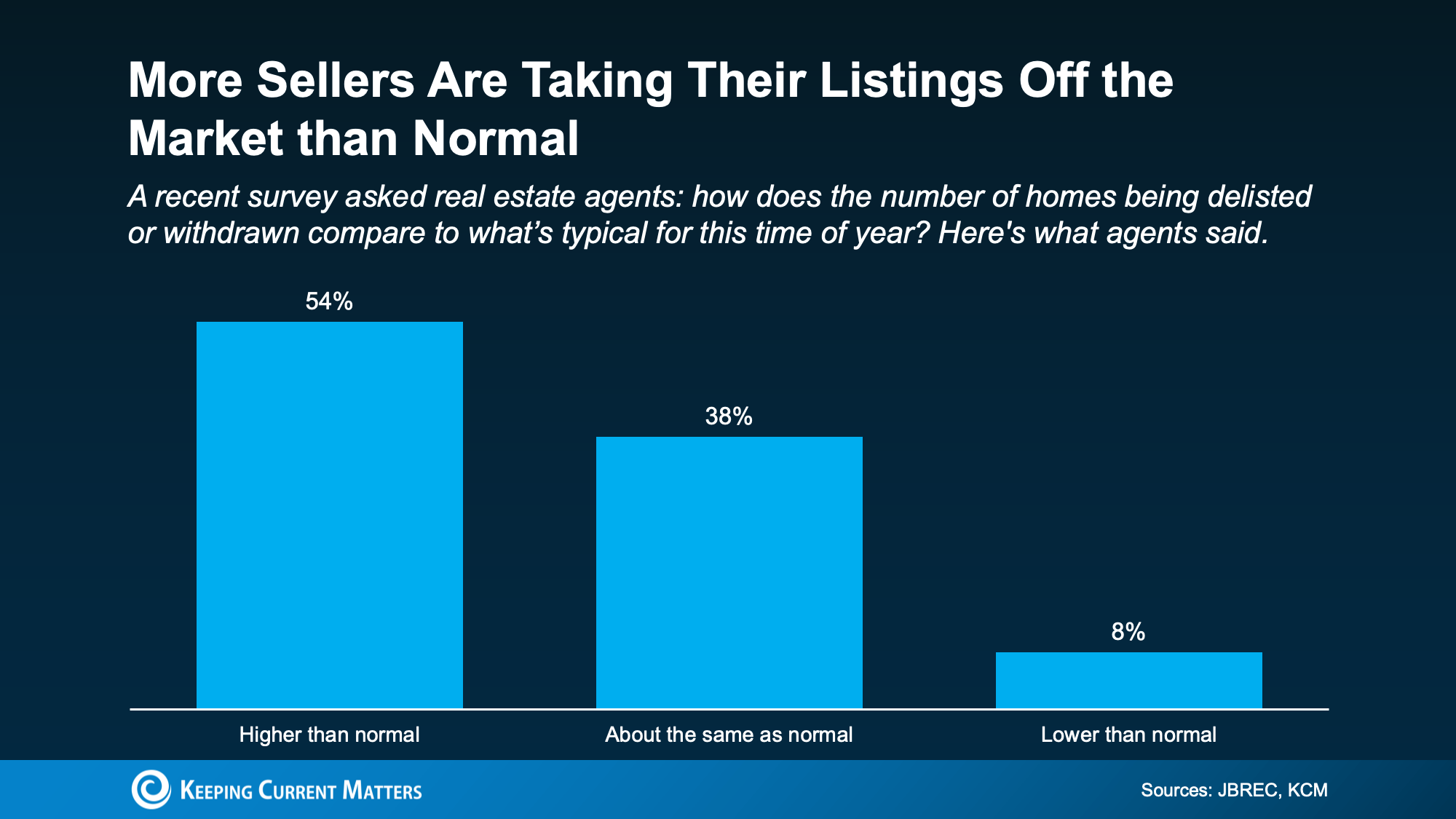 And the top reasons for that? According to the agents, homeowners didn’t get any offers they felt were fair. The survey from JBREC and KCM explains it like this:
“Sellers holding onto high price expectations is the leading reason they are delisting their homes.”
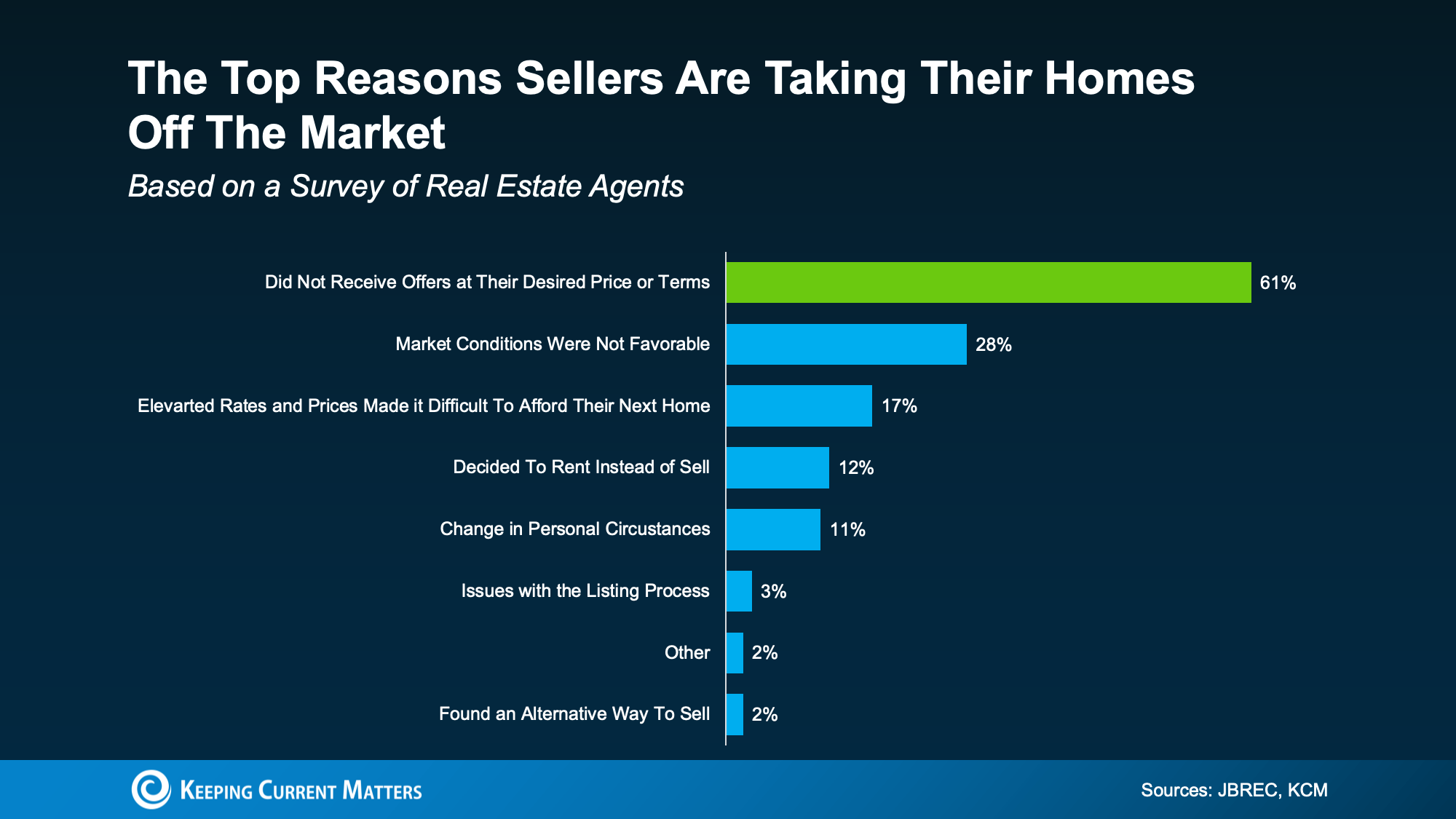 BrightMLS data backs this up:
“. . . sellers are delisting after having their home on the market and finding they are not getting the price they hoped for.”
It’s more proof pricing too high does more than turn buyers away, it puts your whole move at risk. Because if no one looks at your home or makes an offer, how are you going to sell it?
The Secret To Making Your Move Happen
If you’re selling to relocate for a job, need more space for your growing family, or have to be closer to your relatives as they age, you can’t afford to get stuck. You need a pricing strategy that helps you move forward – and that starts with the right agent.
The sellers who are winning right now are the ones working with experienced local agents who know the current market and aren’t afraid to have honest conversations about price.
And it’s paying off. In the right price range and condition, homes are still selling fast, sometimes even with multiple offers.
Bottom Line
Pricing your house for today’s market isn’t just about getting it sold. It’s about making sure your move doesn’t stall before it starts.
Talk to an agent about what buyers are really paying right now in your area, and how to price your home to match.

by Omar Cruz | Oct 7, 2025 | Agent Value, Open Houses
Now that buyers have more options for their move, you need to be a bit more intentional about making sure your house looks its best when you sell. And proper staging can be a great way to do just that.
What Is Home Staging?
It’s not about making your house look super trendy or like it belongs in a magazine. It’s about helping it feel welcoming and move-in ready, so it’s easy for buyers to picture themselves living there.
It’s important to understand there’s a range when it comes to staging. It can include everything from simple tweaks to more extensive setups, depending on your needs and budget. But a little bit of time, effort, and money invested in this process can really make a difference when you sell – especially in today’s market.
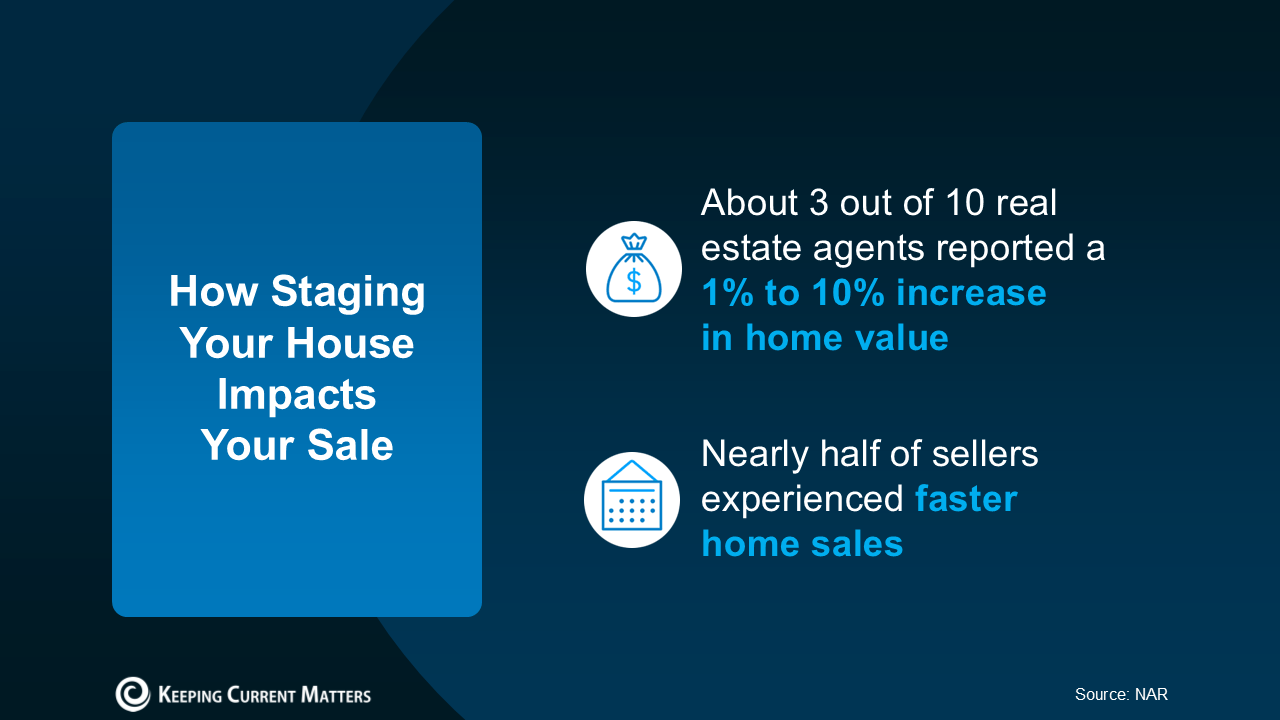
A study from the National Association of Realtors (NAR) shows staged homes sell faster and for more money than homes that aren’t staged at all (see below):
Which Rooms Matter Most?
The best part is, odds are you don’t have to stage your whole house to make an impact. According to NAR, here’s where buyers’ agents say staging can make the biggest difference (see graph below):
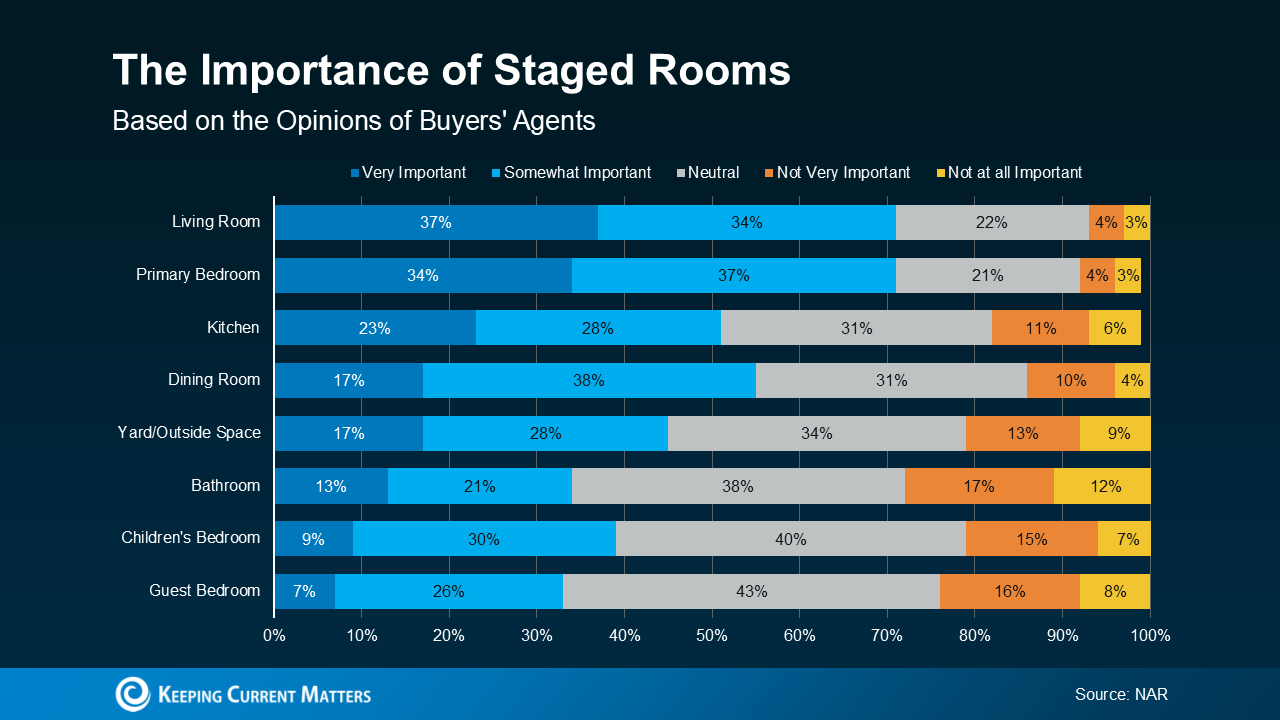 As you can see, agents who talk to buyers regularly agree, the most important spaces to stage are the rooms where buyers will spend the most time, like the living room, primary bedroom, and kitchen.
While this can give you a good general idea of what may be worth it and what’s probably not, it can’t match a local agent’s expertise.
How an Agent Helps You Decide What You Need To Do
Agents are experts on what buyers are looking for where you live, because they hear that feedback all the time in showings, home tours, walkthroughs, and from other agents. And they’ll use those insights to give their opinion on your specific house and what areas may need a little bit of staging help, like if you need to:
- Declutter and depersonalize by removing photos and personal items
- Arrange your furniture to improve the room’s flow and make it feel bigger
- Add plants, move art, or re-arrange other accessories
A lot of buyers can use the agent’s know-how as the only staging advice they need. But, if your home needs more of a transformation, or it’s empty and could benefit from rented furniture, a great agent will be able to determine if bringing in a professional stager might be a good idea, too. Just know that level of help comes with a higher price tag. NAR reports:
“The median dollar value spent when using a staging service was $1,500, compared to $500 when the sellers’ agent personally staged the home.”
A local agent will help you weigh the costs and benefits based on your budget, your timeline, and the overall condition of your house. They’ll also consider how quickly similar homes are selling nearby and what buyers are expecting at your price point.
Bottom Line
Staging doesn’t have to be over-the-top or expensive. It just needs to help buyers feel at home. And a great agent will help you figure out the level of staging that makes the most sense for your goals.
Which room in your house do you think would make the biggest impression on a buyer?
Get an agent to walk through your home with you and go over what will make your house stand out.
